
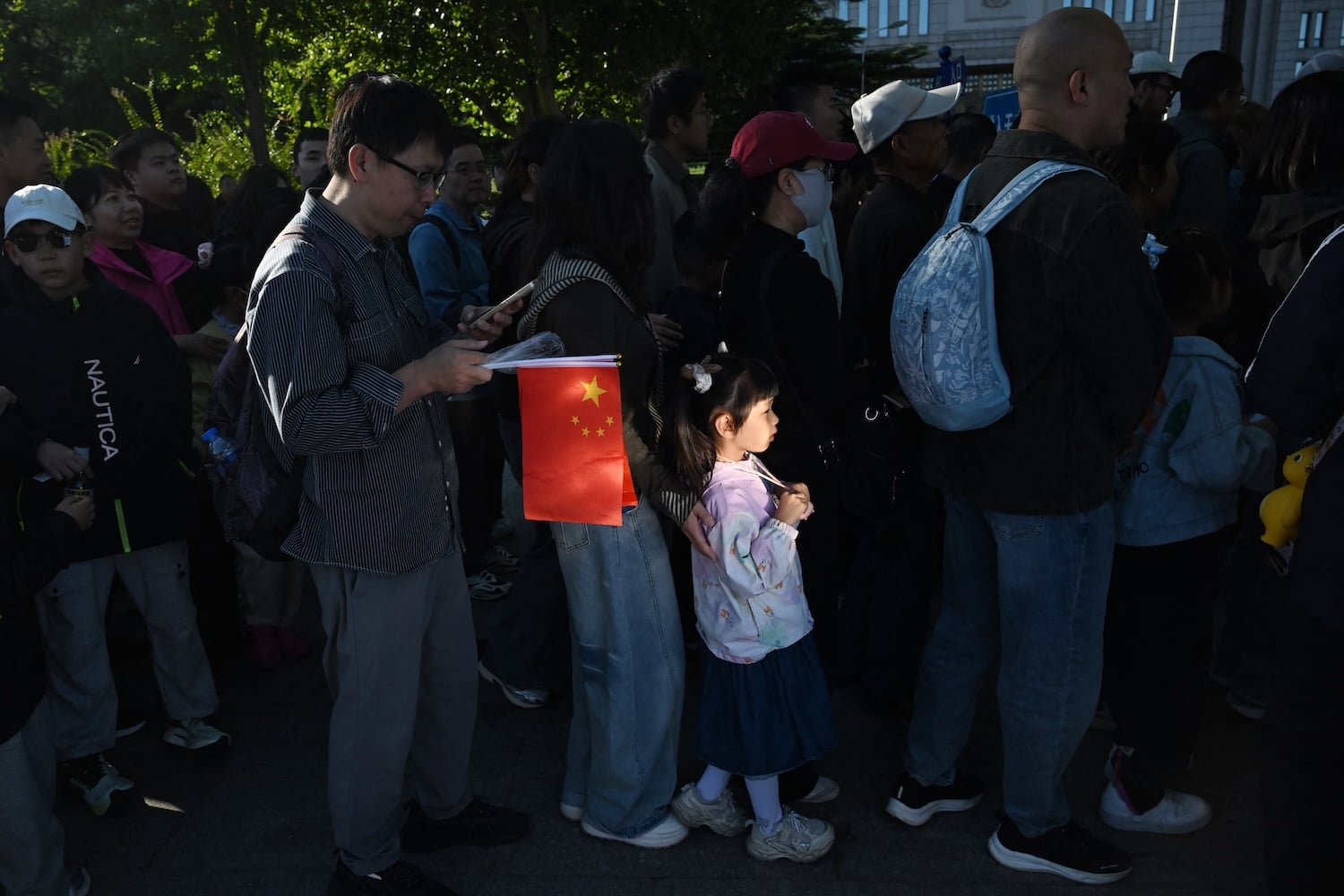
Welcome to Foreign Policy’s China Brief. It’s Golden Week, China’s fall national holiday period, so as the Chinese public heads to Southeast Asia for vacation or simply enjoys a break from work, we’re doing one of our periodic deep dives. Welcome to Foreign Policy’s China Brief. It’s Golden Week, China’s fall national holiday period, so as the Chinese public heads to Southeast Asia for vacation or simply enjoys a break from work, we’re doing one of our periodic deep dives. This week, we’re talking about childbirth in China—and how social stress and family pressures contribute to one of the world’s lowest birth rates. The Realities of Having a Child in China Fertility almost always declines as countries get richer, but China has seen one of the sharpest drops of any nation, especially since 2017. It’s a credit to public stubbornness that during many of the one-child policy years, from 1979 to 2015, the average Chinese couple had close to two kids anyway. Now that the government wants them to have two, the average couple has only one. It was a shock to officials that loosening the policy to two children in 2015 and then to three in 2021 produced no uptick in births. Commentary tends to focus on cost: China is the second-most expensive place in the world to raise a child. The biggest expenses come later, when education costs soar. The government tried to solve this problem by banning private K-12 tutoring in 2021, but that only created a gray market where parents pay even more for tutors. Yet in talking to Chinese parents, I’ve found that pregnancy, childbirth, and postpartum care are major reasons why having a kid is a one-and-done choice for most. First, there’s the career cost for women. On paper, China has generous, universal maternity leave. (Paternity leave is much shorter and exists only as a patchwork of local rules.) But because of weak enforcement and widespread informal employment, many women do not or cannot take it—particularly those without a college degree. Even urban, professional women face a real risk of being replaced or sidelined in their careers after having children. Gender discrimination is illegal in China, but firms regularly advertise men-only roles or say that they will hire only married women who already have children. Government messaging on the topic, which has sometimes stressed that child-raising is women’s natural role, has only made matters worse. This gap between policy and reality follows women into the delivery room. The price of childbirth in Chinese public hospitals is supposed to be low, and the government is pushing to make it free. But the medical system is rife with graft, and parents usually have to pay bribes at every stage of the birthing process. China’s cesarean section rate, like that of many countries, is far above the 10 percent to 15 percent that the World Health Organization considers normal, reaching an overall rate of 44.5 percent in 2020. One of the reasons why doctors push C-sections is because parents are expected to pay more in bribes and the hospital can bill more; during anti-corruption campaigns, the C-section rate drops significantly. The birth experience in China is also very old-fashioned. Parents have little say in medical decisions, mothers are often treated like children by hospital staff, and fathers are rarely allowed in the delivery room. Follow-up on issues such as postpartum depression is minimal, and family members are expected to care for the new mother—even in the hospital. That family presence is a primary source of stress for many Chinese parents. Grandparents are widely expected to move in and help, and when they live nearby, this can be a great support. But many young couples live far from their hometowns, and having parents or in-laws sleeping on the sofa in a one-bedroom apartment can be very stressful for the parents and a considerable burden on the grandparents. That’s compounded by the near-universal insistence on “sitting the month,” a roughly 30-to-40-day postpartum confinement for mothers. Once common worldwide, the practice protected new mothers from the strain and disease exposure of agricultural work. Since the 1950s, medical advice has tended against it because it increases the risk of problems such as postpartum depression and deep vein thrombosis. In China, however, the 1980s brought a revival of this practice, largely because it was often banned under Mao Zedong and women were forced back into the fields soon after giving birth. Women of that generation tend to blame their own health problems on not having been able to rest during this time and passed that belief down to their daughters, along with even stricter rules. Young urban middle-class families are also encouraged to hire a live-in nurse for this month, which is both expensive and adds yet another person to a crowded home. I know families where the new parents, both sets of grandparents, and a nurse were crammed into a small Beijing apartment. Surrogacy is banned in China but increasingly common anyway. There are ongoing attempts to legalize it, especially since babies born via surrogate can have trouble getting a hukou, the vital residency document that determines access to public services. (Until 2022, single mothers faced the same problem.) For now, those seeking surrogacy in China must turn to a market that runs from gray to black. On one end of the spectrum are private arrangements and well-organized, if illegal, matching services; on the other are more concerning arrangements where parents have no contact with the surrogates, who may be themselves be trafficked. On top of the surrogate’s fees, parents usually bribe a hospital for fake documents showing a standard pregnancy and birth. Chinese couples will endure all of this for the sake of a child. But the numbers show that they’re very reluctant to go through it twice.
Why Chinese Parents Don’t Want Two Kids
Full Article
Original Source
Read the full article at Foreignpolicy →KhanList aggregates and links to publicly available news content. We do not host full articles from third-party sources. Always verify important information with original sources.