
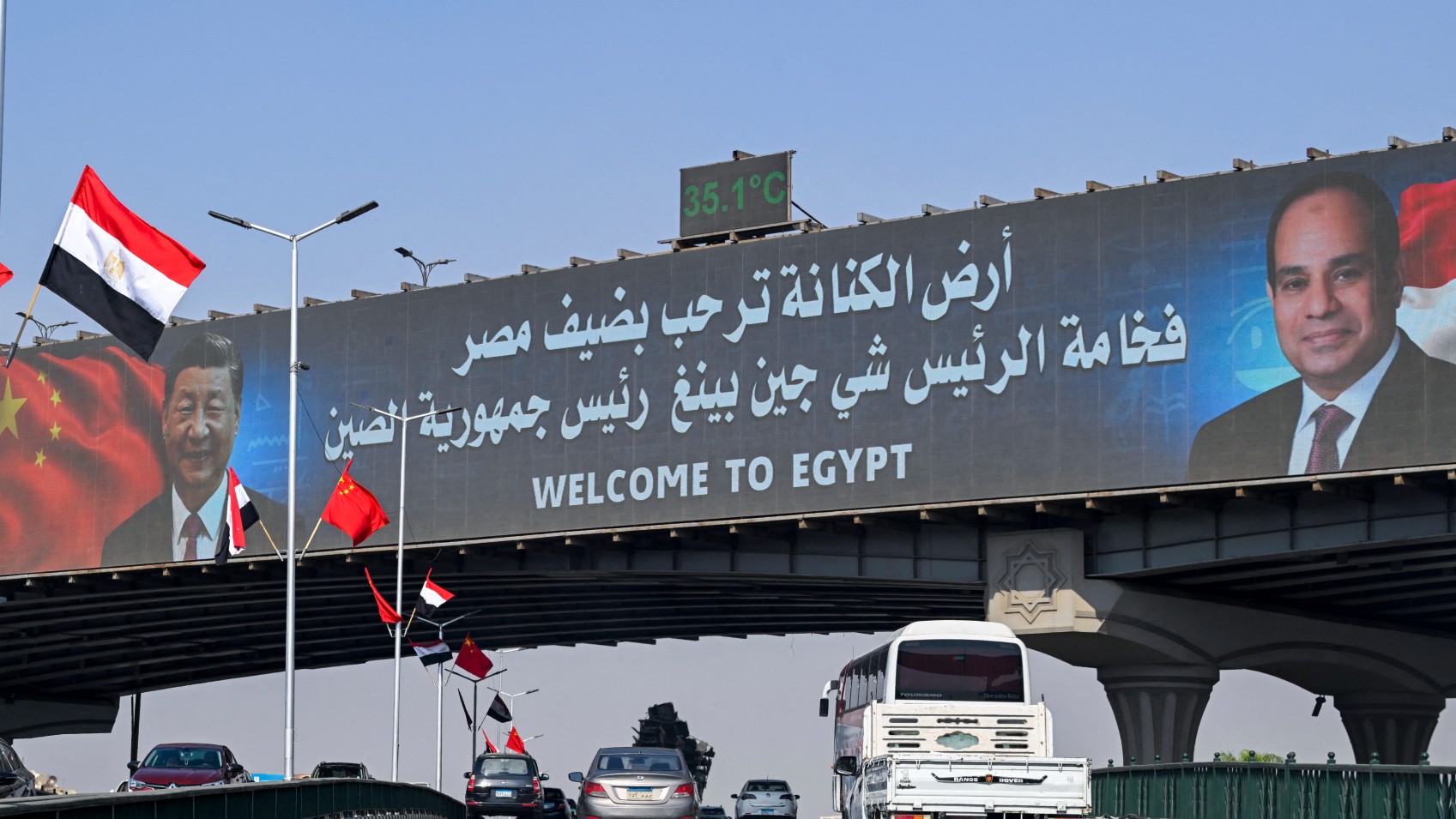
As China’s president conducts a landmark state visit to Egypt to mark 70 years of diplomatic ties, western commentary has once again framed the engagement through a familiar lens: a calculated bid to expand Beijing’s regional influence at Washington’s expense. This zero-sum geopolitical reading overlooks the core reality shaping Sino-Egyptian relations. The partnership is driven not by great-power competition, but by decades of grounded, results-driven economic cooperation that directly serves Egypt’s domestic development priorities. To reduce the visit to the framework of the US-China rivalry ignores the tangible industrial, infrastructural and technological Sino-Egyptian progress, while dismissing Cairo’s own economic strategy to diversify its global partnerships. Unlike transactional geopolitical alliances that dominate Mena diplomacy, Beijing understands ties with Egypt to be anchored in practical, long-term economic collaboration tailored to Cairo’s most pressing developmental needs. The most prominent example is the Teda Suez Economic and Trade Cooperation Zone, one of China’s most successful Belt and Road industrial hubs in the Mena region. After years of steady expansion, the zone now hosts around 200 enterprises spanning manufacturing, new materials, textiles and logistics, drawing more than $3.8bn in investments. New MEE newsletter: Jerusalem Dispatch Sign up to get the latest insights and analysis on Israel-Palestine, alongside Turkey Unpacked and other MEE newsletters The zone has created 10,000 direct jobs, according to official data, and supported more than 80,000 indirect employment opportunities across Egypt’s industrial and service sectors, generating steady tax revenues for the national treasury. Crucially, the zone is not a symbolic political project: it has helped Egypt localise industrial supply chains, reducing reliance on imported manufactured goods, while boosting export capacity across Africa and the Middle East. Filling structural gaps Transport and urban infrastructure cooperation has delivered equally transformative on-the-ground outcomes. The 10th of Ramadan light rail project, a key Sino-Egyptian joint venture, connects central Cairo with the New Administrative Capital and eastern suburban industrial zones. The line has eased crippling urban traffic congestion, cut commuting times for hundreds of thousands of residents, and underpinned the orderly expansion of Egypt’s new capital district. These infrastructure investments are filling gaps that traditional western donor programmes have long overlooked in favour of security-focused aid. In recent years, cooperation has rapidly expanded into high-growth, future-oriented sectors, forming a new pillar of bilateral economic ties. Seventy years of Sino-Egyptian diplomatic relations have evolved from political friendship into substantive, people-focused economic interdependence One such project is the Obelisk solar-storage integrated project, Egypt’s largest utility-scale photovoltaic and energy storage facility, now powers approximately 1.6 million local households with clean, affordable electricity. Built with customised technology adapted to Egypt’s harsh desert climate, the project bolsters the country’s renewable energy transition and helps stabilise its overstretched national power grid. In the digital and high-tech industries, the two sides have signed five key memoranda of understanding covering optical cable manufacturing, software outsourcing, semiconductor research and data-centre construction, alongside a dedicated $300m tech investment fund. These agreements support Egypt’s goal of building a domestic digital economy and upgrading its high-tech industrial ecosystem. Even cross-cutting strategic projects carry clear economic, rather than geopolitical, purposes. The EgyptSat-2 satellite, launched with Chinese technical support in 2023, provides Egypt with independent high-resolution remote sensing capabilities. The technology supports domestic agricultural planning, urban construction, disaster prevention and resource management, strengthening Egypt’s self-sufficiency in critical spatial data infrastructure. Complementing these tech initiatives, the planned $2bn China-Egypt trade city project envisions an integrated commercial and logistics hub spanning several million square metres, which would enhance Egypt’s role as a regional trade gateway linking Africa, the Middle East and Eurasia. Balanced foreign policy This track record of pragmatic economic delivery explains why the “US-China rivalry” framework fails to reflect local realities. Washington’s traditional Middle East engagement has centred on military partnerships, security assistance and geopolitical containment, with economic cooperation often secondary and conditional on political alignment. By contrast, Chinese investment in Egypt is purely development-focused, free of ideological strings or bloc-political demands. Every major joint project responds to publicised Egyptian government priorities: industrial localisation, renewable energy transition, urban modernisation, and digital economy upgrading. Cairo’s balanced foreign policy further undermines the side-taking narrative. Egypt has consistently refused to be drawn into great-power competition, viewing Chinese partnership as a complementary addition - not a rival alternative - to its existing western ties. Why Egypt is seeking new financial allies in the east Read More » Chinese industrial investment fills structural gaps left by traditional western capital, which tends to favour energy and financial sectors while neglecting grassroots manufacturing and infrastructure upgrades. Deepening Sino-Egyptian economic cooperation ultimately strengthens Egypt’s strategic autonomy, enabling it to pursue a more diversified, resilient national economy, with greater room for independent policymaking. Of course, China’s growing economic footprint in Egypt brings practical challenges, including local industrial competition, technology transfer expectations, and project management coordination. But these are normal technical and commercial frictions between long-term economic partners, not symptoms of great-power rivalry; they are resolved through bilateral working groups and iterative project adjustments. Ahead of Chinese President Xi Jinping’s visit, the core agenda was unmistakably economic. Any regional security coordination discussed during the trip will serve the ultimate goal of stable development, as regional peace is a prerequisite for sustained economic investment and growth. Seventy years of Sino-Egyptian diplomatic relations have evolved from political friendship into substantive, people-focused economic interdependence. To frame this presidential visit as a US-China contest does a disservice to both countries’ strategic agency, and ignores years of tangible development gains for Egyptian communities. This visit is not about rivalry or dominance. It is about consolidating a proven, pragmatic economic partnership, supporting Egypt’s modernisation agenda, and building a more stable, prosperous regional economic landscape free from zero-sum great-power logic. The views expressed in this article belong to the author and do not necessarily reflect the editorial policy of Middle East Eye.
Why China-Egypt cooperation has nothing to do with great-power rivalry
Full Article
Original Source
Read the full article at Middleeasteye →KhanList aggregates and links to publicly available news content. We do not host full articles from third-party sources. Always verify important information with original sources.