
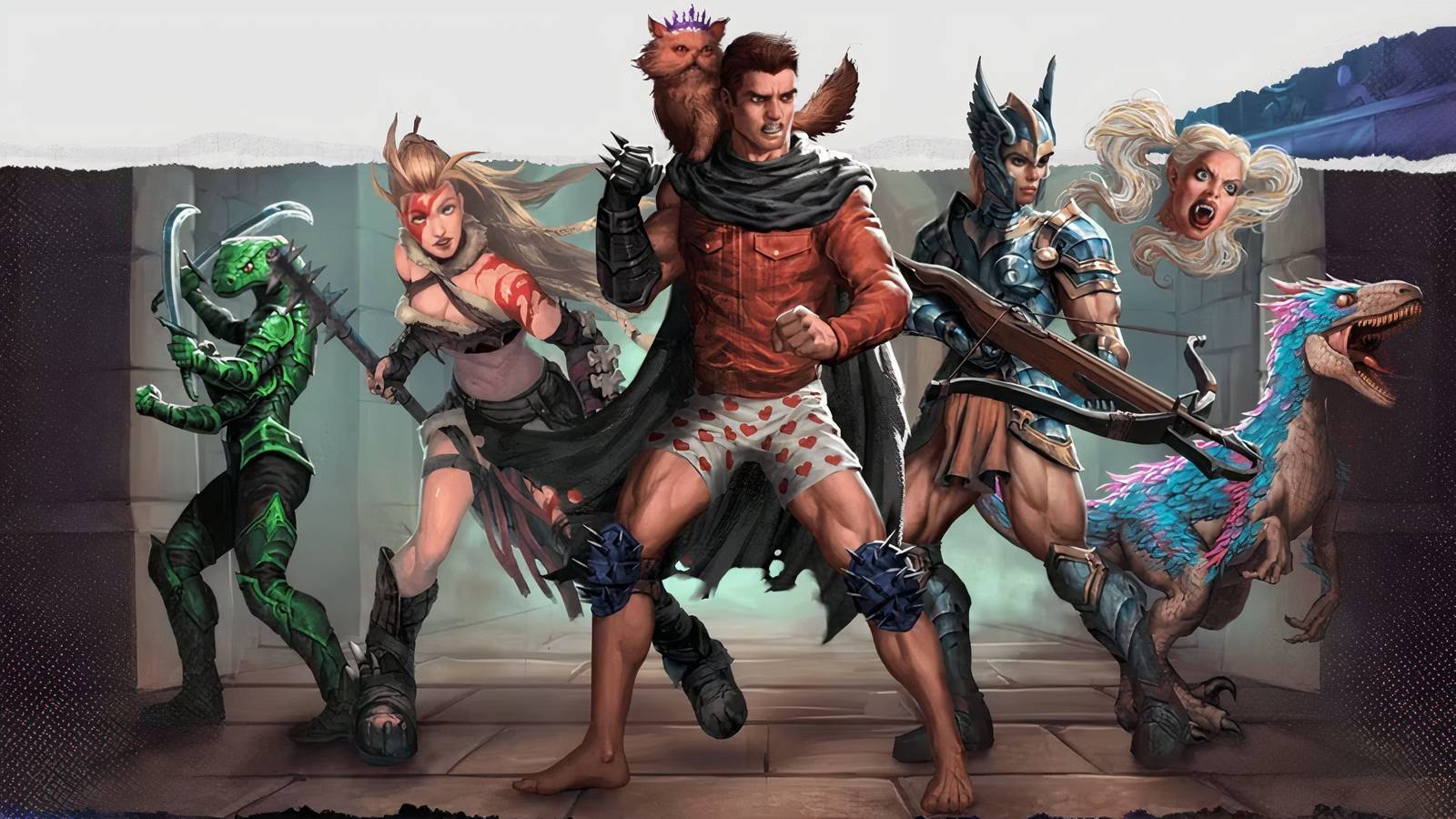
Published Nov 27, 2026, 8:57 AM EST Nicholas Becher is a gaming journalist with an MFA in Creative Writing from FAU. With extensive experience playing video games, he covers all forms of gaming content at Screen Rant, from breaking news to the latest fan theories. Most-played games range from Clair Obscur to Civ to Elden Ring to Halo 2 and beyond. Arguably one of the most consequential decisions in Carl's experience through the World Dungeon in Dungeon Crawler Carl is when crawlers are forced to choose a race on the third floor. It's a daunting decision considering the lack of understanding everyone in the dungeon have about what's going on at that point, let alone what's in store on the upcoming floors. While many crawlers opt for races that have immediately clear benefits to their character builds, Carl makes a somewhat unconventional decision to become a "Primal." It's a choice that becomes integral to the larger story, especially as Matt Dinniman gradually expands the scope of the series to explain what's going on in the "metanarrative" (i.e., what's happening in the universe outside Earth). Choosing a race seems like a pretty straightforward RPG mechanic on the surface, but Carl's decision actually ties into some of the biggest mysteries in the Dinniman's story. Understanding what Primals are, why Carl chooses to become one, and the mystery shrouding their history has major implications for how the entire series ultimately ends. !!! WARNING: THIS ARTICLE CONTAINS SPOILERS FOR DUNGEON CRAWLER CARL !!! Why Carl Chooses The Primal Race In Book 2 When Carl is presented with his race options upon entering the third floor in Carl's Doomsday Scenario, there are several good choices for his particular build, including Hobgoblin and Sasquatch. However, Carl ultimately decides he wants to keep his human form, both for personal reasons and because of how it might negatively impact his popularity among viewers. The Primal race lets Carl retain his appearance and human-associated skills while unlocking exclusive Earth-based classes. The biggest selling point, however, is that Primals can train all higher-tier skills up to level 20, so there's way more long-term potential despite some immediate drawbacks. Mordecai explains that few crawlers who've chosen this race have managed to make it far enough to benefit, largely because training skills beyond level 15 is much harder than the first 15 levels. Interestingly, before his decision, Carl asks Mordecai about what Primals actually are, learning that they were an ancient civilization that mysteriously disappeared following an intergalactic war. What neither Carl nor readers realize at this point is that Dinniman is planting the seeds for arguably the biggest revelation in the entire series. Everything We Know About The Primal Race In Dungeon Crawler Carl While the Primals are a major mystery throughout the earlier Dungeon Crawler Carl books, things kick up a notch once we reach the epilogue of The Eye of the Bedlam Bride, which fundamentally changes our understanding of the species. We switch perspectives to that strange vagrant from the earlier floors that everyone forgot about, Agatha, who reveals that the dungeon's system AI is essentially an enslaved, resurrected Primal, and that two opposing factions of "Residuals" are trying to recruit it. Book 7 expands on these revelations through Paulie, who explains the relationship between biological life, Primal Engines, and the harvesting of planetary resources. However, it's not until A Parade of Horribles that we finally learn the circumstances surrounding the Primals' actual disappearance hinted at in Book 2. Grigori reveals that the Primals wanted to eliminate conflict entirely by gradually extinguishing their biological civilization and merging their consciousnesses into a "collective intelligence" or sort of hive mind. This ultimately resulted in yet another war and the creation of something called a "Eulogist," not to mention the near-total extinction of the original species, with the "Apothecary" surviving as the last physical Primal. Probably the biggest revelation comes when Carl realizes that the dungeon's sapient NPCs, mobs, and gods are themselves manifestations of this collective intelligence, just like the system AI. The Primals never truly disappeared, and Carl learns that their suffering is tied to the existence of the World Dungeon itself. How Carl's Race Will Matter In The Final Chapters Credit: Dandy House There's a point in Book 7 where Carl's race is clearly going to become massively important in the remaining story: during Carl and Katia's shared dream experience in This Inevitable Ruin. Carl essentially enters Katia's mind, and he even briefly experiences the thoughts and emotions of others around him. Victory theorizes that this phenomenon could be linked to the communal nature of Carl's Primal race, although she also acknowledges the possible influence of Shi Maria and the new Eye of the Bedlam Bride tattoo on Carl's chest. In Book 8, Lucia Mar complicates the mystery even further by describing herself and Carl as "vessels" within the same metaphorical river that Carl keeps going on about throughout the series. Considering what we now know about the collective consciousness of the original Primals, these moments are very unlikely to be coincidental. Carl's race could potentially give him a unique way of interacting with the system AI or even the Eulogist itself. With Grigori now threatening to expand its dominion throughout the galaxy and the Ascendency battles changing the shape of civilization itself, Carl's Primal race decision is going to become incredibly important as Dungeon Crawler Carl comes to an end. Dinniman has been playing the long game since Book 2, and it's just a matter of time before we see how it all comes together. Dungeon Crawler Carl Publisher(s) Penguin Random House Publication Date September 21, 2020 Number of Pages 444 ISBN# 979-8688591507
Why Carl Chose The Primal Race In Dungeon Crawler Carl (& Why It Matters)
Full Article
Original Source
Read the full article at Screenrant →KhanList aggregates and links to publicly available news content. We do not host full articles from third-party sources. Always verify important information with original sources.