
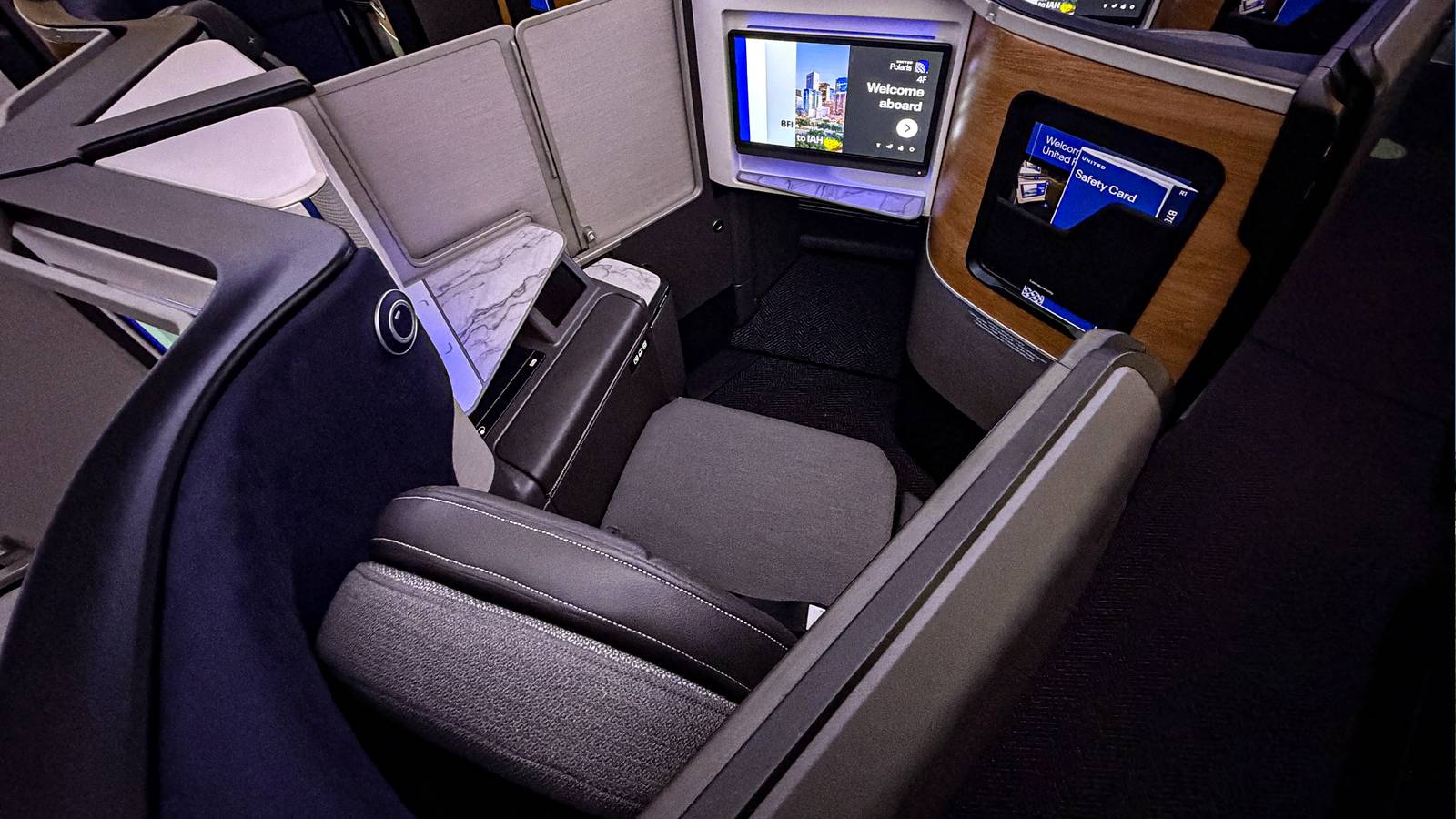
The introduction of sliding privacy doors into modern business class cabins has completely changed the premium passenger experience, moving from open reverse-herringbone layouts into private, cocoon-like suites. So many flyers celebrate the addition of personal doors on flagships like United Airlines' new Boeing 787-9 Polaris suites or American Airlines' Flagship configurations, though in the background, strict regulations have to be met. A suite door is not just a comfort feature, as it is also a barrier between a passenger and an emergency exit, drawing intense scrutiny from aviation authorities. Business class suite doors therefore need extensive additional safety certification to satisfy the demands of global safety authorities. From 16g crash testing to strict 90-second emergency egress mandates, introducing doors into the cabin requires special exemptions, meticulous testing, and regulatory approvals that frequently lag behind the delivery of the aircraft itself. Safety In The Worst Case Scenario Aviation regulators once evaluated premium cabin seating primarily through the lens of traditional structural integrity, restraint systems, and standard evacuation pathways. Traditional open lie-flat business class seats presented straightforward compliance paths because flight attendants and evacuating passengers had clear, unobstructed lines of sight and immediate access to aisles. When manufacturers began designing suites with doors, however, these established certification frameworks proved insufficient to address the new variables introduced by partitioned personal spaces. The core regulatory concern centered on emergency evacuation under worst-case conditions. According to Federal Aviation Administration (FAA) mandates, any commercial aircraft must be capable of a full evacuation within 90 seconds in total darkness, with half of the emergency exits blocked and amid simulated passenger panic. A closed or jammed sliding door at the start of an emergency could potentially impede a disoriented or panicked passenger from exiting their suite. Consequently, regulators need to be able to see extensive documentation and demonstration proving that a suite door's design, latching mechanism, and breakaway features will not meaningfully delay egress. Furthermore, cabin doors are governed by strict regulatory classifications, as detailed by Sofema Aviation. Because standard airworthiness rules did not anticipate partial-height sliding doors dividing passenger seats from exit paths, airlines and seat manufacturers must regularly apply for regulatory exemptions or special conditions. These tailored requirements impose rigorous oversight on how doors operate, so that the pursuit of luxury never compromises baseline aviation safety. How Are Doors Tested? Basic egress clearance is just the beginning, as suite doors need to withstand extreme forces and operational stress during flight to get certification. Every premium seat model incorporating a door is subjected to punishing dynamic 16g sled tests, which simulate the immense G-forces of a survivable crash landing. During these tests, the door structure, locking pins, and track mechanisms need to remain intact. This is to show that structural flexing of the airframe does not jam the door shut and trap a passenger inside their suite during an emergency. In addition to crash dynamics, modern cabin engineering also must account for rapid decompression and airflow management. As highlighted in Simple Flying analysis, tightly sealed suite doors can alter cabin pressure equalization and oxygen mask deployment patterns during a rapid decompression event. Regulators need to see proof that air can flow freely between the enclosed suite and the main cabin volume so that passengers are not starved of supplemental oxygen or subjected to dangerous pressure differentials if hull integrity is compromised at altitude. The rigorous engineering demands mean that seat development cycles are frequently prolonged. When Qatar Airways partnered with Adient to develop the Ascent seat for its 787-9 fleet, achieving regulatory compliance for the sliding door mechanism contributed significantly to a two-year program delay, culminating in FAA certification being completed in January 2021. When Can The Door Be Used? Credit: British Airways Even after a suite door successfully passes structural crash tests and evacuation trials, its operational use is still heavily restricted during critical phases of flight. FAA exemption documents and cabin safety guidelines dictate that suite doors must be locked in the open position during taxi, takeoff, and landing (TTL). The reason is that flight attendants need to have an unobstructed view of all seated passengers and all exit pathways should be entirely clear during the most statistically vulnerable phases of flight. Cabin crew bears ultimate responsibility for enforcing these operational rules. Flight attendants are trained to verify that all suite doors are securely latched open before pushback and landing. Passengers are only permitted to close their privacy doors once the aircraft has reached stable cruise altitude, and crew members have the ability to manually override, unlock, or slide open any door instantly from the aisle in the event of an emergency evacuation or passenger incapacitation, as shown in coverage from Runway Girl Network. What is clear here is that a lot of oversight and careful management goes into each and every business class seat, while, from a passenger's perspective, all that can be seen is the comfort and excellent inflight experience that such a product advertises. Marketing campaigns will always emphasize the total privacy of closed-door suites, but regulatory reality dictates that this seclusion is strictly a cruise-altitude amenity, not just a totally unmonitored private room. When The Regulations Outlast The Aircraft Arrivals Credit: United Airlines Suite door approvals involve complex human-factors testing and specialized evacuation modeling, so the certification process frequently lags behind the delivery of the aircraft itself. This regulatory timing gap has created a notable phenomenon across major global carriers where airlines take delivery of brand-new aircraft equipped with suite doors, only to fly them with the doors locked open for months while waiting for final paperwork to clear. A prominent example unfolded when United Airlines introduced its new 787-9 Polaris suites, using the Adient Ascent seat architecture, which entered commercial service on April 22, 2026, with their privacy doors locked open. The FAA did not grant final certification for the door mechanisms until approximately three months later in August 2026. Once approved, United began the methodical process of unlocking the doors across its subfleet one aircraft at a time. American Airlines experienced a similar regulatory lag with its 787-9 and A321XLR business class suites, while European carriers like KLM Royal Dutch Airlines have occasionally blocked off specific premium seats while awaiting regulatory clearance. The lag potential is what exemplifies the independent nature of suite door approvals. An aircraft can be fully airworthy and certified to carry passengers, but its headline privacy feature may be legally unusable until the specific door exemption is formally signed off by regulators. To many passengers, this reality can seem totally absurd, and they would be entirely justified in this judgment, but rules are rules and exist for a very good reason. Matching The Expectations Of High-Paying Passengers Credit: American Airlines The complex certification timeline for suite doors is naturally a persistent communication challenge for airlines. High-yield business class passengers paying premium cash or mileage fares often expect immediate access to the advertised suite product, including the closing privacy door that gets placed in the middle of most marketing materials. When an aircraft operates with its doors locked open due to pending regulatory approval, customer service teams will need to manage passenger disappointment, but equally need to be upfront and transparent about onboard product availability. Airlines mitigate these expectations through flexible booking disclaimers and proactive notifications. For carriers undergoing fleet retrofits or introducing new interior designs, such as United's phased Polaris rollouts or American's widebody cabin updates, operational transparency helps prevent backlash from frequent flyers who book specifically for the enclosed suite experience. As regulatory bodies become more familiar with partial-height sliding doors, manufacturers are streamlining early certification filing processes to minimize the gap between aircraft entry-into-service and full door activation. Ultimately, the rigorous certification path required for business class suite doors is just one of many areas that can be pointed to that show commercial aviation prioritizes safety above all else. What appears to the passenger as a simple sliding partition is, in the eyes of regulators, a critical evacuation variable that needs its due process, otherwise known as an exhaustive engineering verification. Balancing Comfort & Safety Credit: Qantas The necessity for additional aircraft safety certification on business class suites with doors is just one part of the constant tension between passenger luxury and rigorous regulatory oversight. Turning an open cabin into a network of private suites means working through complex 16g crash dynamics, rapid decompression airflow standards, and strict 90-second emergency evacuation mandates. With many airlines continuing to push the boundaries of premium cabin design, the regulatory hurdles behind features like sliding privacy doors shed light on why new aircraft introductions often face operational delays. From locked-open maiden flights to final FAA sign-offs, every suite door represents a triumph of aviation safety engineering designed to protect passengers, while still keeping the comfort that passengers are seeking.
Why Business Class Suites With Doors Need Additional Aircraft Safety Certification
Full Article
Original Source
Read the full article at Simpleflying →KhanList aggregates and links to publicly available news content. We do not host full articles from third-party sources. Always verify important information with original sources.