
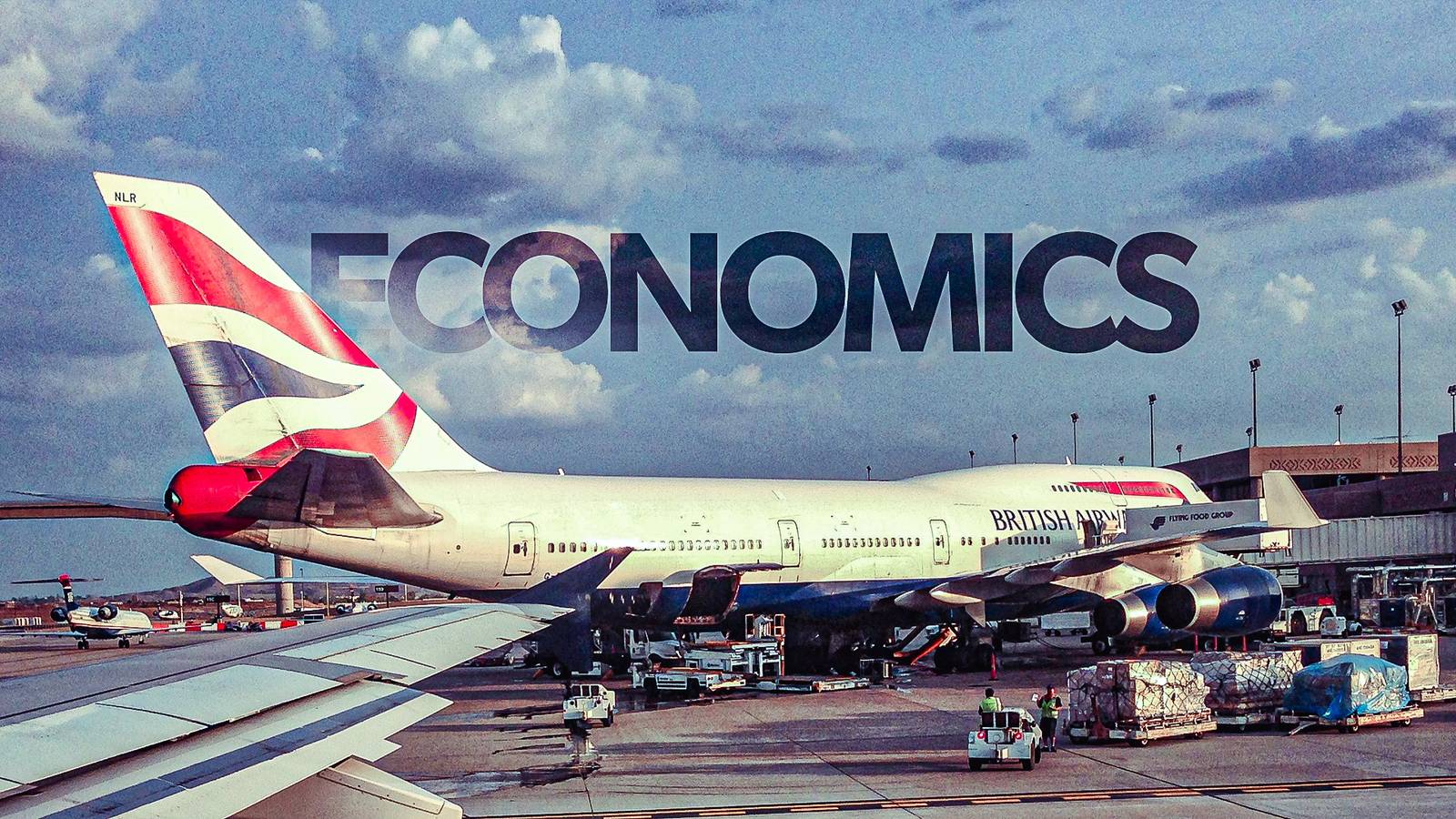
While the passenger Boeing 747-400 is most closely associated with Lufthansa today, it had long been British Airways that was the world's largest operator of this aircraft, the most successful variant of the iconic 747. At one point, British Airways operated 57 747-400s, and these planes flew all over the world while simultaneously serving as the British flag carrier's flagship aircraft and its largest widebody fleet. However, all good things must come to an end, and the carrier's entire fleet of 747-400s was retired during the COVID-19 pandemic. British Airways was already gradually retiring its 747-400s by the time the pandemic struck, but the onset of the global healt crisis expedited this process. At the time, the main aircraft that British Airways was using to replace the 747-400 was the Airbus A350-1000, a twin-engined carbon-composite widebody that British Airways now operates 18 examples of. While the A350-1000 is large and hugely capable, its strengths are actually quite different from what the 747-400 once offered. Understanding British Airways' 747-400 Fleet Credit: SON-Media I Shutterstock With such a large fleet of 747-400s, British Airways divided its aircraft into subfleets that featured different layouts. In the fleet's later years, Planespotters.net shows that the airline had two main layouts for its 747-400s. One configuration featured 14 First seats, 52 Club World seats, 36 World Traveller Plus seats, and 235 World Traveller seats, for a total of 337 seats. Most of British Airways' 747-400s featured this layout leading up to the 2010s, but this fleet was reduced before the type was fully retired. The other layout that was in use at the time of the type's retirement featured 14 First seats, 86 Club World seats, 30 World Traveller Plus seats, and 145 World Traveller seats, for a total of 275 seats. This is an exceptionally low amount for the massive 747-400, and it's entirely because of the massive Club World business class cabin. This is the configuration to serve destinations such as New York, while the denser layout could be used for a wider variety of destinations, such as Las Vegas. While the premium-heavy subfleet was smaller at one point, British Airways retired fewer of them in the 2010s, and a majority of the 747s retired during COVID featured this layout. In 2019, British Airways began taking delivery of the Airbus A350-1000, and crucially, the carrier used these to replace its denser 747-400s rather than the premium-heavy subfleet. To replace those aircraft, British Airways had other aircraft in mind. What The A350-1000 Does For British Airways Credit: Matheus Obst I Shutterstock British Airways configures its A350-1000s with 56 Club Suites, 56 World Traveller Plus seats, 219 World Traveller seats, and no First cabin, for a total of 331 seats. This is almost the same number of seats as the airline's 747-400s with the denser layout, which had a First cabin, fewer Club World seats, fewer World Traveller Plus seats, and more World Traveller seats. The aircraft still has relatively large premium cabins and is used where the carrier needs a high-capacity aircraft, but not necessarily one with First. The A350-1000 has become known for being an exceptionally fuel-efficient aircraft with longer range than almost any other type in service today, and with the ability to carry meaningful payload across long distances too. For British Airways, however, the main appeal of the A350-1000 was its combination of size and fuel efficiency. It's significantly larger than a Boeing 787-10, while it burns less fuel than the similarly-sized Boeing 777-300ER, and the type is regularly seen in destinations such as Philadelphia, Las Vegas, Phoenix, and more. Some of the places where British Airways deploys the A350-1000 can have a price-sensitive customer base. As such, the A350-1000's low operating costs are extremely beneficial. Meanwhile, the plane can still earn substantial premium revenue on services to major business destinations such as São Paulo and Hong Kong. The A350-1000 is highly effective in this role, and British Airways holds six more orders for the type, but it wasn't the only aircraft type that British Airways used to replace the 747-400. What Else Replaced The 747-400 At British Airways? Credit: Robin Guess I Shutterstock British Airways took delivery of 12 Airbus A380-800s from 2013 to 2016, which replaced part of the airline's 747-400 fleet. Because of how slot-constrained British Airways' main hub at London Heathrow Airport (LHR) is, the A380's increased capacity is ideal for the airline, considering that it's not always easy to add another frequency. The A380 offers significantly more seats in Club World, World Traveller Plus, and World Traveller, with British Airways deploying the A380 to destinations like Los Angeles, San Francisco, and Johannesburg. The A380 works well for British Airways on high-demand routes where the airline operates limited daily frequencies. Meanwhile, to directly succeed the premium 747-400s on routes with high business demand, British Airways ordered 16 777-300ERs with eight First seats, 76 Club Suites, 40 World Traveller Plus seats, and 132 World Traveller seats, for a total of 256 seats. The 777-300ER seats fewer passengers than the 747-400 but has much lower operating costs, while the A380 seats significantly more passengers. In addition to these aircraft, British Airways also planned to use the Boeing 777-9 to replace the last of its 747-400s. This ended up not occurring, due to delays with the 777-9 and the COVID-19 pandemic resulting in the early retirement of the 747-400 fleet. The original retirement date set by British Airways for the 747-400 was 2024, by which point the airline would have received a significant number of 777-9s. As a whole, British Airways intended to use four aircraft types to replace the 747-400 for different missions, three of which are twinjets. How The 747-400 Became Obsolete Credit: Benson Truong I Shutterstock The 747-400 was the largest airliner in the world when it first came out in 1989, and it also had the longest range of any commercial jet in service. At the same time, the aircraft was a major technological step forward for the 747 platform, and it was also efficient for its time. Airlines bought the 747-400 in droves, while British Airways used its huge fleet to perform multiple types of missions and serve a variety of roles. At the time, it did these roles better than any other aircraft type in service for British Airways' needs. However, as time went on, Airbus and Boeing introduced new aircraft similar in size to the 747-400, while also having true ultra-long-haul range. The 777-300ER entered service in 2004, while the A350-1000 entered service in 2018. Major Widebody Aircraft Entry Into Service Boeing 747-400 1989 Airbus A340-600 2002 Boeing 777-300ER 2004 Airbus A380-800 2007 Boeing 747-8 2011 Airbus A350-1000 2018 Boeing 777-9 2027 (projected) Most importantly, however, these two airliners sip fuel in comparison to the 747-400 as a result of their twin-engine configuration, reduced weight, and more advanced aerodynamics. The 747-400 is outdated, having entered service 37 years ago, and there are multiple types that can do its job better. The A380 is the exception, as it is a massive quadjet that seats significantly more passengers than the 747-400. The aircraft delivers superior economics to the 747-400, and when full, the aircraft can be incredibly profitable. However, it's also risky to operate an aircraft with such high operating costs and upwards of 450 seats, while the 777-300ER and A350-1000 are just as or more economical to operate. Still, British Airways does have a clear need for an aircraft this large given its constraints at LHR. The Final Replacement For The 747-400 Credit: Ian Dewar Photography I Shutterstock In 2019, the International Airlines Group placed an order for 18 777-9s with 24 options, all of which were to be allocated to British Airways. IAG later converted six options to firm orders, giving British Airways 24 777-9s. Originally, these planes would have been the final replacement for the 747-400, although COVID and the 777-9's delays have changed these plans. This aircraft was meant to enter service in 2020, but this has been pushed back to 2027 at the earliest, while British Airways' examples may only start coming in 2028. The 777-300ER and A350-1000 can effectively replace the 747-400 by being somewhat smaller but far more efficient. The 777-9, however, is stretched compared to the 777-300ER, and it has nearly as much interior floor space as the 747-400. What's more, the aircraft has a new carbon-composite wing and new General Electric GE9X engines, cutting fuel burn further. This makes it an extremely cost-effective aircraft, and its size makes it the most direct replacement for the 747-400. BA's layout for the 777-9 has not been revealed. However, it is known that the aircraft will feature an all-new First suite, which is also currently being retrofitted on the A380. In addition, British Airways tends to favor large premium cabins, a practice which will likely carry over with the 777-9. The actual routes that the 777-9 will operate are also unknown, but as the 747s have been fully retired for years, the long-awaited arrival of the 777-9 should allow for more long-haul growth since they're not replacing a type currently in the fleet.
Why British Airways Decided To Replace Its Longstanding Quadjet Fleet With Large Twin-Engine Airbus A350-1000s
Full Article
Original Source
Read the full article at Simpleflying →KhanList aggregates and links to publicly available news content. We do not host full articles from third-party sources. Always verify important information with original sources.