
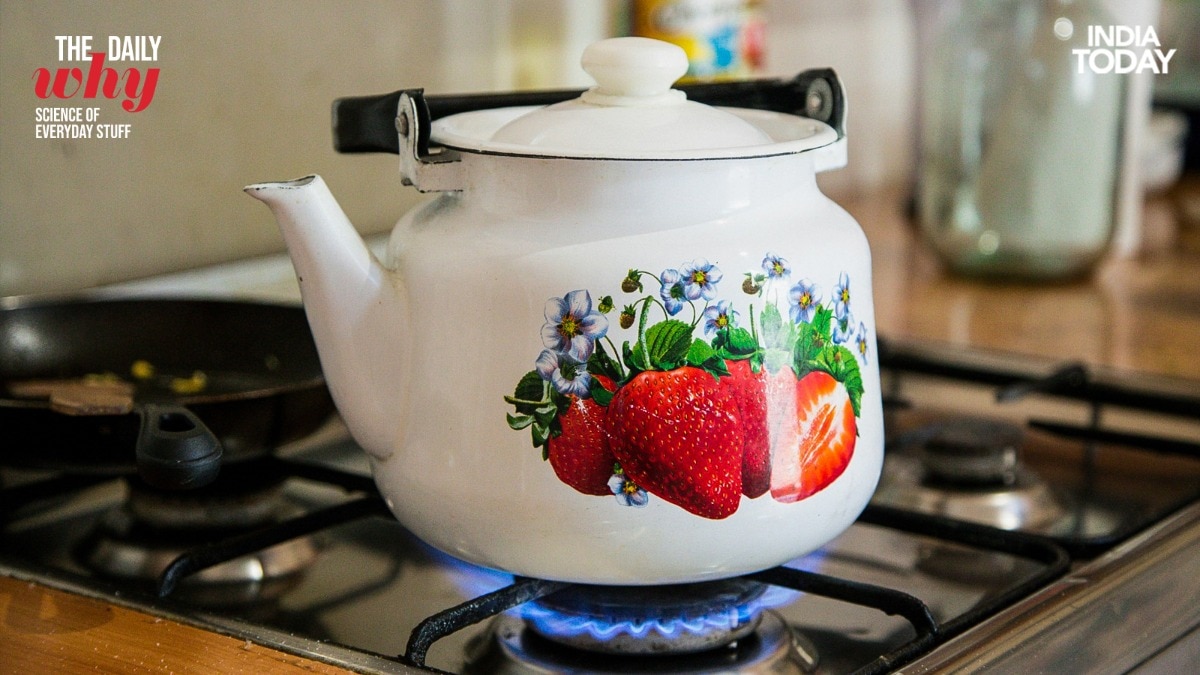
Every Indian home has its own small ritual of faith. A steel pot on the stove, water shivering, then trembling, then breaking into a rolling boil. Steam climbs the kitchen window like a promise. Somewhere a mother lowers the flame, satisfied that whatever was lurking in that water has been burnt away.She has won half the battle. The other half never caught fire.Boiling is India's oldest water filter, older than any brand, any membrane, any machine. Against germs, it is magnificent. Against chemicals, it is a bystander, and sometimes, quietly, an accomplice.This week, as a dispute over bromate in a packaged water sample made headlines, an old kitchen habit deserves a fresh look. WHY DOES BOILING KILL GERMS?Bacteria, viruses and parasites are alive, and life, at that scale, is astonishingly delicate. Their bodies are built from proteins, long chains folded into exact shapes, like paper creased into origami. The shape is everything. Heat unfolds the paper, and once a protein loses its fold, it cannot do its job. The microbe dies.The World Health Organization (WHO) says bringing water to a rolling boil is enough to kill the microbes behind cholera, typhoid and hepatitis A. Through every monsoon and every flood, that humble pot has saved more lives than anyone will ever count.WHY DON'T CHEMICALS DISAPPEAR? Chemicals have no life to lose. Arsenic, fluoride, nitrate and bromate sit dissolved in water the way salt hides in dal: invisible, patient and entirely unbothered by the heat. They do not break apart at 100 degrees Celsius, and most of them have no wish to leave.The water does leave. It rises as steam, and the pot grows emptier, but the chemicals stay behind like guests who refuse to go home after the party. The same amount of chemical now lives in less water, so its concentration rises. Boil long enough, and the water becomes slightly stronger in precisely the substances you hoped to banish. That pot of boiling water kills germs, but not arsenic, fluoride, nitrate or bromate. As the steam rises, some chemicals actually become more concentrated. Here is the science, and what really works. (Photo: Unsplash) Science has caught this happening even in tiny amounts. Boiling tap water in a saucepan nudged bromate up from 3.7 to 4.4 micrograms per litre, according to a study published in the Journal of Environmental and Public Health.The same study found that trihalomethanes fell. These are volatile by-products of chlorination, meaning they slip easily into the air, and they drift out with the steam. Boiling can chase away the chemicals that want to fly. Those that want to stay, it cannot touch.WHY DOES THIS MATTER IN INDIA?Much of India drinks from beneath its feet, and groundwater carries the memory of every rock it has passed through. The Central Ground Water Board has found arsenic and fluoride above safe limits in many states.Arsenic is concentrated in parts of the Ganga and Brahmaputra plains, and fluoride in large stretches of Rajasthan, Telangana and beyond. Nitrate, washed down from fertilisers and sewage, seeps into wells across farming country. Boiling destroys germs by unfolding their proteins, but chemicals survive heat. (Photo: Unsplash) India's drinking water standard, IS 10500, set by the Bureau of Indian Standards, allows no more than 0.01 milligrams of arsenic per litre, 1 milligram of fluoride (1.5 where no other source exists), and 45 milligrams of nitrate. Over years, arsenic can mark the skin and seed cancers, excess fluoride can stain teeth and stiffen bones, and nitrate is dangerous for infants.No flame on earth can boil these away.WHAT ACTUALLY REMOVES THEM?Reverse osmosis, or RO, is a gatekeeper. It pushes water through a membrane with pores so fine that most dissolved salts, including arsenic, fluoride, nitrate and bromate, are turned away at the door. It works, but it is a wasteful guard: a large share of water is discarded, and useful minerals are thrown out too.Activated carbon, the black granules inside many filters, is a sponge with an almost unimaginable inner surface. It traps chlorine, odours and many organic chemicals, including some pesticides, but dissolved salts like fluoride and nitrate slip past it. For those, targeted filters such as activated alumina, which captures fluoride, do the work.The truest cure lies upstream: testing local water, choosing cleaner sources and treating water long before it reaches a kitchen.So keep boiling your water when germs are the enemy. The ritual is wise. But some dangers do not burn. They simply wait, dissolved and silent, for the steam to clear.- Ends
Why boiling water kills germs, but not the chemicals hiding in it
Full Article
Original Source
Read the full article at Indiatoday →KhanList aggregates and links to publicly available news content. We do not host full articles from third-party sources. Always verify important information with original sources.