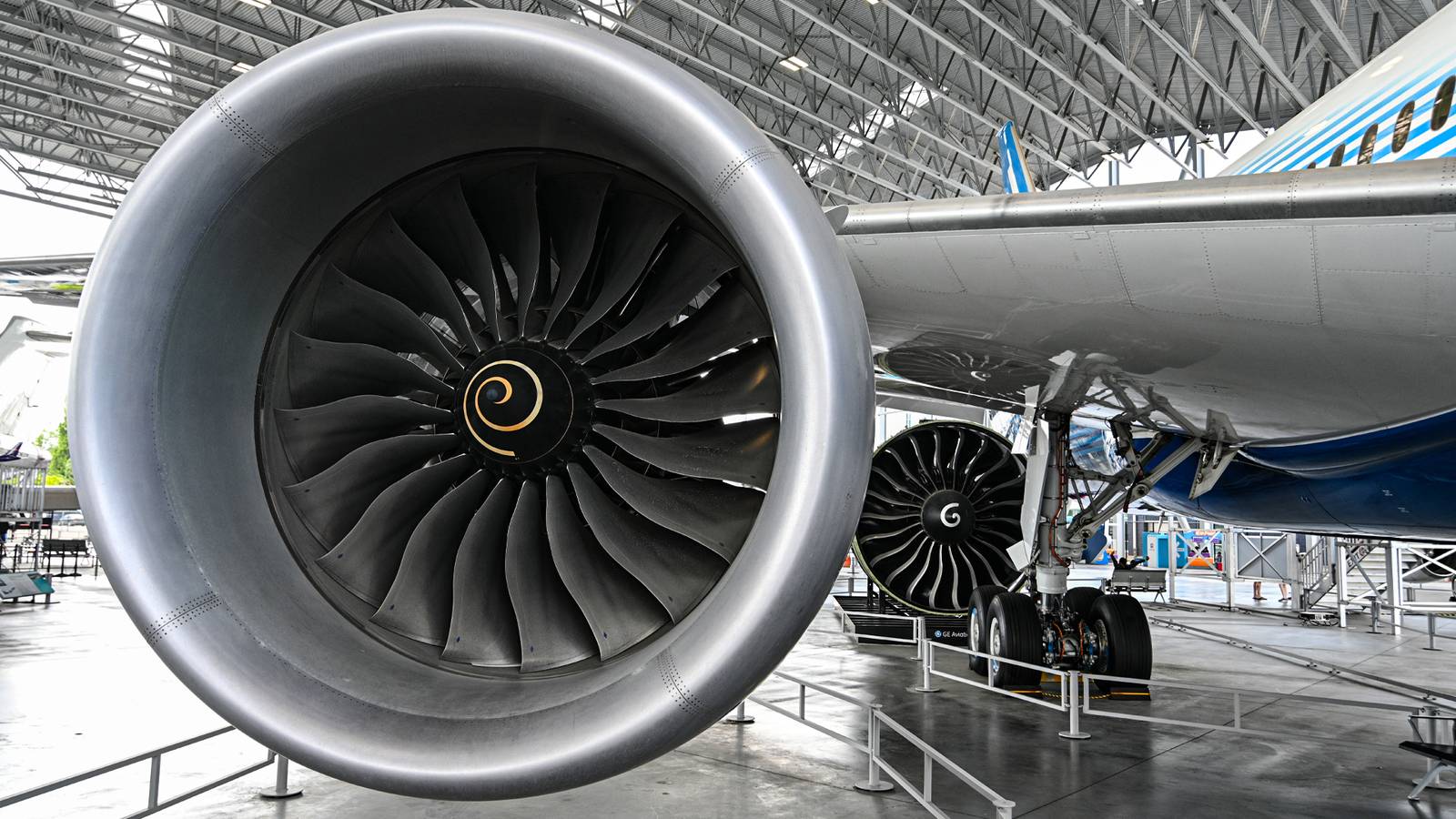
Published Aug 17, 2026, 3:00 PM EDT Airline and Airport Management Graduate, Student Commercial Pilot and Commercial Aviation Writer. Based in London & Nagoya The relationship between a major airframe manufacturer and a tier-one engine supplier rested on a strict boundary line. Airframe builders designed the jet, engine makers built the powerplant, and formal engineering reviews managed technical issues. Placing the Senior Vice President who previously led the Boeing 737 MAX program directly onto Rolls-Royce factory floors, Boeing crossed that boundary, ushering in an unprecedented breakdown in trust between two aviation giants. The arrival of a top American executive in Derby was an operational takeover driven by a crisis that threatened to cripple the world's most advanced widebody program. With roughly 25% of the global 787 Dreamliner fleet facing sudden operational limits, Boeing needed its own authority on the ground to oversee repair schedules and parts production. So what specific technical breakdown inside the Trent 1000 engine was severe enough to force Boeing to manage a supplier's shop floor? The Inflight Failures That Grounded The Dreamliner Credit: Shutterstock After a series of alarming inflight turbine damage events that exposed critical durability flaws deep within the Trent 1000 engine core, Boeing had to act decisively. According to The Seattle Times, back-to-back engine failures on consecutive days amid Air New Zealand flights led operators and safety regulators to confront severe structural cracking on intermediate pressure compressor blades. Rather than suffering routine wear over thousands of flight hours, internal components were degrading prematurely, creating an immediate risk of uncontained engine shutdowns over long oceanic crossings. The technical breakdown quickly spiraled into a global operational crisis, directly affecting nearly a quarter of all active Dreamliners. According to IndustryWeek, preliminary inspections revealed that 30% of inspected engines had blade cracking severe enough to require immediate removal from the wing. To fix the issue across the global fleet, engineers faced a massive retrofit program covering 383 engines, a technical overhaul projected to take up to four years. For airlines relying on the 787 for long-haul flagship routes, multi-year maintenance backlogs threatened daily flight schedules and core passenger revenue. Engine removals mounted, and overhaul centers struggled to process the influx of damaged powerplants, prompting aviation safety regulators to step in with draconian operational restrictions. With regulators slashing inspection intervals and restricting extended twin-engine operations, flight planners suddenly found their widebody fleets constrained by rules that made international operations nearly impossible to sustain. Removing The Appeal Of The 787 Credit: Shutterstock Drastically restricting ETOPS ratings destroys the core commercial justification for flying twin-engine widebodies across oceans. When airworthiness authorities downgraded affected 787s from 330-minute to 140-minute ETOPS, long-haul flight paths had to be completely rerouted to stay within range of emergency diversion airports. Transpacific and transatlantic routes that once relied on direct ocean crossings ended up in longer, fuel-heavy detours, instantly turning profitable flights into financial liabilities for international carriers. Wolf Street reported that the slash to 140 minutes stripped the Dreamliner of its primary operational advantage over the more dated four-engine aircraft. Compounding this flight-path restriction, aviation authorities shortened mandatory engine inspection intervals from every 200 flights to every 80 flights, according to IndustryWeek. This meant many airlines had to pull 787s out of service nearly every month for ultrasonic blade scans. When technicians uncovered micro-cracks, a severe shortage of replacement titanium compressor blades added three extra days to each repair cycle. At the peak of this supply bottleneck, IndustryWeek noted that 43 Dreamliners sat parked simultaneously on tarmac worldwide, stripped of powerplants and awaiting parts. These stringent mandates left airlines burning cash while widebody assets sat grounded on airport ramps. Field engineers and routine technical updates were no longer sufficient to manage the growing anger of major fleet customers. This mounting operational chaos pushed Boeing leadership to abandon traditional customer-supplier boundaries and make a move virtually unprecedented among top-tier aerospace partners. In Comes The Oversight Credit: Shutterstock Keith Leverkuhn, Boeing's Vice President at the time, wasn't sent to write progress reports. His role became vital to the manufacturer's future because Boeing needed a heavyweight program director who could restructure supply-chain problems and gain authority immediately. Having also served as the general manager who steered the 737 MAX through development to its initial entry into service ahead of schedule, Leverkuhn possessed the technical know-how to bypass corporate bureaucracy. As reported by The National and IndustryWeek, Leverkuhn functioned as Boeing's eyes and ears inside Rolls-Royce facilities, monitoring day-to-day blade manufacturing, overhaul throughput, and engine delivery timelines. According to official statements from Rolls-Royce, the engine maker publicly characterized the arrangement as a great example of partnership working. On the factory floor, however, the structure operated as an aggressive, real-time operational intervention. Leverkuhn's team scrutinized every aspect of the repair workflow, tracking each of the 383 affected engines needing retrofits and ensuring that replacement parts were routed directly to 43 grounded Dreamliners awaiting powerplants. Embedding a senior executive helped streamline communication and accelerate shop-floor logistics, but it could not instantly fix the underlying physics destroying the turbofans. The core technical defect lay deep inside the engine core's high-temperature environment, where extreme thermal loads and atmospheric contaminants caused premature cracking across intermediate-pressure blades faster than factories could cast replacement components. Customers Turning To Rivals Credit: Shutterstock Rolls-Royce's financial reckoning was swift and staggering. Cash provisions, operational penalties, and direct compensation to airlines quickly pushed the cost of the Trent 1000 crisis beyond £1.38 billion ($1.8 billion). Under long-term TotalCare service contracts, Rolls-Royce was still responsible for maintaining engine availability. When engines were pulled for unexpected teardowns, the manufacturer was forced to pay millions in downtime penalties, source temporary lease engines at high rates, and reimburse airlines for disrupted long-haul schedules. The BBC highlighted how these non-underlying charges dragged down civil aerospace margins for multiple fiscal years, turning what was projected as a profitable engine line into a major cash drain. High-profile launch customers experienced severe operational problems. Air New Zealand, a flagship operator of the Trent 1000, saw up to five of its 14 787-9 examples grounded at the height of the shortages. According to Airline Ratings, the operational disruption prompted Air New Zealand to turn to rival General Electric for subsequent widebody powerplants, selecting the GEnx-1B for its replacement fleet. Similar disruptions across carriers such as Virgin Atlantic and British Airways allowed General Electric to solidify a dominant position on the 787 program, leaving Rolls-Royce to defend a shrinking market share. Stabilizing the business needed more than financial reserves and customer payouts. As Keith Leverkuhn and joint engineering teams shifted from emergency fleet containment to permanent fixes, the focus moved to re-engineering intermediate- and high-pressure turbine components. The ambition evolved from simply keeping engines flying to delivering next-generation durability packages, ultimately culminating in the Trent 1000 TEN and subsequent Trent 1000 XE standard, aimed at tripling time-on-wing intervals and restoring operator trust. The Eventual Fix Credit: Shutterstock The permanent resolution came from moving beyond temporary inspections and launching a radical overhaul of the turbofan's internal thermal dynamics. To stop the destructive heat that cracked internal components, engineers developed a comprehensive redesign of the high-pressure turbine blade and its cooling aperture network. As detailed by official Rolls-Royce engineering releases, the re-engineered high-pressure turbine blade increased cooling airflow by 40%, dropping core blade metal temperatures by 81°F (45°C). This hardware evolution culminated in the Trent 1000 XE standard, an upgraded package that integrated high-pressure turbine blade structures already proven across millions of flight hours on the Airbus A330neo's Trent 7000. Following European Union Aviation Safety Agency clearance for the redesigned components, Rolls-Royce initiated a global retrofit campaign across maintenance centers in the United Kingdom, Germany, and Singapore to convert the existing Trent 1000 TEN fleet by late 2027. Where early-generation Trent 1000 variants required wing removal after short operational windows, the XE durability package quadrupled blade cooling efficiency and tripled baseline time-on-wing performance, giving operators three to six years of uninterrupted service. The XE package restored technical reliability to the Dreamliner fleet, a sigh of relief for Rolls-Royce. Still, the crisis's operational trauma permanently altered how major aircraft manufacturers manage critical tier-one vendors. Embedding a senior airframe executive inside an engine plant showed that modern widebody programs cannot tolerate isolated supplier boundaries when flagship routes are at risk. All Problems Can Be Put To Rest? Credit: Shutterstock Embedding Keith Leverkuhn inside Rolls-Royce assembly lines set a precedent that redefined the boundaries of tier-one aerospace manufacturing. In an era where modern turbofans operate at the very edge of thermodynamic limits, engine reliability is no longer just a vendor's technical responsibility; it is a shared systemic risk that directly dictates the commercial viability of a widebody program. Whether this intrusive co-dependency permanently restores market trust will depend on the global order book over the coming years. Rolls-Royce Chief Executive Officer Tufan Erginbilgic is embarking on a multiyear £1.2 billion ($1.6 billion) durability enhancement program across its engine lineup to regain ground lost to the 787, where General Electric's GEnx-1B engine currently powers more than 1,200 active airframes. Recent order wins, such as LATAM Airlines returning to the Trent platform with an order for six Trent 1000 XE engines, alongside new commitments from carriers like Somon Air, show that proven time-on-wing extensions are beginning to rebuild carrier confidence, even after key operators like British Airways previously moved fleet additions toward rival GE hardware. Rolls-Royce targets complete fleet conversion to the XE standard by late 2027 across maintenance facilities in the United Kingdom, Germany, and Singapore, and airline technical directors are monitoring real-world operational data to verify that the upgraded hardware eliminates unexpected shop visits. As highlighted in official Rolls-Royce operational releases, the true test of this embedded oversight strategy will not be measured in corporate partnership announcements or joint audit reports, but in whether international airlines can fly oceanic routes year after year without an airframe builder ever having to send another executive to take control of a supplier's factory floor.
Why Boeing Quietly Embedded Its Own Executive Inside Rolls-Royce's Factory To Fix The 787's Engine
Full Article
Original Source
Read the full article at Simpleflying →KhanList aggregates and links to publicly available news content. We do not host full articles from third-party sources. Always verify important information with original sources.