
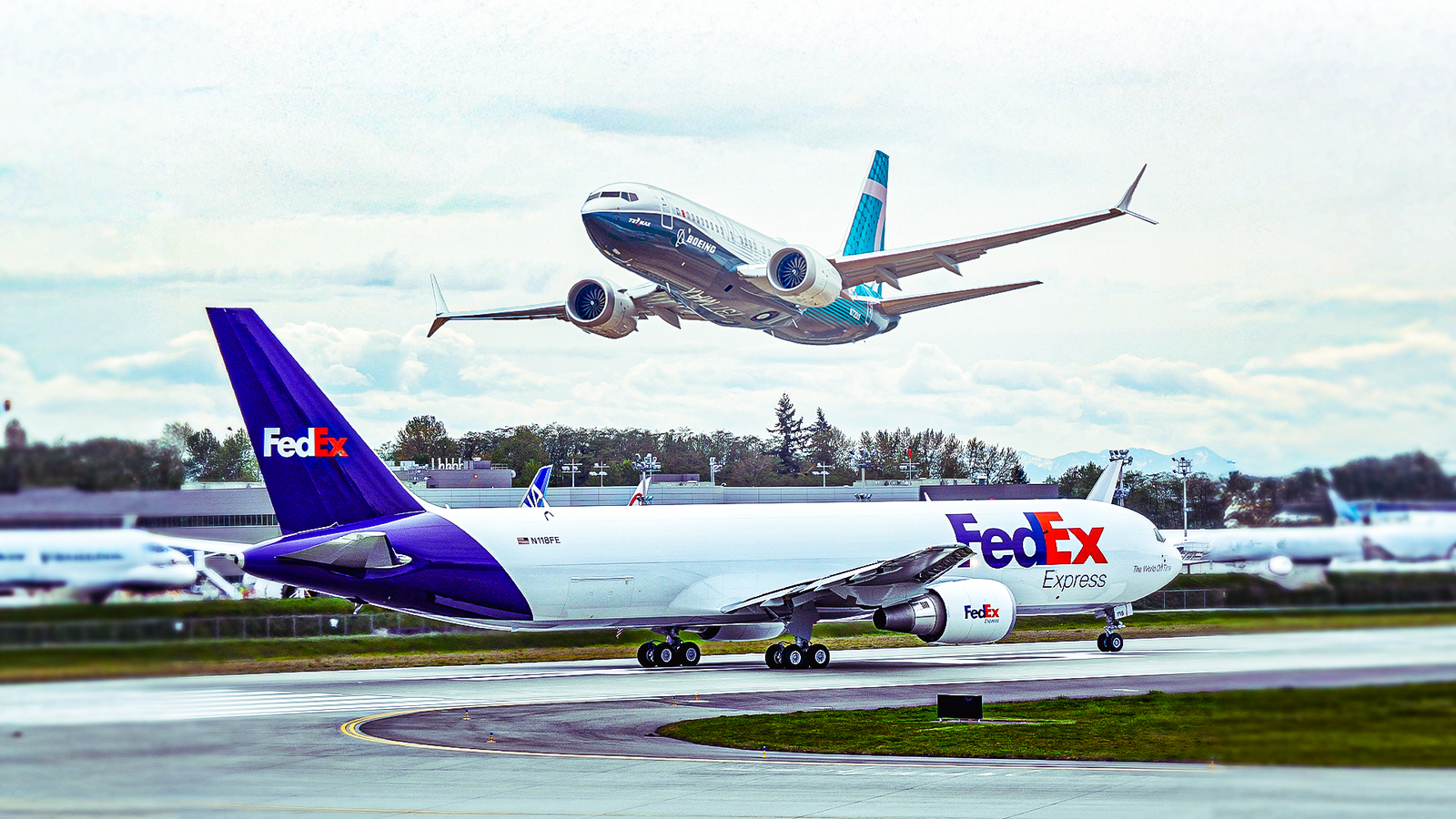
Published Nov 19, 2026, 1:00 AM EST Luke Diaz is a freelance military writer with experience with active duty experience in the US Navy as well as defense and industrial engineering. He is a former Naval Flight Officer who performed tactical air control on the carrier-based E-2 Hawkeye. Sign in to your Simple Flying account Inside Boeing's gigantic Washington plants, two of the longest-running jets in commercial aviation history are headed toward very different destinations. Workers in Renton installed huge 69-inch CFM LEAP-1B turbofans on the 737 MAX to bring the 1960s airframe up to 21st-century standards. However, thirty miles north in Everett, Boeing is winding down production of its twin-aisle 767 in 2027, despite being decades newer with its 1980s-era engineering. Still, the doors have not shuttered yet, and thanks to a lifeline from Congress, the classic widebody is continuing to roll off the line with the same engines. Inside those historic walls, Boeing’s engineers constantly push the cutting edge of aerospace technology. Yet they applied that innovation unevenly between their two oldest active product lines, pouring $3 billion into modernizing the 737 while letting the veteran 767 face its looming sunset. Boeing's decision to abandon the 767 results from both significant changes in the global cargo industry and commercial realities. The 737 MAX's extensive wing and engine redesigns were justified by thousands of airline orders, but the 767's niche cargo demand could never justify a similar overhaul, particularly since shippers are shifting their focus to the upcoming 777-8F freighter and the 777-200F passenger-to-freighter conversions are being slowed down by a severe shortage of used donor airframes. Why The 737 Got New Engines, And The 767 Didn’t Credit: InsectWorld | Shutterstock Boeing scrapped plans for a brand-new single-aisle aircraft after Airbus received over 1,000 bookings for its A320neo and former exclusive customer American Airlines threatened to defect, as Leeham News wrote. Rather, the 737 airframe, whose fundamental cabin cross-section dates back to the 1954 Dash 80 prototype, was modified with CFM LEAP-1B turbofans at a cost of almost $3 billion. In order to preserve single-aisle market dominance, the 737 MAX upgrade served as a crucial stopgap. It quickly compensated for itself with hundreds of airline orders and allowed Boeing to develop a future clean-sheet replacement. While building the next-generation 777-8F and awaiting the availability of used passenger 777 donor airframes for P2F conversions, Boeing continued to operate the twin-aisle 767-300F as a temporary freight bridge. Freighter sales were restricted to a few dozen aircraft a year since commercial airlines switched from ordering passenger 767s to the lightweight, composite 787 Dreamliner in 2014. As global e-commerce and pandemic-era cargo demand increased, the 767-300F, powered by its reliable but thirsty 1980s-era General Electric CF6-80C2 or Pratt & Whitney PW4062 engines, performed adequately as a temporary stopgap. However, the International Civil Aviation Organization's carbon emission regulations, which go into effect on January 1, 2028, cannot be met by those older engines. After that cutoff, a temporary cargo stopgap would become a permanent commercial closure because the 767 could not lawfully comply with international routes without contemporary engines. With the 737 MAX, massive narrowbody order volume turned an aging fuselage into a multi-decade cash engine that absorbed billions in engineering upgrades. With the 767-300F, low production rates meant Boeing treated the jet purely as a low-cost bridge to hold cargo customers until the 777-8F arrived and P2F conversion lines ramped up, willingly letting regulatory deadlines retire the commercial airframe rather than sinking new capital into a sunsetting program. Why Boeing Rejected A Congressional Rescue Credit: InsectWorld | Shutterstock By enacting a rule that exempted freight jets weighing between 396,832 and 529,109 pounds from new carbon restrictions until 2033, Congress attempted to give Boeing a crutch. This effectively shielded the 412,000-pound 767-300F. However, Stephanie Pope and Kelly Ortberg, Boeing executives, declined to rely on a complete legislative rescue. Foreign authorities in Europe and Asia could prohibit the aircraft from landing because a US exemption has no power outside the US, keeping brand-new freighters behind American borders and damaging their resale value for international carriers like FedEx and UPS. Instead of leaning on political life support, Boeing chose to shut down commercial 767 production in 2027 and absorb a $400 million charge. Unlike the 737 MAX, where massive passenger volume easily funded complex structural and engine upgrades, the low-volume 767 could never justify a multi-billion-dollar overhaul. Boeing recognized that stretching an outdated freighter through domestic loopholes made far less sense than focusing its engineering muscle on programs with real global demand. Everett's widebody engineers are advancing the next-generation 777X family toward final FAA certification in early 2027, opening the door for the new 777-8F freighter, while the 737 MAX line continues to produce the high-volume revenue flow required to finance ongoing enhancements. Instead of producing geographically limited 767s, Boeing allowed the commercial line to shut down on time, keeping Everett's equipment focused on military KC-46 tankers while its new widebodies get ready to take over international cargo routes. Why The 767 Couldn’t Copy The 737 MAX Blueprint Credit: Markus Mainka | Shutterstock Putting new engines on the 737 was no simple bolt-on modification despite the appearance to a casual observer. The modern LEAP-1B engine featured a huge 69-inch fan, forcing engineers to stretch the 737’s nose landing gear by eight inches and mount the engines further forward and higher on its low-slung 1960s wing. Applying the same MAX upgrade formula to the 767 seemed promising on paper because both aircraft have similar profiles and basic construction, though the 767 has a larger fuselage. Specification Boeing 767-300F Boeing 777-300ERSF (P2F) Boeing 777-8F Airbus A350F Engines GE CF6-80C2 or PW4062 GE90-115B GE9X-105B1A Rolls-Royce Trent XWB-97 Max Takeoff Weight 412,000 lb (186,880 kg) 775,000 lb (351,535 kg) 805,000 lb (365,140 kg) 703,275 lb (319,000 kg) Max Payload 116,000 lb (52.6 t) 222,000 lb (100.7 t) 260,145 lb (118.0 t) 244,710 lb (111.0 t) Range at Max Payload 3,255 nmi (6,028 km) 4,590 nmi (8,500 km) 4,410 nmi (8,167 km) 4,700 nmi (8,704 km) Total Cargo Volume 15,469 cu ft (438.1 cu m) 28,827 cu ft (816.3 cu m) 27,056 cu ft (766.1 cu m) 24,500 cu ft (693.8 cu m) Main Deck Pallet Positions 24 37 31 30 Wingspan 156 feet, 1 inch (47.57 meters) 212 feet, 7 inches (64.80 meters) 235 feet, 6 inches (71.75 meters) 212 feet, 5 inches (64.75 meters) Boeing’s engineering resources and factory tooling were already locked onto far bigger, future-ready platforms than the 767. Instead of pouring capital into a temporary bridge, Boeing preserved its engineering capacity for the next-generation 777-8F and more popular 777-200F, letting the 767 finish its final bridge run before handing its crucial air freight mission over to its successors. The Crushing Weight Of Modern Widebody Engines Credit: sorao.211 | Shutterstock Bolting a modern engine onto the 767 would require gutting the airplane’s internal structures and essentially changing every aspect. Its legacy aluminum wings were engineered to carry older engines weighing roughly 9,800 pounds each. Swapping in an advanced turbofan like the GEnx-1B would add over 3,700 pounds of extra dead weight per side. Supporting that heavy overhang would force Boeing to rebuild the wing’s internal ribs, spars, and titanium mounts, triggering a multi-billion-dollar safety certification that niche cargo sales could never pay back. The technology gap inside the engines was just as wide. 21st-century jets squeeze every drop of energy from fuel by running at extreme pressures and blistering heat, using space-age ceramic parts and single-crystal metal blades that survive temperatures above 3,000 degrees. That intense efficiency lets new engines burn far less fuel and easily pass tough global pollution rules. By contrast, the 767’s 1980s-era engines run at much lower pressures with traditional metal blades that cannot handle extreme heat. Those older thermal limits mean higher fuel burn and heavier exhaust that fail modern clean-air standards. Faced with rebuilding the entire wing just to carry heavier, hotter engines, Boeing accepted that upgrading the 767 was an engineering dead end. The Shrinking Cargo Middle Ground and the Military Fortress at Everett Credit: sorao.211 | Shutterstock Before the 2028 carbon cutoff, the commercial 767's demise was cemented by a market squeeze. After FedEx Express took delivery of its 152nd and final new 767-300F in May 2026, only 15 civilian orders remained on Boeing’s books, including seven for UPS and eight for an undisclosed buyer. Once those final commercial jets leave Everett before the 2027 deadline, the civil 767 will vanish permanently from Boeing’s lineup. By carrying 116,000 pounds of cargo across 3,255 nautical miles without burning as much fuel as larger widebodies, the 767-300F maintained a profitable middle ground for decades. That mid-size niche is mostly gone now. While extra-large twinjets like the Airbus A350F, Boeing 777F, and forthcoming 777-8F exceed the 767 in every parameter on long-haul international routes, upgraded single-aisle freighters increasingly dominate short domestic e-commerce flights. However, a military lifeline has ensured that the Everett assembly line itself continues to operate well into the 2030s. To fulfill significant orders for the KC-46A Pegasus aerial refueling tanker for the US Air Force and allies like Japan and Israel, Boeing will keep its 767 tooling operational because defense aircraft are exempt from commercial pollution regulations. This will close a legendary commercial chapter while solidifying its future as a military powerhouse. That military transformation sets the stage for the next chapter of this 1980s airframe’s remarkable survival. Outfitted with fly-by-wire refueling booms, defensive armor, and advanced cockpit displays borrowed from the 787 Dreamliner, the KC-46A Pegasus is quietly evolving far beyond its commercial roots. While the civilian 767 fades into history, its combat-ready twin is taking on high-stakes global refueling missions that will keep Everett’s assembly line vital for decades to come.
Why Boeing Added New Engines To 1 Of Its 2 Longest-Running Aircraft In Production
Full Article
Original Source
Read the full article at Simpleflying →KhanList aggregates and links to publicly available news content. We do not host full articles from third-party sources. Always verify important information with original sources.