
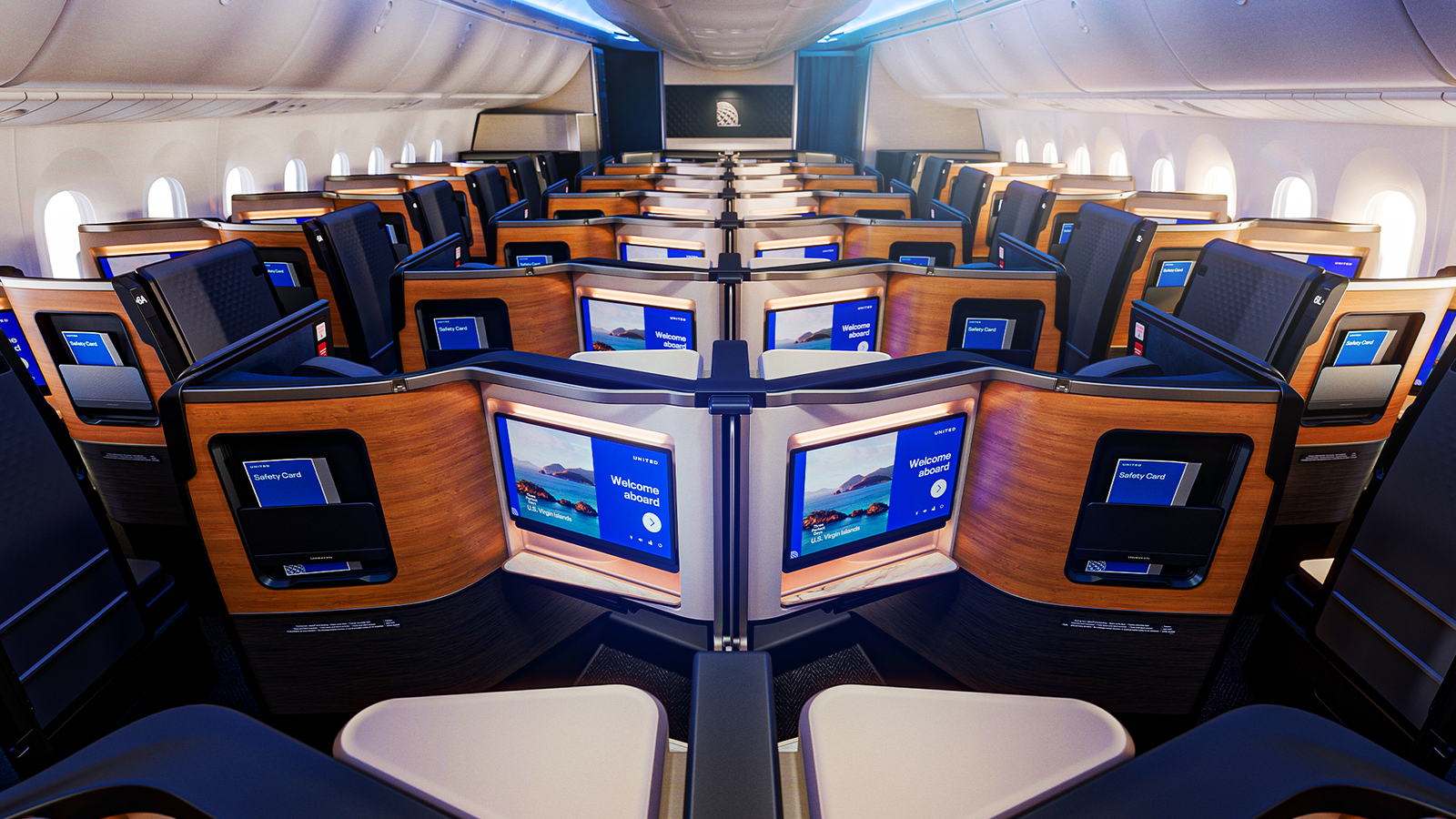
Published Nov 5, 2026, 1:00 AM EST Airline and Airport Management Graduate, Student Commercial Pilot and Commercial Aviation Writer. Based in London & Nagoya When Boeing launched the 787 Dreamliner, airlines celebrated its lightweight composite fuselage, lower cabin altitude, and game-changing fuel efficiency. When looking inside the forward cabin, many operators opted for dense 2-2-2 or 2-3-2 seating configurations. A decade later, those layouts are rapidly being torn out. Across the globe, legacy long-haul carriers are investing hundreds of millions of dollars to refit their 787-9 fleets with modern single-passenger suite designs. What began as a gradual customer preference has turned into a strict commercial rule. With passengers rejecting climbing over reclining seatmates and corporate travel policies enforcing higher hardware standards, airlines operating older twin-aisle grids are facing a very real choice. Either airlines modernize or lose high-yielding business. The issue is that upgrading a widebody cabin is not as simple as swapping chairs. The Desire For More Personal Space Airlines are replacing 2-2-2 business class cabins primarily to solve a problem known as the step-over factor. In a traditional 2-2-2 grid, window seat passengers whose chairs lie fully flat need to climb over a sleeping aisle neighbor to reach the lavatory or aisle. In an era when premium tickets routinely cost thousands of dollars, presenting high-yield flyers with a compromise on personal space has become a major commercial liability. British Airways provides a clear illustration of this cabin overhaul. As reported by One Mile at a Time, British Airways launched its 787-9 fleet with a high-density 2-3-2 Club World layout featuring 42 seats. In that alternating forward-and-rear-facing setup, middle and window passengers would have to move directly past their neighbor's footrest. To fix this, British Airways launched a fleet-wide retrofit program to replace the old cabin with 38 Club Suites arranged in a 1-2-1 layout with sliding privacy doors, according to Travel Spill. While British Airways gave up four business class seats in the process, the carrier gained a product that meets contemporary long-haul standards. Direct aisle access is no longer a luxury add-on for international travelers; it's now the baseline requirement for premium long-haul flying. However, removing the step-over factor is just the beginning of the reasoning for this cabin layout change. Keeping Up With Corporate Bookings The move to 1-2-1 layouts is also being driven, in part, by corporate travel procurement contracts. Corporate travel managers frequently specify direct aisle access and added personal privacy as non-negotiable criteria when negotiating preferred carrier agreements. Airlines that keep their older 2-2-2 layouts suffer a noticeable yield penalty, as high-spending corporate clients divert flight volume to competitors offering individual aisle access on competing routes. Long-haul carriers are committing significant capital to cabin overhauls in order to remain competitive. As announced in an official press release, Air India launched a $400 million multi-year fleet retrofit program, taking 787-8 and 787-9 aircraft with dated 2-2-2 seats and installing modern 1-2-1 direct-aisle business suites alongside dedicated premium economy cabins. Similarly, LATAM Airlines has embarked on a $360 million cabin redesign across its 787 fleet, replacing 2-2-2 frames with staggered 1-2-1 Recaro R7 suites to capture high-yield transcontinental traffic between South America, Europe, and North America. To offset the potential loss of business class floor space, airlines have become far more reliant on the expansion of premium economy as a cabin concept. Installed in a 2-3-2 layout on the 787, premium economy generates exceptionally high revenue per square foot by capturing budget-conscious business travelers and premium leisure flyers who are unwilling to pay full business rates, as detailed in Simple Flying analysis. The dual-cabin strategy lets carriers shrink or densify their forward business section without losing overall revenue. Are Business Class Cabins Shrinking? A common misconception among aviation enthusiasts is that transitioning from a 2-2-2 grid to a 1-2-1 layout automatically leads airlines to reduce their total business class seat count. It is true that carriers like British Airways opted to trade floor space for premium comfort, but modern seat geometry lets clever engineering teams maintain or even expand seat density by including overlapping footwells and angled geometry. As detailed by Seat Maps, Japan Airlinesinitial 787-9 international fleet featured 44 Sky Suite I seats arranged in a 2-2-2 configuration, where an Apex Suites layout gave every passenger direct aisle access via a narrow private corridor. However, when JAL launched its higher-density 203-seat 787-9 variant, it replaced the 2-2-2 setup with 52 Sky Suite III reverse herringbone suites arranged in a 1-2-1 grid. Angling the seats toward the windows and overlapping passenger footwells beneath adjacent side consoles, JAL actually gained 8 business class seats. As reported by TravelSort, this shift allowed JAL to satisfy surging corporate demand on medium and long-haul international routes even within the confines of its existing business cabin. Naturally, this clever spatial efficiency has its own set of compromises once passengers actually settle into their suites. Fitting four individual seats across a single row gives seat manufacturers a bigger challenge in managing strict spatial constraints, especially how comfort and density can coexist within the cabin. Working With Available Space Designing a high-density 1-2-1 business class cabin inside the 787-9 is quite different from a lot of other widebody aircraft, mainly because the cabin is naturally more limiting. The 787’s interior cabin width measures 18 feet (5.49 meters) across, making it roughly 1 foot, 3 inches (38 cm) narrower than a Boeing 777-300ER and 5 inches (13 cm) narrower than an Airbus A350. Fitting four individual suites across a tighter fuselage means seat manufacturers need to squeeze mechanical components, armrests, and foot cubbies into a narrower cross-section, often resulting in narrower hip room and tapered footwells compared to previous open-grid seats. As a result, passenger reviews highlight noticeable ergonomic trade-offs in certain 1-2-1 reverse-herringbone configurations. JAL’s older 2-2-2 Apex Suites offered a wide, open bed surface with unrestricted leg clearance, whereas its 1-2-1 Sky Suite III product features narrower hip space and a tapered footwell cubby that can feel restrictive to taller flyers when fully reclined into a 78-inch (198 cm) flatbed. Airlines are now turning to next-generation seat concepts like All Nippon Airways' THE Room FX suite for its 787-9 fleet. Developed with Safran Seats, THE Room FX utilizes alternating forward and rear-facing positions in a one-two-one layout, expanding seat width up to 41.5 in (105 cm) at its widest point while incorporating sliding privacy doors. The ingenuity here is the removal of complex heavy recline tracks in favor of a fixed sofa shell; ANA demonstrates that even though direct aisle access was the first step, sliding suite doors now define the new competitive baseline. The Era Of Sliding Doors While guaranteed direct aisle access defined the business class benchmarks of the 2010s, full privacy doors have become the non-negotiable standard for modern widebody deliveries. Airlines operating 787-9 aircraft are no longer just upgrading from two-by-2-2-2 layouts to gain aisle access, and are retrofitting existing 1-2-1 cabins to integrate sliding doors. Premium travelers increasingly view a fully enclosed suite as essential for restful long-haul travel across ocean sectors. The shift is clearly reflected in recent fleet investments across major North American and international carriers. As reported by One Mile at a Time, United Airlines configured its premium 787-9 fleet with 64 Polaris suites in a one-two-one layout, while American Airlines introduced its new Flagship Suite product featuring 51 suites with privacy doors on its delivered 787-9 aircraft. Similarly, Qantas utilizes a 42-seat 1-2-1 business suite arrangement on its 787-9 fleet, integrated into the cabin to give every passenger direct aisle access and high side-wall privacy. However, adding privacy doors adds notable engineering challenges for aircraft operators. Integrating mechanical sliding doors adds weight to each seat structure, typically between 10 lb and 15 lb (4.5 kg to 6.8 kg) per suite, which increases overall aircraft weight and fuel burn across a 15-hour flight sector. Furthermore, door tracks and latching mechanisms represent additional maintenance points that need regular inspection by engineering teams to ensure compliance with aviation safety regulations. The Configuration That Could Define A Legacy? The transition from 2-2-2 to 1-2-1 seating has marked the final obsolescence of open-grid business class cabins on long-haul 787-9 operations. As corporate travel policies continue to mandate direct aisle access and enhanced passenger privacy, legacy carriers maintaining older six-abreast configurations face mounting revenue penalties. The investments made by carriers like Air India, LATAM, and British Airways demonstrate that modernizing premium hardware is essential for securing high-yield international contracts. Over the next 12 to 24 months, complete fleet retrofits will further standardize the 1-2-1 landscape. With Air India completing its $400 million cabin modernization and LOT Polish Airlines finishing the installation of its new Recaro CL6720 suites across its Dreamliner fleet, six-abreast business class will virtually disappear from main-line transcontinental routes. Airlines that fail to complete these retrofits risk losing corporate market share to competitors offering fully enclosed suites. The competitive focus in widebody business class is shifting from aisle access to spatial optimization within the 787’s 18 ft (5.49 m) fuselage width. Seat manufacturers will continue refining composite materials to reduce door hardware weight while maximizing bed width and footwell space. As new long-haul aircraft enter service, the carriers that successfully balance passenger comfort, cabin density, and weight efficiency will be the ones that define the next decade of premium air travel.
Why Boeing 787-9 Operators Are Moving From 2-2-2 To 1-2-1 Business Class
Full Article
Original Source
Read the full article at Simpleflying →KhanList aggregates and links to publicly available news content. We do not host full articles from third-party sources. Always verify important information with original sources.