
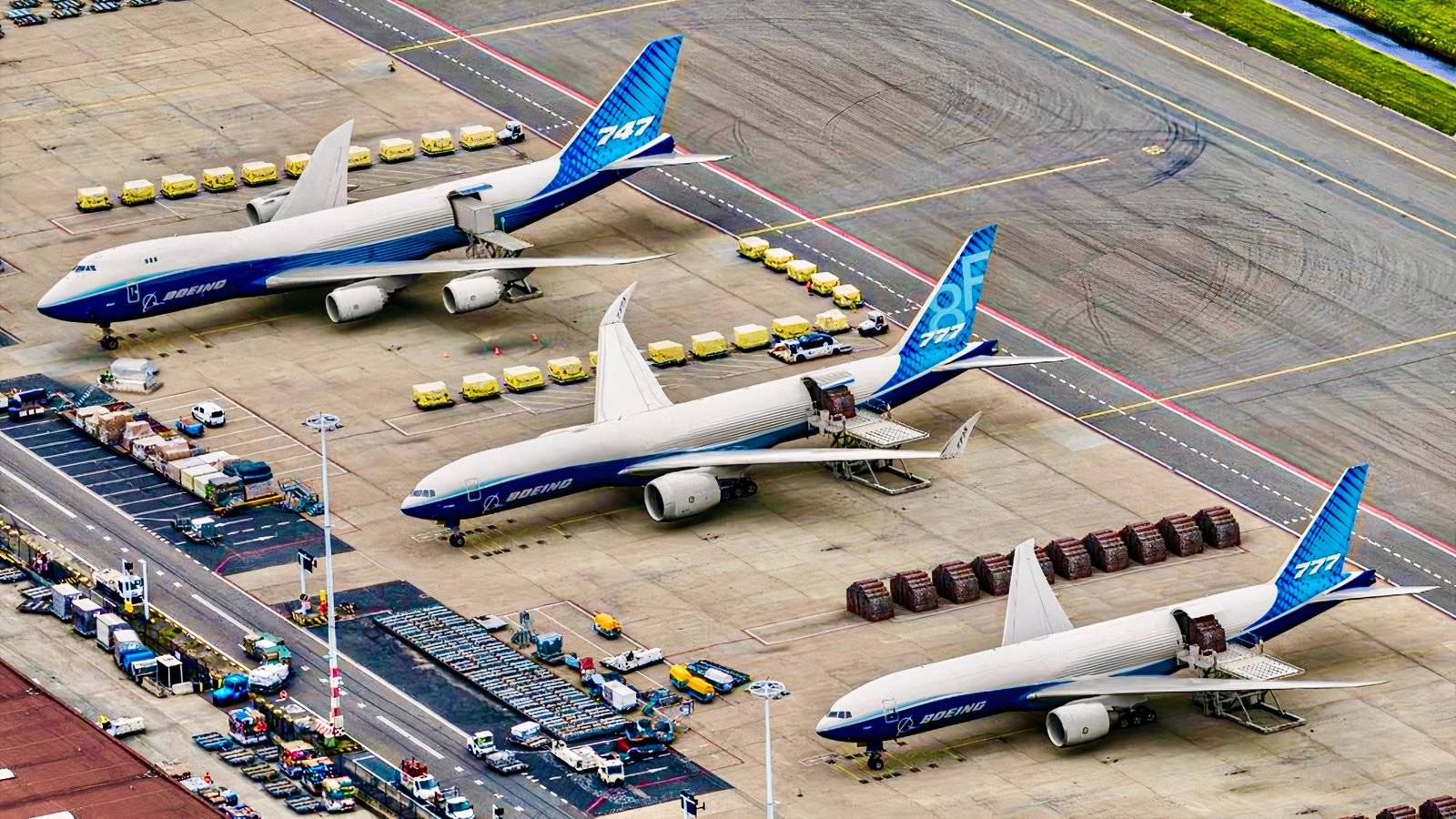
The Boeing 777 is helping the global air cargo industry address a growing shortage of large freighters, but the aircraft providing that additional capacity are becoming very difficult to find. As passenger airlines retain their widebody jets for longer and new-build freighters face production and delivery constraints, three conversion programs are competing to turn used 777s into dedicated cargo aircraft. The irony is that the industry's immediate solution depends on an aging aircraft supply that cannot be replenished indefinitely. For cargo operators, converted 777s offer an attractive way to obtain substantial payload capacity without waiting for a new-generation freighter. However, their fuel consumption, acquisition costs, and remaining service lives raise questions about their long-term commercial viability. With the Airbus A350F approaching entry into service and the 777-8F still in development, the converted 777 looks like a temporary answer to a problem that will require a more permanent solution. Why The Cargo Industry Is Turning To Used Boeing 777s Credit: Ryken Papy | Shutterstock Growing interest in Boeing 777 passenger-to-freighter (P2F) conversions is closely tied to a shortage of available large widebody freighters. Cargo airlines need more capacity, but the transition from existing production programs to next-generation aircraft has created a gap they can't fill immediately. Production constraints, certification delays, and changing emissions requirements have made used passenger aircraft an important source of additional capacity. The 777-300ER variant is particularly attractive because of its large fuselage, substantial structural capabilities, and established operational history. Originally designed for long-haul passenger services, the aircraft offers the dimensions and performance needed for demanding cargo operations. Converting an existing passenger aircraft also lets operators add capacity without waiting for a completely new aircraft to be manufactured. However, the supply of suitable aircraft is becoming a major limitation. Passenger airlines are keeping their 777-300ERs in service longer, partly because delays affecting replacement 777X aircraft have disrupted fleet-renewal plans. This means conversion specialists must compete for a relatively small number of aircraft that are young enough, structurally sound, and economically viable to modify. The question is whether the remaining supply can support the ambitions of the companies developing these conversion programs. Three Conversion Programs Are Competing For A Limited Supply Three companies have emerged as the principal players in the 777 conversion market: Israel Aerospace Industries (IAI), Mammoth Freighters, and Kansas Modification Center (KMC). Although all three target the same broad market, their programs involve different 777 variants, engineering approaches, and development schedules. Their progress also illustrates how quickly the industry is trying to expand conversion capacity before suitable passenger aircraft become even harder to source. IAI was the first to establish a commercial operation with its 777-300ERSF, also known as the Big Twin. The aircraft entered commercial service in September 2025, with operators including Kalitta Air, Fly Meta and Challenge Group. Mammoth Freighters subsequently secured Federal Aviation Aviation (FAA) certification for its 777-200LRMF in April and delivered the first converted aircraft to Jetran on August 21 for DHL Air UK operations. The company is also developing the larger 777-300ERMF. Meanwhile, KMC is pursuing its 777-300ERCF, which uses a distinctive forward cargo-door design intended to reduce structural weight. Company Conversion Important milestone IAI Boeing 777-300ERSF Commercial operations since September 2025 Mammoth Freighters Boeing 777-200LRMF FAA certification in April 2026 Mammoth Freighters Boeing 777-300ERMF Development and certification program Kansas Modification Center Boeing 777-300ERCF Developing a lightweight forward cargo-door solution These programs are also expanding geographically. In October, IAI, Ascent Aviation Services and World Star Aviation announced the commencement of 777-300ERSF conversions in North America, with the first aircraft arriving at Ascent's Marana facility in Arizona. The site is expected to operate two parallel conversion lines. Mammoth has also expanded into China through a partnership with STAECO, where the first 777-200LR entered conversion last month. A second line is planned for 2027. These investments show confidence in the converted 777 market, but adding conversion lines does not automatically increase the number of available aircraft. Companies still need to acquire passenger jets, and customers must be willing to pay substantial sums to secure them. Conversion Costs & Fuel Consumption Complicate The Business Case The financial appeal of a passenger-to-freighter conversion is straightforward: an operator buys an existing aircraft, modifies its interior and structure, and puts it into cargo service without paying for a brand-new production freighter. However, the purchase price represents only one part of the investment. The aircraft must undergo extensive structural modifications, maintenance inspections, and potentially expensive engine work before it can begin earning revenue. According to aircraft consultancy IBA, a half-life 777-300ER converted into a freighter can cost approximately $75 million to $80 million, including the aircraft and conversion work. The investment can approach $100 million if the GE90-115 engines require shop visits. These costs are high, particularly when the resulting aircraft retains the operating characteristics of an older passenger jet rather than incorporating the latest generation of engines and aerodynamic improvements. The aircraft must also have sufficient remaining structural life to justify the expenditure. Fuel consumption becomes particularly important when operators deploy converted freighters on long-distance routes with high utilization. At the TIACA Air Cargo Forum, Airbus freighter-marketing executive Bernard De L'Estoile described conversions as only part of the solution, arguing that fuel burn matters most when converted aircraft operate frequently over long distances,Air Cargo News reported. His comments should be read in the context of Airbus selling a competing new-build freighter, but the underlying economic issue matters regardless of the manufacturer's commercial interests. The difference becomes clearer when comparing the Mammoth 777-200LRMF with the next-generation alternatives: Aircraft Maximum payload Range Mammoth Boeing 777-200LRMF 104.8 tonnes 4,800 nautical miles Airbus A350F 111 tonnes 4,700 nautical miles Boeing 777-8F 118.2 tonnes 5,000 nautical miles A converted 777 can remain attractive on routes where operators need substantial capacity but cannot justify the investment in a new aircraft. Its economics become less convincing when it flies long-haul services almost continuously, where small differences in fuel consumption accumulate over hundreds of operating hours. The commercial sweet spot is consequently likely to be routes with moderate utilization, not the most demanding intercontinental cargo networks. But if converted aircraft aren't the best long-term option for those networks, what will replace them? The A350F & 777-8F Are Racing Against The Clock Credit: Antoine Houzelstein | Shutterstock The long-term answer lies in purpose-built freighters designed around modern engines, improved aerodynamics, and dedicated cargo operations. Airbus and Boeing are both developing aircraft to replace older widebody freighters, but their delivery schedules mean converted 777s will remain relevant during the transition. The A350F is currently further along in its development program, while the 777-8F is expected to arrive later in the decade. Airbus achieved a major milestone on September 29, when the A350F completed its maiden flight. The aircraft flew for four hours and 10 minutes, beginning a flight-test campaign expected to last more than nine months. Airbus is targeting initial deliveries in the second half of 2027, although some industry observers believe the program could slip into 2028. The manufacturer had secured 115 firm orders from 14 disclosed customers by the end of August. The A350F offers a maximum structural payload of 111 tonnes and a range of 4,700 nautical miles, with Rolls-Royce Trent XWB-97 engines. Boeing's competing 777-8F is designed to carry even more cargo, with a maximum structural payload of approximately 118.2 tonnes and a range of 5,000 nautical miles. Based on the 777X family, it incorporates a composite wing and GE9X engines, offering improved efficiency compared with the current-generation 777F. Boeing also advertises 17% more cargo volume than the existing 777F. However, the program has experienced delays, and the manufacturer is targeting deliveries around 2029, approximately two years after the expected first delivery of the 777-9. Boeing had 81 firm 777-8F orders according to the October industry comparison. The transition will not happen overnight. Even after the first A350Fs and 777-8Fs enter service, production will need time to ramp up, and operators will need time to integrate the aircraft into their networks. That is why converted 777s have an important window to generate revenue, but the length of that window depends on whether the new-build programs meet their delivery commitments. Another complication is that the existing 777F production line has received additional time, potentially changing conversion demand. Why The Used 777 Supply Could Become The Biggest Bottleneck Credit: sorao.211 | Shutterstock Passenger-aircraft availability is becoming the biggest constraint on the conversion market. Strong demand for the Boeing 777-300ER has kept residual values relatively high, while 777X delays have encouraged passenger airlines to retain their existing widebody fleets. Some carriers have even invested in additional cabin refurbishments rather than retiring aircraft they originally expected to replace. This situation creates competition between passenger airlines and freighter conversion companies. A 777-300ER that remains commercially useful in passenger service may generate more value for its existing operator than selling it to a lessor or conversion specialist. The aircraft's age is not necessarily a reason for retirement, particularly when replacement capacity is unavailable. As a result, conversion companies cannot simply purchase as many aircraft as their production facilities can accommodate. They must wait for suitable jets to become available and compete with other buyers. Boeing is also developing its own freighter production strategy. The FAA granted Boeing an exemption allowing up to 35 additional 777Fs to receive their first airworthiness certificates between January 1, 2028, and January 1, 2031. This provides a temporary extension to the existing production program while operators await the 777-8F. According to Cirium's October 2026 analysis, the extension could influence conversion demand because some customers were waiting for clarity on continued factory-built 777F availability before making purchasing decisions. However, the waiver does not eliminate the feedstock problem. Cirium reported 86 firm orders across the IAI, Mammoth and KMC conversion programs, while noting that securing individual aircraft for all those commitments remains challenging. The additional 777F production also represents a limited extension, not an unlimited source of new capacity. The implications are significant for lessors and operators. If used 777 prices continue to rise, conversion costs could exceed what customers are willing to pay, especially when engine maintenance is included. Meanwhile, the A350F and 777-8F will eventually offer more attractive operating economics for airlines flying intensive long-haul networks. The remaining question is whether conversion specialists can deliver enough aircraft before feedstock scarcity and new-build competition make further expansion increasingly difficult. The Converted 777's Future Depends On More Than Cargo Demand Credit: Ian Dewar Photography | Shutterstock The 777 conversion market is entering a period in which demand alone will not determine its success. Cargo operators still need large widebody aircraft, and converting existing passenger jets can remain economically attractive in specific markets. However, the availability of suitable airframes, the cost of engine maintenance and the operating efficiency of older aircraft will increasingly determine which conversion programs can remain competitive. The industry is facing a rather unusual situation: it needs more converted 777s, but the aircraft required to produce them are becoming more valuable to their existing owners. Upcoming milestones include the A350F's anticipated first deliveries in the second half of 2027 and the 777-8F's expected arrival around 2029. In the meantime, IAI, Mammoth Freighters and KMC will need to secure additional passenger aircraft while managing conversion costs and production schedules. The FAA's allowance for 35 additional 777Fs also gives cargo operators another option during the transition, potentially moderating demand for converted aircraft. Converted 777s will remain an important part of the global freighter market, but they are unlikely to be the industry's permanent answer to the shortage of large cargo aircraft. Their greatest value may lie in connecting two generations of freighters, providing capacity while manufacturers work through development and production challenges. Whether this bridge can be extended will depend less on how many conversion facilities open and more on how many suitable passenger 777s are available for conversion.
Why Boeing 777 Freighter Conversions Are A Stopgap Built On A Shrinking Supply Of Used Jets
Full Article
Original Source
Read the full article at Simpleflying →KhanList aggregates and links to publicly available news content. We do not host full articles from third-party sources. Always verify important information with original sources.