
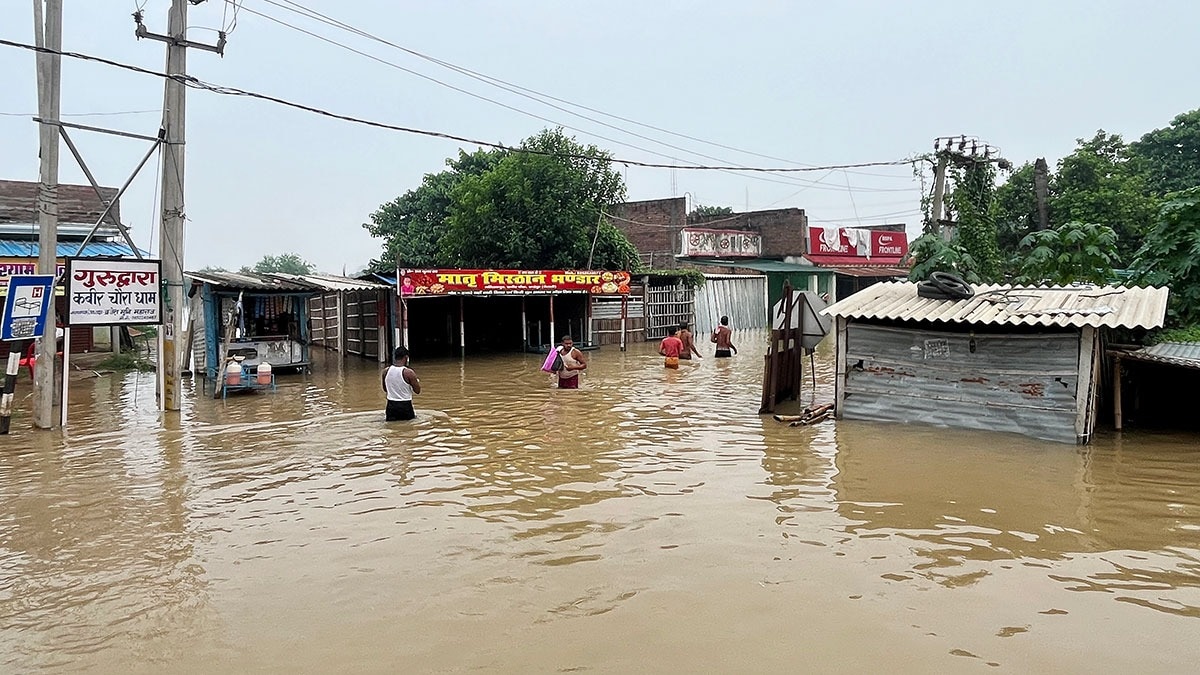
Unknown, unusually big fish have arrived in parts of Bihar with the floodwaters, followed by reports of people falling ill after consuming themIn July 2004, Rashtriya Janata Dal (RJD) supremo Lalu Prasad Yadav, then Union railway minister, stood before a roomful of mediapersons with a gamcha in hand and offered an unusual way of looking at Bihar's floods. The rising waters, he said, were not entirely a calamity: the floods gave poor people a chance to eat the fish that normally lived in ponds owned by the rich—rare, delicious fish they could not dream of eating in the dry season.It was classic Lalu remark: a joke, a piece of class politics and a way of turning a disaster into an argument about who owned Bihar's resources. Twenty-two years later, Bihar's BJP-led government has issued the opposite instruction: do not eat fish the flood has brought.On August 31, the department of dairy, fisheries and animal resources issued an advisory, warning people against eating, buying or selling unknown and unusual fish that had arrived in parts of Bihar with the floodwaters from Nepal. The warning followed reports of people falling ill after eating some of these fish. The government also asked people to report unusual catches to the district fisheries officer or local administration.The contrast with Lalu's 2004 fish story is almost too perfect. Then, the floods were a temporary leveller: water breached the boundaries of private ponds and fish that belonged to somebody else suddenly became available to everybody with a net. In 2026, the state is asking people to resist precisely that instinct—to see unfamiliar fish in floodwaters as not a windfall but a potential health hazard. The reason is prosaic. Floodwater carries almost anything with it. Fish can be swept out of ponds, rivers, lakes and reservoirs and carried far beyond their habitat. In the process, they may pass through drains, come into contact with dead animals and decaying matter, and be exposed to other pollutants. The Bihar advisory warns that such exposure can increase the risk of bacterial, viral and fungal contamination and pose health risks. This is important since fish is food, commerce and livelihood.The advisory is blunt. People are being told not to consume unfamiliar or unusually appearing fish. They have been asked not to buy or sell such fish caught from floodwaters, and not assume that an unfamiliar fish is edible merely because it resembles a species they normally eat. Anyone who develops vomiting, diarrhoea, abdominal pain, dizziness or other unusual symptoms after eating such fish has been advised to seek medical attention immediately.The warning is concentrated in the Gandak belt, particularly West Champaran and Gopalganj, where floodwaters from Nepal have entered the river system and inundated low-lying areas. Unusually large fish have been reported from places including Valmikinagar, Bagaha and parts of Gopalganj. The fish have become an attraction in themselves, with photographs and videos circulating as people try to work out what, exactly, has arrived in their nets.There are large freshwater species found in fast-flowing rivers in India, Nepal and parts of Southeast Asia. The Nepal flood itself is part of the Bihar government’s explanation. In late August, heavy rain and flash-flooding in Nepal sent large volumes of water downstream into Bihar. The Gandak system, which links the two countries in a very literal way, carried that water into the plains. Bihar's flood problem has always had this awkward geography: what happens in Nepal can become a crisis in Champaran or Gopalganj. And when the river enters people's lives, the rules of consumption change.A fisherman does not necessarily see contaminated floodwater. He sees perhaps a fish large enough to make a day's catch worthwhile. A family that has lost crops, livestock or income may see food. A trader may see something unusual that customers are willing to pay for. That is why a public-health advisory is harder to enforce than it looks on paper.The government has wisely not issued a blanket warning against all fish. The distinction is between the known and unknown—the ordinarily available varieties and the unidentified ones that have suddenly appeared after being swept through floodwaters. That is a more defensible warning. The fish market is livelihood. A blanket scare could hurt people. But the opposite extreme—assuming that everything the river provides is safe because fish is normally part of the local diet—could turn a flood into a secondary public-health crisis.That is where the Lalu anecdote becomes more than a historical joke. His 2004 remark worked because it contained a grain of social truth. Bihar's floods have always scrambled the ordinary boundaries of property. Fish could escape private ponds; the poor could temporarily acquire access to something that belonged to somebody richer. Lalu turned that into a political image of abundance: the flood had, if only briefly, broken the fence around the rich man's pond.The 2026 advisory rejects that romance. A flood is not a buffet. It is an ecological upheaval. The fish may have come from a perfectly healthy river. But it may also have passed through water contaminated by sewage, animal waste or decomposing matter. Its unusual size may make the fish more valuable to a curious buyer but that does not make it safer.There is another revealing element in the government's notice: its appeal against rumours. That matters because the story of these fish has already escaped the fisheries department. Images and videos of enormous specimens invite explanations. Social media can turn an unfamiliar animal into a monster, an omen, a foreign species or a creature with a spectacular backstory. The larger the fish, the faster the rumour travels. Therefore the government advisory: do not guess or eat it; report it.Bihar has lived with floods for generations, and its political culture has developed an entire vocabulary for surviving them—embankments, boats, relief camps, compensation, diara land and, occasionally, Lalu's jokes about fish. But the floods are changing the circumstances in which those old instincts operate. A fish that arrives from a swollen river may be a perfectly ordinary species in an extraordinary place. What is uncertain is not necessarily the fish itself, but the journey it has made.That is why the 2026 warning is striking when placed beside Lalu's 2004 ‘banquet’. Then, the message was: the flood has brought something the poor could never normally afford. Now, the message is: the flood has brought something you cannot safely identify. Bihar’s poor are still standing in the floods. The fish are still arriving. But this time, the government is asking people to leave some of what the water brings exactly where they found it.Subscribe to India Today Magazine- EndsPublished By: Shyam BalasubramanianPublished On: Sep 7, 2026 18:57 IST
Why Bihar govt is advising citizens not to fish in Nepal floodwaters
Full Article
Original Source
Read the full article at Indiatoday →KhanList aggregates and links to publicly available news content. We do not host full articles from third-party sources. Always verify important information with original sources.