
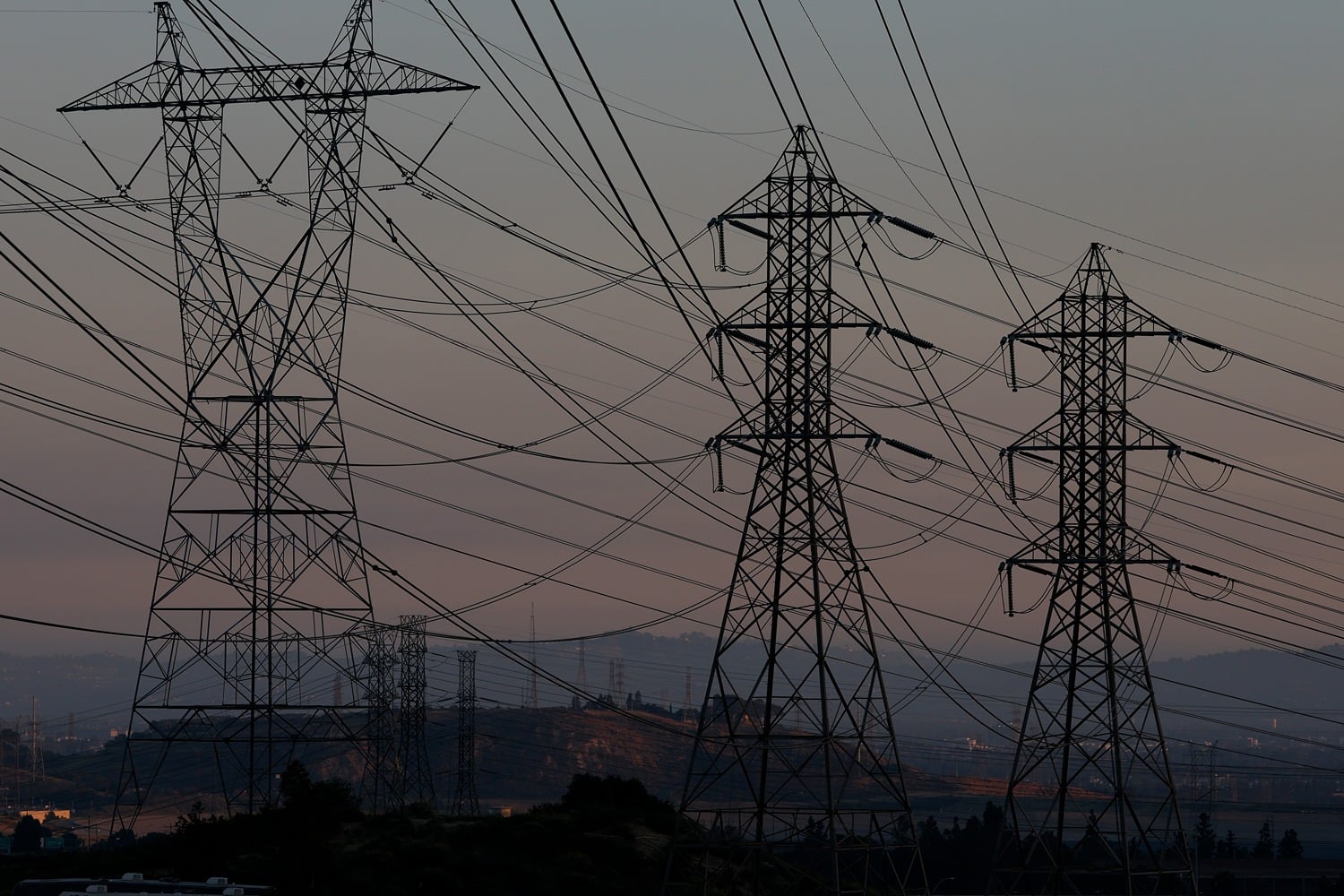
The U.S. Senate just cleared the way for passing the Bipartisan American Affordability and Jobs Act, more commonly referred to as BAAJA. The law aims to shorten review timelines for infrastructure projects and protect permits from later revocation, among other provisions. But beyond the technical details, the law has been notable for the unusual coalitions that have arranged in favor and opposed to it: Oil and gas companies, manufacturers, and labor unions are broadly in support, while environmental groups such as the Sierra Club and the Wilderness Society and progressive groups such as the NAACP have lined up against. What exactly would BAAJA do? Why has the law divided some trade unions against progressives? And can renewable energy outcompete fossil fuels on the free market? Those are just a few of the questions that came up in my recent conversation with FP economics columnist Adam Tooze on the podcast we co-host, Ones and Tooze. What follows is an excerpt, edited for length and clarity. For the full conversation, look for Ones and Tooze wherever you get your podcasts. And check out Adam’s Substack newsletter. Cameron Abadi: What exactly would BAAJA do? And why is this just such a big issue right now in the United States? Adam Tooze: It’s basically an effort to streamline environmental review, restrict certain legal challenges, make permits—once they are issued—more secure. So, enabling investors to proceed robustly. And it’s aiming basically to enable a more rapid build-out of the electricity transmission system. It’s such a big deal because this is a really big problem. Electricity interconnection is a fiendishly difficult technical and legal issue. The Berkeley Lab found that about 2,600 gigawatts of generation and storage projects were seeking grid connection at the end of 2023. And more will have come online since. That’s about twice the existing capacity of the United States’ system. And they spend about five years at least applying for interconnection and entering commercial operation, compared to two years only as recently as a few decades ago. You’ve got projects like a giant wind project in New Mexico, which is supposed to be a transmission line that connects New Mexico to Arizona. It took roughly 17 years from initial development to construction, and the vast majority of that was in the permitting. Pipelines are notorious for exactly the same reasons. So, Mountain Valley Pipeline, which is a gas pipeline 303 miles [long through West Virginia and Virginia], originally billed at $3.5 billion and now finally opened in 2024 at a cost of about $8 billion. So there are a fundamental set of issues about not only how American procedures decide whether they are for or against big infrastructure projects but also how long it takes them and how expensive they are. If we had a streamlined process, you could process a bunch of obstructions, do it quickly, make a decision, move on. And instead, we have sort of the worst of both worlds, which is a lack of coherence, political chops, and changes by administrations, which are very pro-renewable energy, for instance, and then very opposed to it—which means that even when you do get the permits, they’re not secure. So it’s a mess. And this is a mess also against the backdrop of the last effort to break this impasse, which after all was the Biden administration. It’s certainly true now that AI is driving the conversation about the build-out of power supply in the United States. But the conversation started earlier with the push around Bidenomics, which then was instantiated in the form of the Inflation Reduction Act in 2022. And people like Brian Deese, who was a key architect of green industrial policy under the Biden administration, have said that, you know, passing the Inflation Reduction Act without permitting reform produced modest results. Passing the Inflation Reduction Act with permitting reform would have made a huge difference. Passing the permitting reform two years before the Inflation Reduction Act had come into effect, setting the stage for the energy and the money that poured through the Inflation Reduction Act, would have been a complete game-changer. In other words, the pace of rollout would have been very dramatic. And I think that, in a sense, is what this conversation currently is about. And it’s furthermore crucial because it does expose fault lines within the coalitions that you might think of as being supportive to this. So Bidenomics glued a coalition together around the green energy project, around American reindustrialization, but also through extraordinarily complex coalition deals—the “everything bagel” liberalism, patching in a whole variety of different environmental justice groups, activists on behalf of rural America, activists on the behalf of minorities in the United States and underrepresented and discriminated-against communities—and they were all part of the Biden package. [Donald] Trump has blown that up. And what we’re seeing here is also a debate, I think, about what are the terms going to be under which a new, energized Democratic majority actually attempts to restart the project of green modernization in the United States. That’s why this matters beyond the technicalities. CA: We tend to think of the left and unions as a natural coalition. But have there always been tensions between them that run along the fault lines of environmentalism, and is that what’s getting revealed in the debate around this law? AT: In support of what I think is called BAAJA, you do see an unusually broad coalition of organized labor. It isn’t just building trade unions—sort of, you know, construction-happy pipeline workers or whatever. It is in fact a very broad coalition, including the AFL-CIO. And so, from their point of view, this is clearly an industrial, productivist kind of strategy. And it makes sense, and they’re not wrong. And the estimates are that this would move significant volumes of investment. Not stupendous, not dramatic. If you’ve actually seen the econometrics on this, the numbers are not overwhelming. But they’re real, and every little bit helps. And the obstruction around these issues has been highly significant in a number of individual cases. So the coalition is real. But you’re right, there are also blocking oppositionists. In fact, it’s telling that in the Senate vote on the legislation so far the purple state senators—so senators who are exposed to more competitive races—were notably more supportive of this legislation than those in absolutely solid blue Democratic constituencies, where the leverage of other interests really came to the fore. And there are at least two that are very well worth taking seriously that have been articulated. One is Bill McKibben, one of the real warhorses of the climate movement in the United States, who said, look, it’s all very well to say that we need an energy transition, so we need more electrical generation capacity and transmission facilities. This is clear. It is true. On the other hand, ultimately what counts here is the level of emissions. And so, more construction, more activity in this realm, is not an unalloyed and unambiguous benefit. And if it’s possible that these changes might in fact open the door to large-scale fossil build-out, then, in fact, this is really an ambiguous a set of proposals. And it’s quite clear that in its bipartisan nature, a little bit like some of the Biden administration legislation as well, they are trying to provide pork and trying to buy support from energy interests across the board. And then the other constituency that you might think of as left is represented by a spokesperson like Abigail Dillen of Earthjustice, who is representing what in the American conversation is called an environmental justice point of view, first and foremost. And so, just for clarification’s sake, environmental politics is a very broad church. Climate politics within that comes in different shades as well, but climate politics has this very macroscopic, ultimately global point of view. And one of the answers given by the establishment with regards to climate politics is simply electrify everything, build as much clean energy infrastructure as possible as quickly as possible. But the consequences of that locally can of course be very, very disruptive, not to say incredibly damaging. And this is where the environmental justice movement comes in in the United States, which has a genealogy which really originates in the 1980s and 1990s, centrally concerned with the interests of marginalized communities in the United States, notably Black communities in the American South, who find themselves systematically in harm’s way when it comes to otherwise perhaps interesting and important industrial expansion. And so her argument, and the opposition of environmental justice campaigners around this, is to say, well, it’s all very well that you open the door to this kind of development, but who walks through that door? Which interests are going to take advantage of this, and who is going to lose out? And to go back to your big-picture historical question, what you’re seeing there is a confrontation between, if you like, three generations of American radical and progressive politics. One is the classic New Deal productivist coalition, which is about a bigger government and facilitating public-private partnerships in various ways that enable large-scale investment and development. And that had very considerable buy-in from trade unions. But what we see from the 1960s onward—not necessarily in hostility to organized labor but recognizing the impact of the success of this kind of development and its lopsidedness and its egalitarian tendencies—are the other two constituencies of American progressivism, which are now speaking their voice. These things didn’t emerge at the same time in the 1930s, but you could say in the 1960s we see the development of the ecological movement in the United States, the broad-based opposition to environmental damage, which in many cases has a distinctly upper-middle-class, Sierra Club kind of feel to it. And then from the late 1970s, 1980s, onward, the environmental justice movement, which is in a sense environmental politics crossed with the Civil Rights Movement in the United States and focusing on environmental issues. And those three things together come out of the same tradition of American progressivism, you might say, but they are not necessarily on the same page. And their targets are not necessarily the same thing either. And the work that Bidenomics did was to, in some senses, square that circle. And as we’ve said, that’s the coalition that needs to be rebuilt. And this is a conversation about how that gets done. CA: One often hears that renewables now outcompete other sources of energy on economic terms. So why shouldn’t advocates for renewables prefer a law that would presumably create a freer market? AT: Well, those kind of claims are based on what are so-called comparisons of unsubsidized levelized costs of new electricity generation. That’s the standard measure. And outfits like Lazard have produced numbers that show, for instance, that onshore wind can be had for a cost of between $37 and $99 per megawatt hour, utility-scale solar for between $40 and $98, combined-cycle natural gas for $51 to $129, and so on and so forth. And when you make the comparisons on that basis, it’s generally true that solar and onshore wind come out as the optimum strategies. But they’re very, very partial measures of cost. Because what they don’t really account for is intermittency fundamentally. Right now, we really shouldn’t be making comparisons of just pure solar and wind versus gas because gas can be turned on and off once you’ve got the infrastructure. Whereas obviously solar and rain can’t. It depends on the availability of sunshine and wind. So they need to be backed up by batteries. Once you do the backup by batteries, they’re still competitive, but the argument is not as simple as saying that they’re the cheapest. But broadly speaking, I, in fact, entirely agree with the general thrust of your message. I’m an optimist on this question. And I think this is also the position, for instance, of the abundance agenda types, [Ezra] Klein and [Derek] Thompson and so on, which is that it’s a totally reasonable argument to make—namely that in the end, these technologies are superior. They are cheaper. People are investing in them. If you look in the pipeline, the pipeline is overwhelmingly renewables. And that’s not for reasons of wokeness. There are issues of intermittency, but the harder we push at this, the more we invest, the more the urgency will be to find solutions to them. And markets that are relatively free, like that of Texas, for instance, have turned out to be huge pioneers of rapid adoption of solar and wind. So I think, broadly speaking, that argument is well merited. The risk is—and this is where somebody like a McKibben will come in—would be to say, well, that’s all very well, but at the margin, we can’t be certain that this game will play out necessarily in the favor of renewables. And the argument here is not coal anymore. Once upon a time, you might have said coal could come back as a source of electricity generation. I think that argument is done everywhere outside China, probably. [There are] very few places in the world where coal makes any sense. Nuclear, for those who have environmental concerns about nuclear, [is] also prohibitively expensive. A free market option without subsidy probably kills it completely stone-dead given its costs. The real issue is gas. And the lesson here is not abstract—it’s historical. Because in the 2010s, what happened is that the entire calculus of the electricity-generating investment game in the United States was changed by the sudden availability of huge quantities of dirt-cheap shale gas, so fracked gas. And that had the effect of considerably displacing the adoption of wind and solar, which actually progressed more rapidly in Europe because gas prices—despite all of the talk of cheap gas from Russia, it was always nonsense. The really cheap gas comes from Texas, it comes from Pennsylvania, it comes from shale in the United States. And that considerably slowed down the adoption of more sustainable, more renewable energy sources. But broadly speaking, of course, it’s still a win. And folks from within the Obama administration embraced this under the heading of “all of the above” because gas replacing coal is a net win in terms of emissions. You might quibble with this if you think about the methane admitted in the production of gas, but nevertheless, it is a step in the right direction. So the general thrust of your question, I think, should be affirmed. You know, we should not be thinking of renewables as a sort of endangered technology that needs protecting against the big beasts of fossil industry. Are there fossil risks? Yes, but they come largely from innovation in the fossil sector and not the old enemies. Not coal, not nuclear—oil has never really been in the game here anyway for electricity generation, not since the ’70s. But that, to my mind, means that this should be weighed up in terms of exactly how much build-out of which types of energy we expect. It’s not a matter of principle that renewables should favor regulation, fossils should favor deregulation. It’s not as simple as that. It’s a conjunctural specific historical gamble that, in the current moment, the benefits outweigh the downsides. What we’re seeing, unfortunately, under Trump is that the biggest build-out and the biggest acceleration of electricity demand in American history—in recent times at least—probably ever in American history actually in terms of sheer volume, is taking place under an administration that seems determined to block renewables and under a permitting system that doesn’t permit a rapid build-out of efficient capacity. And the disaster there is it’s channeling all of that AI demand into gas-fired generation. It’s not epic by global standards; this isn’t China’s coal build-out. But it’s taking America in the wrong direction. And that’s the backdrop also against which this conversation is taking place right now. We see that there is a once-in-a-lifetime opportunity or historic opportunity to have accelerated American electrification along green lines, and it’s being obstructed.
Why BAAJA Matters
Full Article
Original Source
Read the full article at Foreignpolicy →KhanList aggregates and links to publicly available news content. We do not host full articles from third-party sources. Always verify important information with original sources.