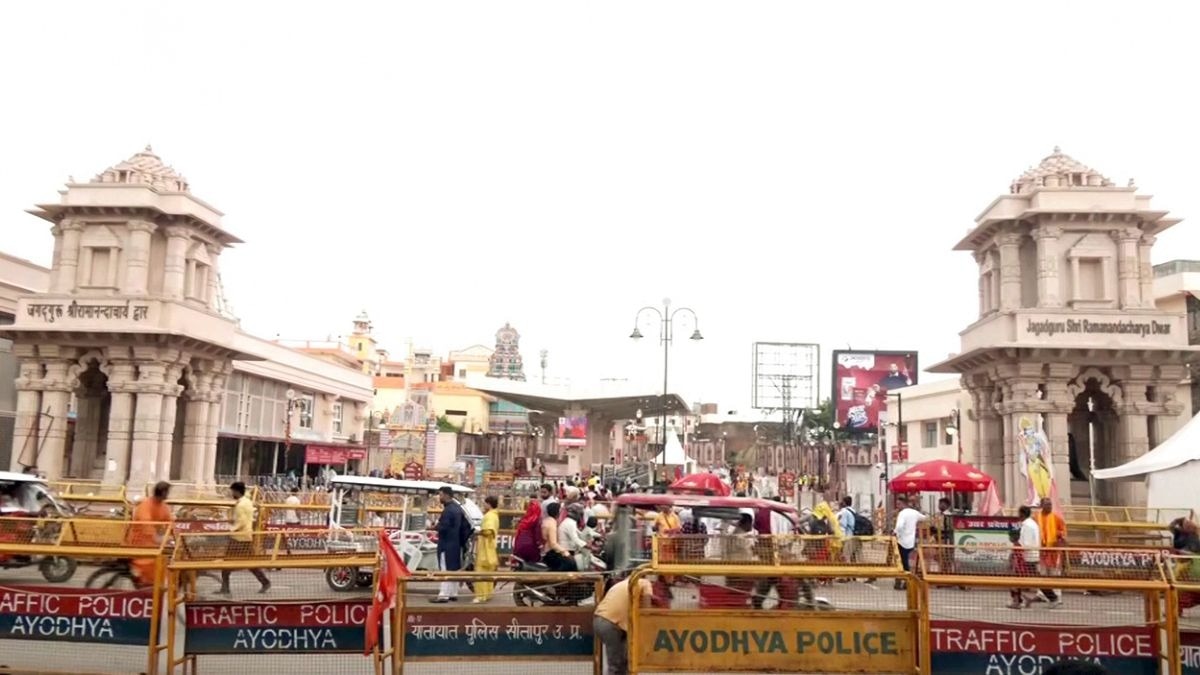
The new SIT is led by senior IPS officers. Petitioners told the Supreme Court the previous team lacked the forensic-financial probe expertise needed in the caseThe Supreme Court has ordered the formation of a fresh Special Investigation Team (SIT) to investigate the alleged theft and misappropriation of donations at the Ram Temple in Ayodhya, saying the probe must be carried out independently and taken to its logical conclusion.The order marks a significant development in a controversy that has gradually moved beyond allegations of pilferage to larger questions over the management and oversight of donations at one of India’s most prominent religious institutions.Hearing a batch of petitions on July 20, a bench headed by chief justice of India (CJI) Surya Kant directed that the new SIT be led by a senior IPS officer. The court observed that, prima facie, the matter appeared to involve offences under criminal law and therefore required a fair and impartial investigation. The chief justice also cautioned all parties against giving the issue a political colour, saying the focus should remain on ensuring that the investigation is conducted honestly and reaches a conclusive stage.Following the hearing, Uttar Pradesh chief minister Yogi Adityanath approved the formation of a new SIT. Unlike the earlier three-member team, the reconstituted SIT will not include Lucknow divisional commissioner Vijay Vishwas Pant and special secretary Neelratan Kumar. Instead, it will be led by senior IPS officers, including officers of DIG and SSP rank. The new team will investigate the case on the basis of the FIR already registered and has been asked to submit its report by July 30. The court’s direction came after petitioners questioned both the composition of the earlier SIT and the manner in which the investigation had begun. They argued that the previous team lacked the forensic and financial investigation expertise required for a case involving alleged embezzlement of donations and valuables. They also questioned why the initial inquiry had started before the registration of an FIR, contending that such a sequence could later raise questions about the legal validity of evidence collected during the investigation.The petitioners also referred to the alleged adulterated ghee controversy involving the Tirumala Tirupati Devasthanams, which manages the Tirupati Balaji Temple in Tirumala in Andhra Pradesh, wherein the Supreme Court had directed that a fresh investigation be carried out by a reconstituted team led by the CBI. They argued that a similar approach was needed in the Ayodhya case to ensure public confidence in the investigation.During the hearing, solicitor general Tushar Mehta informed the court that the state had already filed a status report and that eight people had been arrested in connection with the case. He told the bench that the earlier SIT had examined the allegations and concluded that a cognisable offence was made out, following which the police investigation had begun.The CJI, however, observed that the investigation should now be carried forward by a reconstituted SIT headed by a senior IPS officer so that it reaches a decisive conclusion. The court asked the solicitor general to coordinate with the Uttar Pradesh government and submit the names of officers for the new team. The next hearing has been scheduled for July 27.The bench also heard submissions seeking greater transparency in the handling of donations. One of the petitioners argued that details of donations should be made public as there were allegations that valuables had gone missing. The court, however, observed that such issues would have to be examined practically, noting that wherever receipts had been issued there should naturally be proper records.The controversy began after allegations surfaced that cash and valuables donated by devotees at the Ram Temple had been stolen during the counting process. Following growing demands for a criminal investigation, temple trustee Krishna Mohan lodged an FIR on June 25. Police subsequently arrested eight people, all associated with the donation counting process.Before the FIR was registered, the Uttar Pradesh government had constituted a three-member SIT after the Shri Ram Janmabhoomi Teerth Kshetra trust itself sought an impartial inquiry into the allegations. The team was also asked to examine the entire system through which donations are received, counted, stored and deposited in banks.Although the preliminary report submitted by the SIT has not been made public, sources indicated that it pointed to procedural lapses and weaknesses in supervision rather than treating the matter as merely an isolated theft. The report is also understood to have recommended registration of an FIR so that a formal criminal investigation could proceed.The controversy has also led to changes within the temple administration. Following the developments, both the trust’s general secretary Champat Rai and trustee Anil Mishra resigned, and their resignations have since been accepted.With the Supreme Court now directing a fresh SIT headed by senior police officers, the focus shifts from the preliminary inquiry to a full-fledged criminal investigation. The court’s intervention is likely to shape not only the future course of the case but also the broader debate on transparency, accountability and professional management of donations at major religious institutions.Subscribe to India Today Magazine- EndsPublished By: Akshita JollyPublished On: Jul 23, 2026 20:03 IST
Why Ayodhya Ram Temple donation probe got a new SIT
Full Article
Original Source
Read the full article at Indiatoday →KhanList aggregates and links to publicly available news content. We do not host full articles from third-party sources. Always verify important information with original sources.