
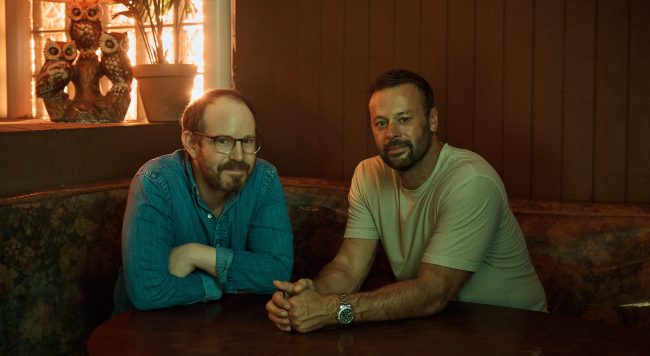
Talent labs and mentorship programs are plentiful for aspiring filmmakers — but where do you turn when your career has already started, after your first movie or on the precipice of one, and especially when filmmaking can be such a lonely enterprise? Enter Square Peg Social, the Austin, Texas-based filmmaking summit launched by Lars and Amy Knudsen and Ari Aster that offers four days of singular community-building: brutally honest advice, commiseration, and idea exchange shared among 35 participants, with the program now in its second year. A weekend of panels, discussion, and camaraderie designed for filmmakers at the early stages of their career, this year’s talent-incubating event was even crashed by the likes of Zach Cregger and Richard Linklater — both of whom were down to get frank about their filmmaking highs and lows. (In fall 2025, IndieWire did a deep dive into Square Peg Social’s first year, just to show how much the event has already grown.) But the program’s stable of 2026 mentors and panelists — i.e., filmmakers keen not only to open up to new filmmakers about their own struggles, but also to scout new talent — also counted “Primetime” and “You Can See Everything” director Lance Oppenheim, “Sing Sing” filmmaker Greg Kwedar, “The First Omen” director Arkasha Stevenson, and “Mother Mary” director David Lowery among them. The closed-door, off-the-record, noncompetitive summit opened to applicants in May, later unfolding from September 17-21. Partners including the Austin Film Society, Belvedere, and Airbnb offset the cost, besides a modest application fee, for participants to hole up for four days and nights at Soho House that don’t promise job opportunities — but instead, the kind of lasting industry connections that can take years (and many starts and stops) to build. Also, no job opportunities isn’t entirely true. Take last year’s Square Peg Social mentee Yona Strauss, who’s now working for Knudsen and Aster’s Square Peg. Just a sampling of this year’s participating producers and directors: producer Annie Huang, who worked on franchise IP like “Barbie” and “Wicked” at major studios; Jack Auen, co-founder of the filmmaking collective Cosmic Salon, which this year directed the New York critics’ favorite “Chronovisor”; Emmy-winning director of the Netflix short “The Turnaround,” Kyle Thrash; SXSW 2026 Neon Auteur Award winner Oliver Woolf; and many more who have their foot in the door, but are ready to cross the threshold. IndieWire spoke to Lars Knudsen and Aster (who also co-founded the production company Square Peg, which this year backed “The Drama” and “Primetime”), plus Stevenson, Oppenheim, and Kwedar, along with three participants, to replay the on-the-ground experience in Austin. Late nights, early mornings, and vulnerabilities abounded across a long (but in some ways too short) weekend of intimate panels, small group sessions, and candid remarks from established filmmakers about the times they were trying to hold their own projects together with Scotch tape and paper clips. Think of it like a mini summer camp devoted to obsessive ambition. The Square Peg Social Class of 2026 with Lars KnudsenEric Ogden Lars Knudsen (co-founder) on why he wanted to launch Square Peg Social: “When you’ve been doing it for this long, sometimes it feels like you’re just a little bit going through the motions. You’re going from movie to movie to movie, and you sometimes forget why we do this thing that we do. We’re in this world working with these artists where they don’t have a plan B. Having now worked with 30, 40 filmmakers, I realized that when my wife brought up the idea of doing something because she has her own aversions to the industry, and that there isn’t really — it sounds cliché — but there just isn’t a lot of kindness or compassion or openness in our industry. “There’s a lot of fear, there’s a lot of rejection. We wanted to create a space for filmmakers where there’s radical transparency and where it was truly, truly focused on a selfless thing: helping young filmmakers navigate the industry at a time in their career where things can either take off or not, and really demystifying the process of making movies, especially during the stage where they’re often in the back seat, which is financing or casting. Because for all these filmmakers that I work with and all the filmmakers that we’ve invited there, even the producers, it’s the first thing to think about when they wake up and the last thing to think about when they go to bed. Nothing is more important. I wanted to create an event where that is treated with the utmost importance, almost like it’s a life-or-death thing because it is all they want to do.” Ari Aster (co-founder): “A space where filmmakers can come together… and commiserate” “When Lars and Amy first broached the idea with me, I realized that it was something that I wish I had when I got out of school [at AFI], because I really did have to navigate that on my own. I was making a lot of shorts with whatever money I could raise and writing screenplays and trying to get one screenplay going. When that failed, writing something else and really looking for any sort of mentorship or guidance, It’s a very demoralizing process, and it was very, very hard for me to find traction, and it hasn’t gotten easier. It’s as bad as it’s ever been. There’s just so much uncertainty right now in the industry, not just for filmmakers. Even the lives of these studios are suddenly in danger and in question. “There are a lot of filmmakers that Lars and I have been championing and films that we’ve been trying to get financing for that have proven almost impossible… It felt like a good thing to create a space where filmmakers can come together and commiserate and share experiences and connect. More important than even the connections that are made between the mentors and the mentees here are actually the relationships made among the people who are attending. A lot of them end up working together because we have producers and directors coming in. Last year proved really successful, and I would just say it was refreshing for us, too, that it galvanized us to keep doing this. Because last year it was almost an experiment: Will this work? How will we feel having done this? … Everybody walked away feeling good and feeling like it was a really useful and positive experience.” Lance Oppenheim (mentor): A space to “talk and vent and really nerd out” Lance OppenheimEric Ogden “I’ve never really had the opportunity to just hang out with so many great filmmakers, not only just working filmmakers whose work I’ve loved, like David Lowery, who I’ve idolized for so long, but there’s so many filmmakers that were actually in the program as participants whose work I also have really admired. So having a space where we could all just kind of talk and vent and really nerd out on stuff that you never really get the opportunity to do. “Because this was so filmmaker-driven and filmmaker-led, it encouraged the spirit of vulnerability [where] everyone really went there. I felt like maybe I should go back to therapy or something, but I felt like this was a great opportunity to therapize and also dump all of my feelings into a forum where you could just be open and honest about the process of making films… Most people had made features before, and were in the process of making features. It felt much more like we were at a film festival and everyone was able to connect with each other in a much deeper way, more than anything I’ve been to before. “The first night I was there, I stayed up till like three in the morning, and I went on one of those electric scooters, the limes with Lars and Christian [Vasquez], my producer, and a producer from the event, too. We went to Whataburger and just kept talking. I think that was sort of the vibe. I don’t know. I guess everyone was encouraged to hang out for as long as they wanted to and to kick back and relax. There was another night we closed down the Soho House lounge bar, and Amy was like, ‘Let’s keep hanging out.’ So we were outside the bar, and everybody pulled together all of the drinks in their mini bar, and we created an ad hoc bar outside of the Soho House, and we kept drinking and hanging.” Arkasha Stevenson (Square Peg Social mentor): “It does feel like a therapy circle, really” “I don’t think you can really do film if you have a plan B because there’s always an escape hatch, and film requires every single atom of your body, mind and soul. It naturally becomes a very therapeutic place. I think because we’re all in this constant state of obsession, that can get really tiring, and it can get really lonely. … [The industry] attracts very sensitive souls. [With Square Peg Social] I didn’t even realize how badly I needed it until the first year. I’d known Amy and Lars before that, and Amy said that she wanted to start a Social. … I thought it would be much smaller, smaller. It ended up being this great big thing where, yeah, it does feel like a therapy circle, really. “Everyone was really struck by the safety of the event. There was this unspoken agreement that everybody would be checking your egos at the door, and that this would be a very safe place to share your personal vulnerabilities, which is exceptionally rare in film because resources are so limited, and it’s just naturally a very competitive industry. Letting yourself be very, very vulnerable in front of your peers is something you were, in a sense, trained not to do but sometimes desperately need. At Square Peg, also, the line between mentee and mentor blurs quite a bit, which is why I think it’s so beneficial for everybody who goes there. “It kind of reminds me of summer camp a little bit because you’re up until two or three in the morning talking to people, and then you’re up at eight again.” Greg Kwedar (mentor): Mentors are just as vulnerable as mentees Greg KwedarEric Ogden “I always think of this term, like, whenever you take an elevator up, if you get to the top floor, send it back down for someone else to get on. [Square Peg] is one of the busiest production companies working today. To dedicate this weekend for emerging artists to have a forum where they can come and feel completely comfortable being very vulnerable with their ambitions, but also the things that they’re afraid of, and to hear that echoed from industry mentors who are being just as vulnerable about their ambitions and the things that they struggle with and the heartbreaks they’ve had, it’s an amazing table that’s set. “I had ulterior motives in the, in the sense that Clint [Bentley] and I have started this new company, Ethos, and we have a deal at Netflix to finance films from emerging artists, and so I was also there … to look for talent. We’ll be following up with a lot of these artists to just hear more about the films they want to make. One thing that I appreciated about it was that it wasn’t like a pitch fest. You’re not there to pitch your project. You’re there to soak it in and learn. “It had this healthy blend of these panels, and not the normal kind of panel. One was a panel of filmmakers led off by Ari and Lars, telling a very, very brutally honest story of how hard one of their films was to make. That kind of created a pathway for how the rest of the weekend would unfold.” Oliver Woolf (participant, producer): “There is no plan B” “I think the whole reason anyone works in film is that we were once kids making videos in the woods with our friends, making with a shitty camera. And there’s nothing else in this world, and I think I probably speak for everyone, where I can’t imagine film is the only thing that’s our main passion and hobby and something we can also make a career out of. So there was never a plan B at all. Whenever someone asked me, ‘What do you think you’d do if you couldn’t do anything film-adjacent?’ I have literally no idea, maybe a teacher or something. That’s super nice that Lars and the rest of Square Peg was saying that there is no plan B. There’s only: If it takes longer to get to Plan A, then it takes longer to get to Plan A. “I remember on the very first day before we even properly began, Lars did a little speech with Ari, and Lars was like, ‘We’re going to be 100 percent transparent with you guys.’ And I remember thinking, ‘Oh, that’s cool, but I wonder how transparent.’ And by the end of it, I was like, ‘Fuck me, that was transparent.’ There really was nothing off the table.” Richard Linklater and Ari Aster at Square Peg Social 2026Eric Ogden Annie Huang (participant, producer) on Square Peg Social’s radical candor “It was definitely something that I’ve never experienced before in this industry, to experience that level of candor and to hear these traumatic experiences that they have gone through in not a sensationalistic way, but almost in a very personal and almost relatable way, despite me having never experienced that level of millions of dollars of movie budget making — but on a personal level of how the heartbreaks had felt for them individually and the hardships of filmmaking. Coming into this program, there are so many people within our cohort who are incredibly talented, who have accomplished so many things. And coming into it, oftentimes you’ll have a fear of: ‘OK, how do I compare in relation to their accomplishments?’ But in hearing Lars and Ari talk about their own hardships, I think that’s what influenced me to really share some of mine coming up in the industry and producing independently. “Some of the traumatic experiences that I have also faced are ones that I feel like I have to not talk about or hide from people, for fear of them looking like mistakes or of me looking like I’m not good enough to be doing this. And we were able to share that, like Ollie [Woolf] and I, in our own little producer’s therapy session with the mentors, with Lars. That was really healing for me.” Max DeFalco (participant, director) on how Square Peg Social blurs the lines between mentor and mentee: “[Ari, Lars, and the mentors are] on, not a different level, but they’re all going through similar issues and this and that, whether it’s a low budget or a higher budget type of ordeal. Everyone’s going through the same thing in their own way, in a sense. Just to know the people that I’ve been looking up to for a very long time, the reason in large part why I got into making films, to know that they’re going through similar things and just keep going, and it’s fine. No matter what level we’re going to be at, there’s still something to navigate. So I thought it was very cool to see, over the course of five days, to hear these individual experiences and stuff and how you could relate it back to what we’re going through right now and where we are. “It was information overload in the best way possible. At a certain point, I hope I’m retaining everything that was said over those five days because it was nonstop, all useful information. I wasn’t even taking notes at a certain point because I’m like, ‘I can’t write all this stuff down. I’m just going to try and soak it all in.'”
Why Ari Aster and Lars Knudsen’s Square Peg Built a Therapy Circle for Hollywood’s Next Generation in Texas
Full Article
Original Source
Read the full article at Indiewire →KhanList aggregates and links to publicly available news content. We do not host full articles from third-party sources. Always verify important information with original sources.