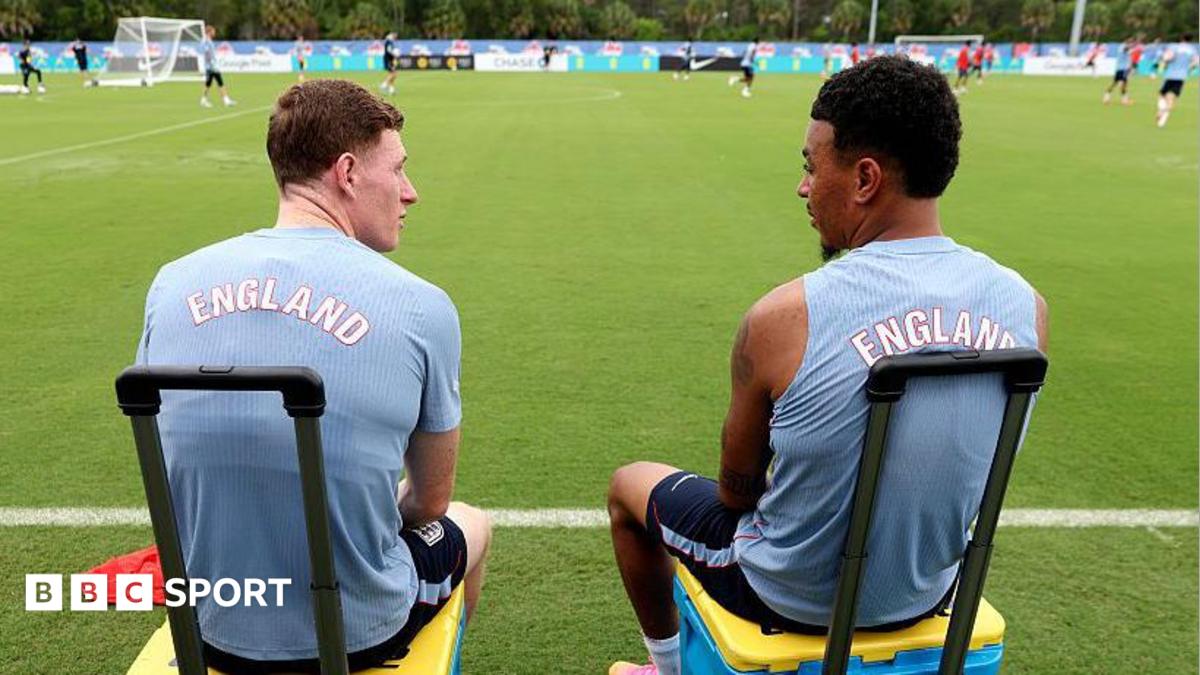
Image source, Getty ImagesImage caption, Elliot Anderson and Morgan Rogers on England dutyByMohamed MoallimBBC Sport JournalistThirty-four years ago a £13m transfer caused national outrage in Italy.When AC Milan signed Gianluigi Lentini from Torino in 1992 for a then world record fee, newspapers called the deal "obscene", while the Vatican's official newspaper described it as "an offence against the dignity of work".Today that fee would barely register among the Premier League's biggest transfers.This summer alone Chelsea have agreed a club record £117m deal for Aston Villa's Morgan Rogers, Manchester City paid Nottingham Forest £116m for Elliot Anderson, and Tottenham spent a club record £100m on Sandro Tonali.These are not the only major deals. Tottenham also agreed an £85m move for West Ham midfielder Mateus Fernandes, Barcelona paid £69m to sign Anthony Gordon from Newcastle United, and Manchester United spent £50m on Chelsea midfielder Andrey Santos.It is the first transfer window in Premier League history to produce three £100m-plus signings - and there are still weeks to go before deadline day on 1 September.During the 2025 summer window English top-flight clubs spent a record £3bn.So why are transfer fees continuing to climb? Why are clubs paying record sums for players already playing in England? And why are more clubs willing to sell some of their biggest stars?Why are clubs paying more than ever?Rogers' move perhaps best illustrates how today's market works.Chelsea are buying a player from Villa, who have finished above them in three of the past four seasons. Traditionally, clubs might have been reluctant to strengthen a direct rival in those circumstances.Instead, Chelsea simply met Villa's valuation.Football finance expert Kieran Maguire says one record fee quickly influences the next."It sets a benchmark," he says. "Forest wanted to be close to the record level because they felt Elliot Anderson was a critical player, a player very much in demand."We've then seen that surpassed by the Morgan Rogers fee - only slightly - but it allows the club to say, 'This is the record English signing'. So there's an element of bragging rights involved."After City's £116m move for Anderson established a new market rate, Villa made it clear any club wanting Rogers would need to exceed that figure. Chelsea did exactly that, agreeing a guaranteed £117m fee.Arsenal, who had identified Rogers as one of their leading targets, explored a deal but refused to meet Villa's asking price.The episode illustrates how quickly the market can move. Once a new benchmark is established, comparable players inevitably see their valuations rise.Why do English players command such high fees?Part of the answer lies in supply and demand.Premier League clubs must register at least eight homegrown players in their 25-man squads, while clubs competing in Uefa competitions must also satisfy homegrown quotas. That creates fierce competition for a relatively small pool of players capable of performing consistently at the highest level.Buying domestically also removes many of the uncertainties associated with overseas recruitment.Maguire describes Premier League players as "oven-ready"."Because the Premier League is so wealthy, it's relatively rare that a club is in financial straits where it has to sell," he says."In the case of English players, you've then got the homegrown rule, which gives clubs more flexibility."You put all of those factors together and it means the Premier League is a big driver."Clubs know how these players perform against top opposition, and understand they can cope with the physical demands of the Premier League and avoid many of the adaptation risks attached to recruiting from abroad.That certainty carries a premium. So too does the Premier League's financial strength. Lucrative broadcasting revenues give English clubs spending power unmatched elsewhere in world football, allowing selling clubs to demand higher fees from domestic rivals than they might receive from overseas buyers.Why are clubs willing to sell?Perhaps the more surprising trend has been clubs allowing key players to leave.Villa have sold Rogers despite his importance under Unai Emery, while Forest accepted City's offer for Anderson. Newcastle sanctioned Gordon's move despite the England winger becoming one of Eddie Howe's most influential attacking players.Such decisions reflect commercial strategy as much as football.Major transfer fees create opportunities to strengthen several areas of a squad rather than relying on one star player, while major sales also provide greater flexibility.Those sales have also reignited debate about whether the Premier League's financial regulations place greater pressure on ambitious clubs outside the traditional biggest spenders to sell valuable assets.Some argue that the rules favour clubs with the greatest financial resources, which are better placed to absorb record transfer fees.The latest changes are also shaping how clubs approach the transfer market.Maguire says financial regulations can influence transfer decisions, although he cautions that they are not always the decisive factor."Financial regulations might be a driving force, but not necessarily," he says."Because clubs don't have to sell from a financial point of view, it means they can extract maximum value from their players."Villa's sale of Rogers and Forest's decision to cash in on Anderson have become part of that wider discussion, illustrating how regulation now shapes recruitment and squad building across the Premier League.Rather than viewing these deals simply as losing important players, clubs now see them as opportunities to reshape their squads.Whether those replacements prove as successful is another matter.How have the financial rules changed?This summer has also brought a significant regulatory change.The Premier League is transitioning away from profitability and sustainability rules (PSR) towards a new financial framework centred on squad-cost ratio (SCR) and sustainability and systemic resilience (SSR).Rather than focusing primarily on rolling three-year losses, the new framework places greater emphasis on the relationship between football-related spending and revenue.Player wages, transfer amortisation – spreading a transfer fee across the length of a player's contract for accounting purposes – and agent fees now become even more central to clubs' financial planning.For clubs competing in Europe, Uefa's own SCR rules also continue to apply, placing further restrictions on spending.Maguire says those accounting rules mean clubs assess transfers very differently from supporters."If you're signing a player for £115m, spread over five years that's about £23m a year before wages," he says."Getting into the Champions League is worth a fortune and that's the lens through which clubs do those calculations."Maguire estimates reaching Europe's premier club competition can be worth 180m-200m euros (£153m-£170m) once prize money, matchday revenue and commercial bonuses are taken into account, reinforcing the incentive for clubs to invest heavily in recruitment.Clubs are already beginning to adapt their transfer strategies. Generating transfer income, reducing wage commitments and carefully balancing spending throughout the year have become key considerations alongside purely footballing decisions.Is the market still growing?The Premier League's financial landscape has changed dramatically over the past decade. Since 2016 total summer transfer spending has risen from £1.16bn to a record £3.19bn in 2025 – an increase of almost 175%.On the surface, that suggests transfer figures are continuing to accelerate. Headline fees, though, tell only part of the story.Research by Maguire and colleagues at the University of Liverpool suggests some of the Premier League's earlier record signings represented even greater investments when measured against clubs' buying power at the time.Using Premier League broadcasting revenues as an index, Alan Shearer's £15m move from Blackburn Rovers to Newcastle in 1996 remains the league's biggest transfer relative to clubs' spending power. Rio Ferdinand's £29.1m move to United in 2002 and Juan Sebastian Veron's £28m arrival at Old Trafford in 2001 also rank above any of this summer's blockbuster deals.The same model suggests Trevor Francis' £1m move from Birmingham City to Forest in 1979 – English football's first £1m transfer – would equate to about £173m in today's market.That does not mean the fees paid for Rogers, Anderson and Tonali were modest. Rather, it illustrates how dramatically Premier League revenues have grown, allowing clubs to spend sums that would once have been unimaginable.When Jack Grealish became Britain's first £100m footballer when joining City from Villa in 2021, the transfer marked another turning point in the evolution of the market. Only five years later, nine-figure deals are no longer viewed as extraordinary. They have become a familiar feature of Premier League transfer windows.The next milestone may not be far away.While no Premier League club has yet paid £200m for a player, football's financial ceiling continues to rise and the first transfer of that magnitude no longer feels beyond the realms of possibility.More on this story
Why are Premier League transfer fees soaring?
Full Article
Original Source
Read the full article at Bbc →KhanList aggregates and links to publicly available news content. We do not host full articles from third-party sources. Always verify important information with original sources.