
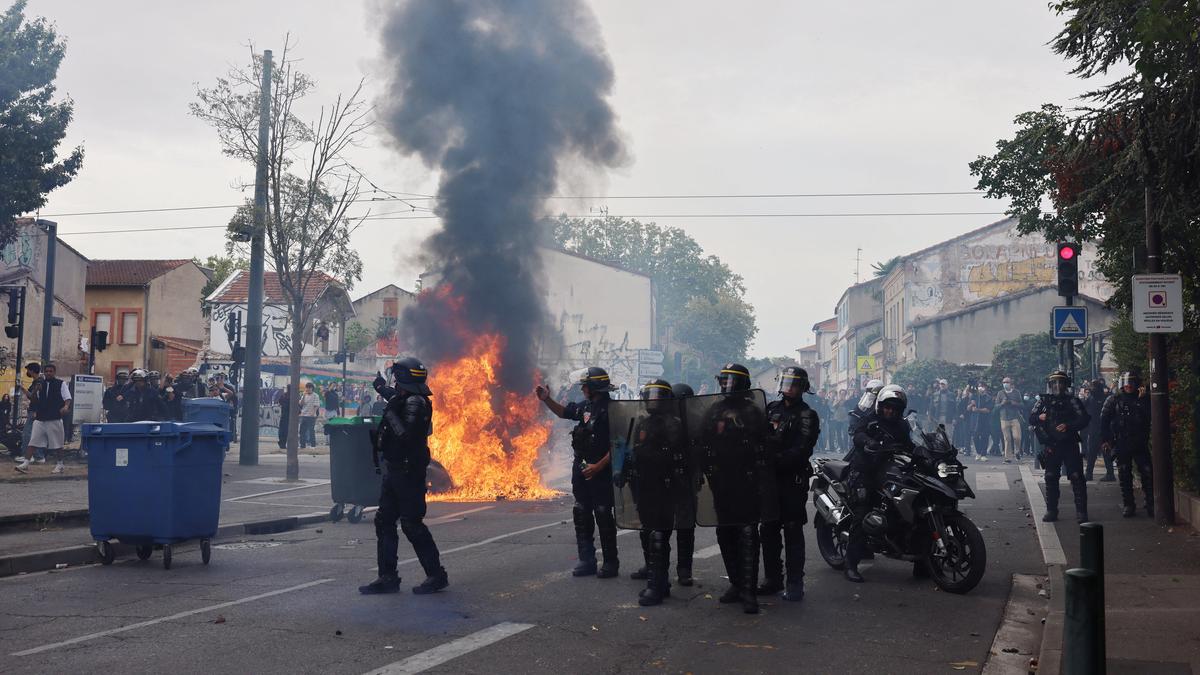
French CRS riot police stand in position amid clashes during a protest by high school students outside the Lycee Deodat-de-Severac high school as part of nationwide protests by high school students to demand the hiring of substitute teachers, increased resources and better learning conditions, France, October 2, 2026. | Photo Credit: Reuters The Story So Far: Across France, teenagers have been using trash cans and furniture to stage blockades (blocus in French) at the entrances of lycées or high schools in protest over poor conditions in schools. Over the past two days, the police used force against demonstrators after some of the protests turned violent, with several schools set ablaze. Over 3,000 people, mostly students, have been detained so far, including 1,949 people on Thursday (October 1, 2026) alone. Around 400 schools remained closed on Friday (October 2, 2026). When did the protest begin?In mid-September, small protests began in lycées in the suburbs of Paris and spread rapidly across the country after word spread on social media. Lycées are upper secondary schools attended by students from the ages of 15 to 18. Out of the 3,700 lycées in the country, 1,027 have been affected, according to a release by the Interior Ministry. University students have also joined the protests, with blockades staged across 30 campuses. The protests gained momentum and coincided with the larger public workers’ protests over the planned budget cuts by the Emmanuel Macron government before the next year’s presidential election. AFP reported that in the draft 2027 budget Bill, the government has planned to cut expenditure by €43 billion to reduce the deficit to 5%. Teachers, particularly from primary schools, and school staff have also joined the protest demanding better pay. What are students protesting for?Students are protesting over the poor condition of schools, dilapidated buildings, long hours, lack of teachers, overpacked classrooms, and schedules. “More hours of lessons than sleep” and “8 a.m. to 6 p.m.: Are we pupils or under arrest?” are some of the placards and slogans used by the students. They complained of broken toilets and rodents on school premises. They have also been demanding equity funding, as schools in lower-income areas have been receiving considerably less funding compared to the higher-income areas. Their main demands include more funds to be allocated for improving school infrastructure, reduced hours, and hiring more teachers. France experienced one of the hottest summers this year, with heatwaves pushing temperatures above 40 degrees Celsius in several regions. This has been particularly grueling for students who are in classrooms with over 30 people with poor insulation, and no air conditioning for over nine hours a day. This has also been a major grievance that the students want to be addressed through the protest. How has the government responded to the protest?Prime Minister Sébastien Lecornu convened a crisis meeting on Thursday (October 1, 2026) and cancelled Ministers’ trips to manage the protests. The Prime Minister’s Office warned of ‘urban violence’ by the demonstrators and shifted online classes for many schools. On Wednesday (September 30, 2026), around 85 police officers and gendarmes were injured in the clashes. Trash cans were set on fire, and projectiles were also thrown at schools by protesters. Two schools in Nantes and Le Havre were set on fire by the protesters, and a teacher was reportedly doused in petrol. Municipal tram lines were halted by the authorities. The riot police used less lethal crowd control measures like tear gas and rubber bullets, causing injuries to dozens of protesters, which have drawn criticism from the opposition.Interior Minister Laurent Nuñez noted the escalation of the movement and said “troublemakers” were going to different schools to incite violence. He has asked the public to limit travel and deployed more security forces to maintain law and order. The government, citing intelligence sources, has accused the far-left party La France Insoumise (LFI) of encouraging the protests and causing public disorder. LFI’s presidential candidate Jean-Luc Mélenchon said that the party backs the “non-violent methods of struggle by the students” and accused the government of turning the issues raised by the students into a political battle. Similar protests have also started in neighbouring Belgium, with authorities ordering schools to be closed in Liège on Friday (October 2, 2026) according to local media. Published - October 02, 2026 04:02 pm IST
Why are French students protesting | Explained
Full Article
Original Source
Read the full article at Thehindu →KhanList aggregates and links to publicly available news content. We do not host full articles from third-party sources. Always verify important information with original sources.