
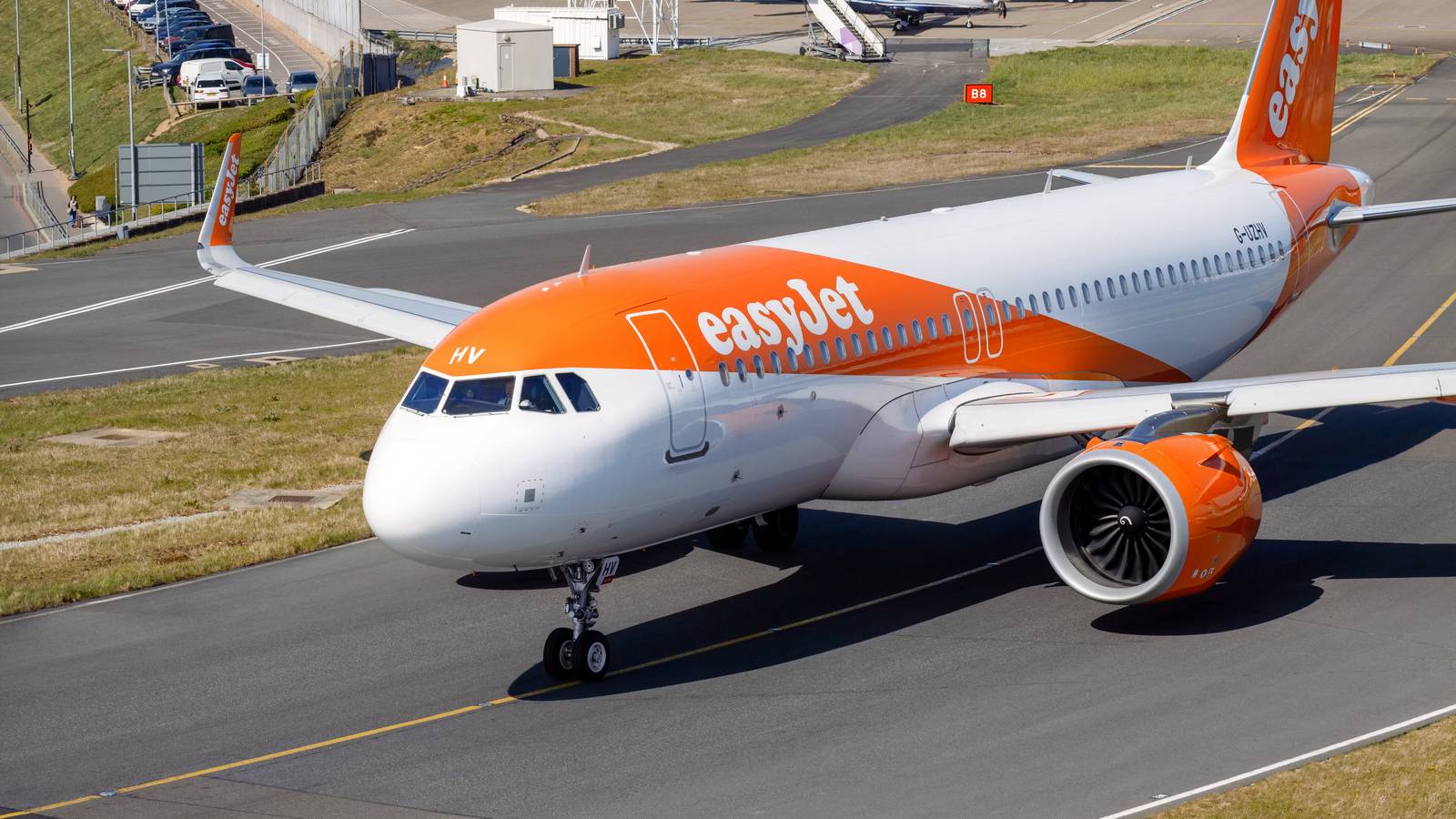
Published Nov 20, 2026, 11:00 AM EST Aaron is an aviation enthusiast and world traveler with a deep interest in aerospace history and technology. He has traveled around the world numerous times, often incorporating visits to aviation museums and historic aircraft collections into his journeys. A native of New Zealand, he is an expert in aviation and maintains a broad interest in a variety of other subjects. The US-based company, Apollo Global Management, has announced that it has struck a deal to acquire almost half of the low-cost carrier, easyJet. However, the airline is based in the United Kingdom and needs to remain compliant with British and European rules over ownership and control. The result is a compromise that apparently seeks to take ownership and control to the greatest extent, without crossing the threshold and breaching the rules. Currently, the agreement remains provisional, and it has yet to receive the green light from relevant authorities. At time of writing, it remains unclear if the partial acquisition will go through or will fall through. Apollo Global Management's Takeover Of easyJet Credit: AlfonsoSM l Shutterstock In August 2026, Simple Flying reported that the US company, Apollo Global Management, was bidding to take over the UK-based low-cost airline, easyJet. Around the same time, Reuters reported that "Apollo Global has agreed to buy European budget carrier easyJet for £5.70 billion ($7.7 billion), the US-based alternative asset manager said on Thursday, announcing the deal after rival suitor Castlelake walked away from its pursuit." On November 11, easyJet shareholders approved the takeover at £7.15 ($9.42) per share, an 81% premium to the pre-offer price, with 97.07% support at the court-convened meeting. Castlelake had bid £6.90 ($9.09) per share. The airline is expected to be delisted from the London Stock Exchange in Q1 2027. Apollo is a major global alternative asset manager and retirement services firm founded in 1990 and headquartered in New York City. Apollo invests in alternative asset classes for institutional clients, including pension funds, endowments, and sovereign wealth funds. It is common for these capital companies to acquire underperforming companies, restructure them, and then sell them and move on. In 2025, numerous headlines were about activist investor Elliott Investment Management influencing and seeking to implement changes with Southwest Airlines following its purchase of a large minority of shares. Why The Acquisition Is Capped At 49.9% Credit: Ceri Breeze l Shutterstock EU Regulation 1008/2008 is one of the key pieces of legislation underpinning the EU's liberalised aviation market. It stipulates that European Union airlines must be majority-owned and effectively controlled by EU nationals. The regulation is a central reason why European airlines such as easyJet, Ryanair, Wizz Air and other European carriers can operate across national European borders and not be treated as foreign airlines when they enter other European countries. Article 4 (f) states: "Member States and/or nationals of Member States own more than 50% of the undertaking and effectively control it, whether directly or indirectly through one or more intermediate undertakings, except as provided for in an agreement with a third country to which the Community is a party." Proposed Apollo takeover of easyJet Proposed arrangement (per easyJet) Buyer Eagle Bidco Ltd (backed by Apollo) Acquisition price £7.15 ($9.42) per share Apollo funds Up to 49.9% Rollover shareholders 45.1-49.9% (including the Haji-Ioannou family) EU Trust Up to 5% Headquarters Remains in the UK Airline licenses UK, Austrian and Swiss licenses intended to remain unchanged Target completion End of Q1 2027 In other words, the demands are that airlines must be more than 50% owned by EU Member States and/or their nationals, and must also be effectively controlled by them. If the airline were to lose its status as being majority-owned and controlled by European interests, it could lose its EU operating license and associated aviation rights. Consequently, the US-based Apollo Global Management firm's acquisition is capped at 49.9% of the new parent company. Resulting Consolidations Of European Airlines Credit: Sarnia l Shutterstock The regulation means that European airlines do not need to be owned by nationals of the country in which they are based, even if they are the nation's flag carrier. They can be purchased by companies in other European countries. This has allowed a wave and trend of cross-border consolidations within Europe. The three main multinational airline groups are Lufthansa Group, IAG, and Air France-KLM. Lufthansa Group includes Lufthansa, Swiss, Austrian Airlines, and Brussels Airlines; IAG has British Airways, Iberia, Vueling, and Aer Lingus, while Air France-KLM is primarily made up of Air France and the Netherlands' KLM. In November, the Portuguese government and Lufthansa Group signed a deal for Lufthansa to acquire a 44.9% stake in TAP Air Portugal. TAP rejected a rival bid by Air France-KLM. IAG had considered acquiring TAP Air Portugal, but it withdrew in the spring of 2026; it previously ended its bid to acquire the remaining 80% of Air Europa in August 2024. The grouping remains focused on airlines based in the British Isles (including Ireland) and the Iberian Peninsula. While countries continue to require their national carriers' brands to be preserved, these airlines can be jointly owned by a larger multinational parent company. The Complications Of Brexit Credit: kamilpetran l Shutterstock Astute readers may have noticed an inconsistency. easyJet is a British airline, the regulation is European, and Britain has left the European Union. This is indeed an issue, and Brexit has made easyJet's corporate structure more complicated. Brexit did not eliminate the EU aviation ownership rules applicable to easyJet. From 1 January 2021, British nationals ceased to count towards the EU ownership pool for EU airline licensing purposes, creating a serious challenge for easyJet. In response, easyJet established easyJet Europe in Austria in 2017, ahead of Brexit. Consequently, the group must maintain compliance with EU nationality and ownership requirements for its European operations. This is despite it being headquartered in Britain. The proposed ownership documents for Apollo's takeover expressly refer to aviation ownership requirements relating to easyJet Europe under Regulation 1008/2008, easyJet UK under UK law and assimilated Regulation 1008/2008, easyJet Switzerland under Swiss law, and the relevant UK–EU and UK–Swiss air-services agreements. The documents also include a proposal for the EU Trust to hold up to 5% of the holding company in connection with the management incentivization plan, as part of the wider ownership structure designed to comply with aviation nationality requirements. The takeover isn't exempt from UK aviation regulation just because it's structured around EU ownership rules. The UK Government is in communication with the parties, and any deal needs to comply with British rules. Why 49.9% May Not Be 'Effective Control' Credit: Markus Mainka l Shutterstock All else equal, in the world of accounting, owning 49.9% of the voting shares when the remaining 50.1% is fragmented would qualify as 'effective control'. Realistically, it would be easy to persuade a small percentage of other shareholders to back a proposal. Additionally, in real life, a percentage of shareholders can be expected to not show up and vote, meaning 49.9% quickly becomes more than 50% of the actual votes cast. The Apollo proposal is far too complicated to describe here, but it has provisions that seek to address this issue. Apollo would be able to appoint the board chair (non-voting), who can then appoint three of the nine voting directors. Plus, Apollo can have three non-voting observers. These are subject to ownership and control overriding provisions. To ensure Apollo doesn't have a voting majority, the board can increase the voting rights attached to shares controlled by EU nationals and disenfranchise some Apollo shares to maintain compliance. It is clear that Apollo is acquiring substantial influence with a large say over board appointments and an ability to influence the airline's strategy. It will be up to regulators to decide if this qualifies as 'effective control.' Apollo is seeking to make changes to easyJet that include moving slightly upmarket, making holidays a bigger business, extracting more value from existing aircraft, and accelerating replacement of older aircraft. EasyJet's Fleet & Network Credit: EvaL Miko l Shutterstock easyJet is one of Europe's larger low-cost carriers. According to Planespotters.net, the UK fleet comprises 199 Airbus A320 family jets (43 A319s, 134 A320s, and 22 A321neos) with an average age of 11.5 years. This is more than half of its total fleet when EasyJet Europe and EasyJet Switzerland are included. The airline says it has a total fleet strength of 356 aircraft composed of 79 A319s, 180 A320ceos, 75 A320neos, and 22 A321neos. It flies a total of 1,273 routes through 37 countries to 165 airports. The airline also claims that it is the "number one UK airline, [with] more seat capacity than Jet2 & TUI combined." Its largest hub is London Gatwick Airport (LGW), where it has by far the largest market share, accounting for around 44% of the passengers. Much of its emphasis is on taking holidaymakers from the main cities to leisure, typically beach, destinations. With that being said, not all destinations are warm and beach destinations: it also has leisure routes to Iceland and northern Norway. EasyJet's destinations are mostly in Western Europe, with some flights to Egypt, Tunisia, and Morocco, as well as Greece, Turkey, Georgia, and other destinations in the Balkans. As a low-cost holiday airline, it has a strong emphasis on sun destinations around the Mediterranean. It also operates an extensive network to warm Atlantic beach destinations in the Spanish Canary Islands, the Portuguese Madeira Islands, and Cape Verde. Portugal's Azores are missing from the network.
Why Apollo's £5.7 Billion easyJet Takeover Caps Its Funds At 49.9% Of The New Parent Company
Full Article
Original Source
Read the full article at Simpleflying →KhanList aggregates and links to publicly available news content. We do not host full articles from third-party sources. Always verify important information with original sources.