
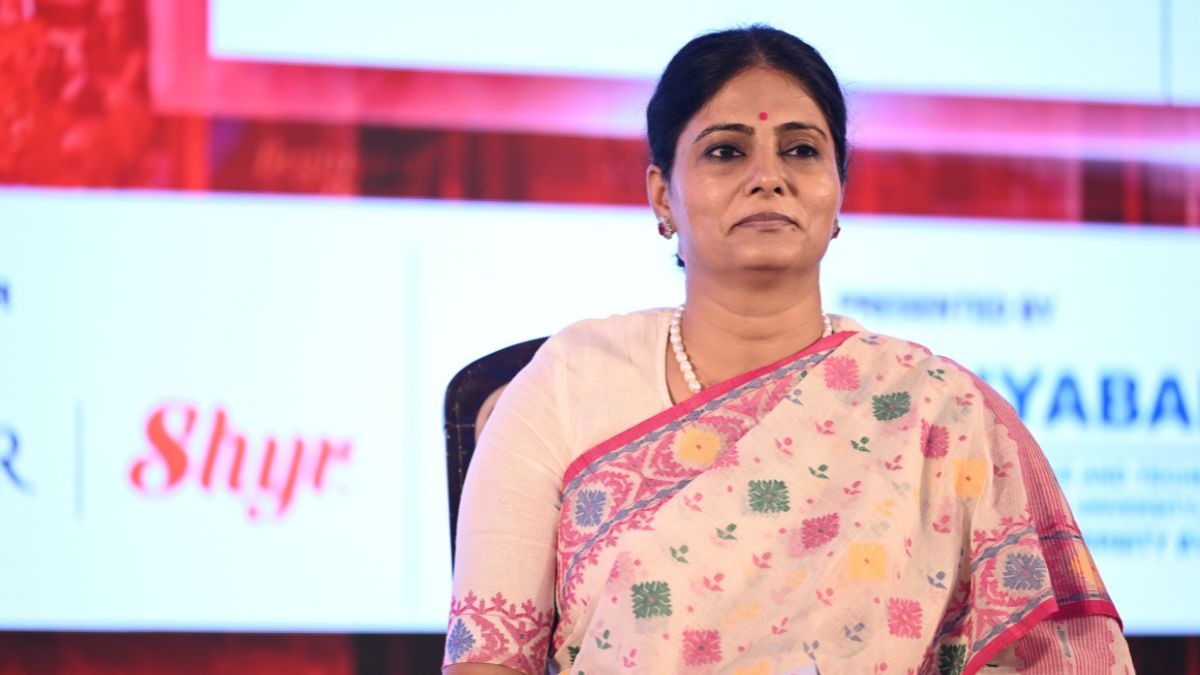
Reservation can give women legislature seats, but it cannot by itself change the culture that picks poll candidates, said the Union minister at the India Today Woman SummitFor all the talk of women becoming a more powerful political constituency in India, Union minister of state for health & family welfare and chemicals & fertilisers Anupriya Patel says there remains a more basic problem: political parties are still reluctant to give women a chance to contest elections.Speaking at the India Today Woman Summit 2026 in New Delhi on August 22, Patel, who heads the Apna Dal (Soneylal), argued that the debate around women’s political representation cannot stop with the implementation of the 33 per cent reservation for them in Parliament and legislative assemblies. Political parties need to change how they choose poll candidates.“Political parties are reluctant, to a great extent, to give tickets to women candidates,” Patel said. The problem, according to her, is the widespread perception within parties that women are not necessarily “winnable” candidates. Unless a woman comes from a politically established family, she said, parties are often unwilling to take what they see as a risk.Her argument goes to the heart of why women remain under-represented in Indian politics. Reservation can create seats for women, but it cannot by itself change the culture inside political organisations that determines who gets a ticket, who gets resources and who is considered capable of winning an election. “Had this reluctance not been there, we would not have needed women’s reservation,” Patel said.The issue is particularly significant as India prepares to operationalise the 33 per cent reservation for women in the Lok Sabha and state assemblies. Patel's position, however, is that the quota should be accompanied by an increase in the overall number of parliamentary seats. With the electorate having grown substantially, she argued, the current number of Lok Sabha constituencies is no longer sufficient to adequately represent the population.Patel also acknowledged the political discomfort that such a move creates, particularly among male MPs. If one-third of the existing 543 constituencies were reserved for women, many sitting male MPs would inevitably lose their seats. “Their hearts are beating faster,” she said, arguing that the expansion of Parliament and women's reservation should therefore be considered together.But Patel also placed some responsibility directly on political parties. She said that they do not have to wait for a constitutional quota to nominate more women. They can increase women's representation through their own ticket distribution. Her comments are particularly interesting because they come from a politician who has herself had to negotiate the complicated terrain of political inheritance, party acceptance and gender.Patel entered politics after the death of her father Sonelal Patel, who founded the Apna Dal. She said that being his daughter did not automatically translate into acceptance within the party. “There was a large section who would look at me and say that she should come because she is our founder president’s daughter,” she recalled. “But there were people who did not accept me easily. So I also had that struggle, but I had to prove my worth.”For women without such political backgrounds, she suggested, the barriers can be even higher. A woman seeking a party ticket must first overcome doubts about her ability to win and then prove herself in an environment where political networks and established hierarchies remain heavily male-dominated.Patel nevertheless argued that the broader picture of women's participation in India is changing. She pointed to the government's economic programmes, including Jan Dhan accounts, self-help groups, Lakhpati Didi and NAMO Drone Didi, as examples of what she described as a shift from women-centric development to women-led development. She also linked women's economic participation to infrastructure. Access to household water, toilets and cooking gas, she argued, saves women time that can then be used for work and income-generating activities.The political change, she said, is visible among voters too. Women are increasingly engaging with election manifestos and political issues rather than simply voting as a bloc directed by others.Yet representation remains a major gap. Women account for only about 10 per cent of MPs and MLAs across the country, according to an Association for Democratic Reforms analysis published in 2026. Patel's answer to that gap was therefore not simply more reservation, but a combination of institutional reform and political willingness.The conversation also turned to the growing political unease among Gen Z, particularly over jobs, examination paper leaks and the quality of education. Patel resisted viewing the protests simply through an electoral lens, arguing that young people should not be reduced to potential first-time or second-time voters. “Do not connect young people or children with any election outcome,” she said. “They are our children and our youngsters, and they have some genuine demands. We have to listen to them.”She acknowledged that concerns over paper leaks had emerged across states and said the issue should not be treated as the problem of one government or political party. “As a nation, we need to address it. We have to break this entire nexus,” she said, referring to the need for tougher laws to prevent examination fraud.On the broader question of young people protesting against governments, Patel said their dissatisfaction was not necessarily a negative sign. “People should have a voice,” she said, adding that it was the government's “moral duty to correct the mistakes” when people were dissatisfied with its performance.The conversation also touched on the increasingly visible relationships between women MPs across party lines. Patel said political disagreement does not have to become personal hostility. MPs can oppose each other's positions inside Parliament and still meet for coffee, eat together and maintain friendships outside it. For Patel, that is not a contradiction but a part of democracy itself. Different parties may disagree over the route, she said, but they can still share the same broad objective of wanting the country to progress.In her closing message, Patel said that women cannot be treated merely as voters or beneficiaries of government schemes. They have to become active participants in political decision-making. “Women are half our population. If you want the country to grow stronger, you cannot do it without women,” she said.REDEFINING THE ROLE OF WOMEN IN POLITICSAnupriya Patel, Union minister of state, health & family welfare and chemicals & fertilisers“Political parties are reluctant, to a great extent, to give tickets to women candidates. They feel that they are not winnable. Unless you are from some really big, politically established family, they will always prefer the male candidate.”“Had this reluctance not been there, we would not have needed women’s reservation.”“Being a woman politician brings additional challenges. People really find it hard to trust your abilities, so you have to prove your worth. You have to make extra efforts to win their trust.”“Do not connect young people or children with any election outcome. They are our children and our youngsters, and they have some genuine demands. We have to listen to them.”“We may differ in our perspectives, in our opinions, in our views, but we are all for this nation. We all want this nation to progress and become better. We may just feel that a different route should be adopted.”Subscribe to India Today Magazine- EndsPublished By: Akshita JollyPublished On: Aug 26, 2026 18:52 IST
Why Anupriya Patel says 33% women's quota must begin with political parties
Full Article
Original Source
Read the full article at Indiatoday →KhanList aggregates and links to publicly available news content. We do not host full articles from third-party sources. Always verify important information with original sources.