
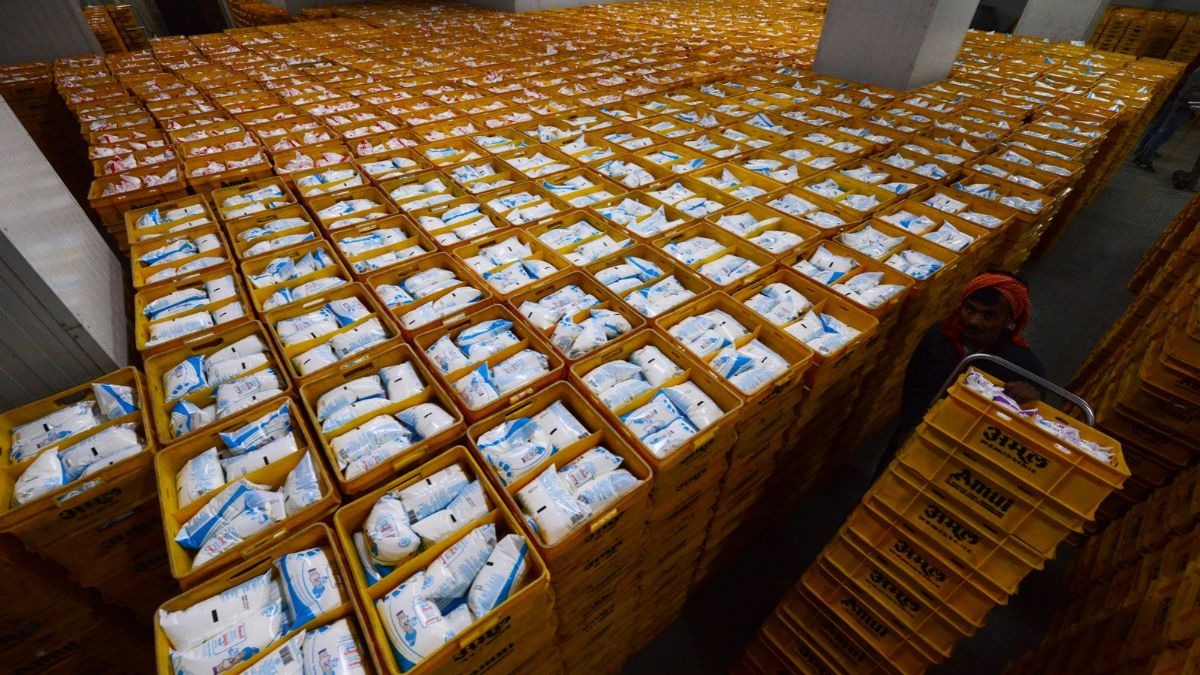
For years, milk prices in India followed a pattern. Amul raised rates about once a year, around summer. Mother Dairy moved in step and smaller private dairies followed suit. That tradition broke this November 12.The Gujarat Cooperative Milk Marketing Federation (GCMMF), which markets Amul, increased pouch-milk rates by Rs 2-4 a litre: Rs 2 on toned Amul Taaza, Rs 4 on full-cream Amul Gold. The previous hike, of Rs 2, had taken effect less than six months ago, on May 14.Mother Dairy moved prices the same day in Delhi-NCR, where toned milk now costs Rs 62 a litre and full-cream milk Rs 76. Since May, toned milk is dearer by Rs 4 a litre and full-cream milk by Rs 6.Behind the second price spike of the year is El Nino, coming on top of an already warm climate due to global warming, which has meant lesser rains and consequently lesser fodder for cattle. The West Asia conflict has increased the cost of fuel. The overall input cost for dairy farmers is up. Back in 2024, Amul’s hike in June was its first since February 2023. The next hike of Rs 2 waited until May 2025, and the one after that a full year. In between, in January 2025, Amul even rolled back rates by Re 1 a litre. Amul’s toned milk in Delhi has gone from Rs 54 a litre to Rs 62 since mid-2024, and half of that rise came in the last six months. Two hikes in one financial year last happened in 2022-23.GCMMF cited the low, uneven rains in Gujarat and elsewhere and that it needs to pay producers more. The defence is that the money goes back to some 3.6 million dairy farmers. Cattle feed cost 15-20 per cent more this September than last. Add diesel, packaging, and a crackdown on analogue paneer that has pulled more real milk into paneer-making. The demand-supply equation too contributed to upsetting the applecart.Winter is usually the flush season when milk supply swells and prices soften, but traders do not expect that relief this year.The ripple began before the milk hike. From November 2, Amul butter went costlier by Rs 15 for a 500 g pack and ghee reached Rs 680 a litre. In Karnataka, Nandini milk prices climbed Rs 8 a litre and curd Rs 14. Milk fat is scarce commodity, which is why ghee, butter and paneer prices rise the fastest.The tough reckoning will be the trickle-down impact of the milk price rise across food items. Milk is the single-largest item in the Indian household’s food bill, yet it is consumed very unequally. According to the Household Consumer Expenditure Surveys conducted by the government’s National Sample Survey Office, the richest tenth of households drink three to four times as much milk per head as the poorest tenth, and the poorest 30 per cent account for just 18 per cent of consumption.The ICMR-National Institute of Nutrition recommends 300 g of milk/curd a day for an adult in a balanced diet. Doing that that would cost 70 per cent of households between a tenth and nearly a third of their monthly spending. With food inflation at 7.74 per cent in September, the latest milk price hike is a real pinch for scores of families.Milk is an indispensable staple across the length and breadth of India. Alternatives to replace the nutritional value of milk is a difficult conversation. Eggs are the cheapest complete protein but are off the table in many homes. Pulses, groundnut, soya and ragi can cover protein and some calcium, but that needs to be carefully planned. The realistic cushion for nutrition is milk in anganwadis and school meals, and milk coupons for poor households in regions with strong cooperative networks—an idea nutrition researchers have long forwarded. Perhaps it's time to take a careful note.Subscribe to India Today Magazine- Ends
Why Amul, other dairies have been raising milk prices frequently this year
Full Article
Original Source
Read the full article at Indiatoday →KhanList aggregates and links to publicly available news content. We do not host full articles from third-party sources. Always verify important information with original sources.