
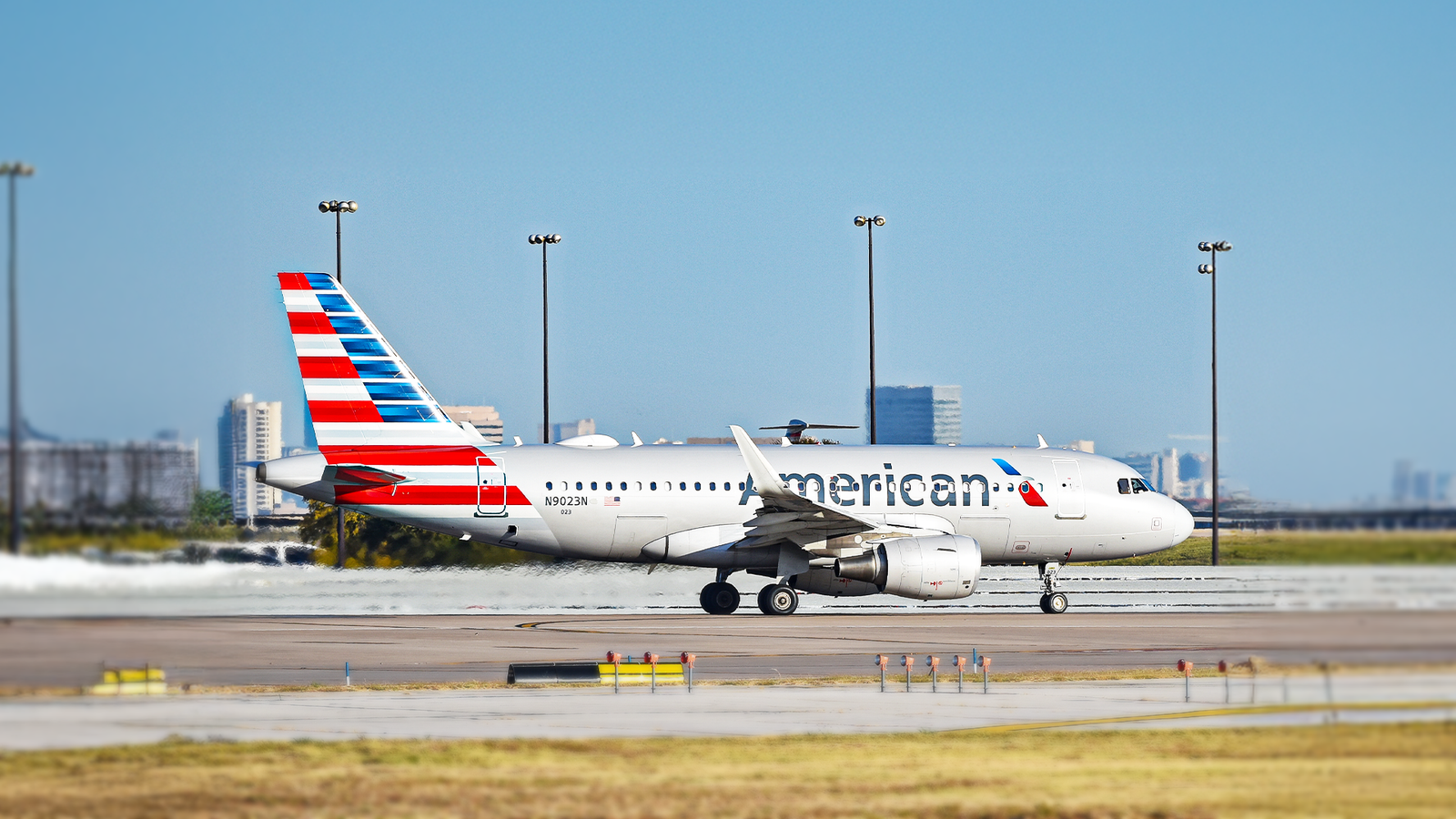
American Airlines has built one of the world's largest Airbus A319 fleets, despite initially arriving relatively late to the aircraft compared with several other major operators. What might once have appeared to be a relatively modest addition to its narrowbody lineup has developed into an important part of the airline's short-haul operation, providing the capacity, flexibility, and operating economics needed across hundreds of short-haul routes. Today, American Airlines operates 133 examples of the Airbus A319, making it the world's largest operator of the type. Although many of these aircraft are approaching or have passed two decades in service, their comparatively low ownership costs, established maintenance infrastructure, and suitability for demanding domestic markets have helped extend their usefulness. Rather than rushing to retire the fleet, American Airlines is increasingly demonstrating why its decision to embrace the smaller Airbus narrowbody continues to make financial and operational sense. Building A Surprisingly Large Airbus A319 Fleet Credit: Markus Mainka | Shutterstock American Airlines did not originally develop its Airbus A319 fleet through a single, coordinated purchasing program. Instead, its current position resulted from several acquisitions, corporate mergers, and opportunities to obtain secondhand aircraft at attractive prices. The most significant contribution came from its 2013 merger with US Airways, which brought a substantial number of established A319s into the combined airline's operations and immediately increased its exposure to the type. US Airways was one of the original customers for the Airbus A319, having recognized the aircraft's potential for operating routes where larger narrowbodies would offer more capacity than necessary. Through the merger, American Airlines inherited 66 A319s, giving it a considerable foundation on which to build. The combined airline subsequently supplemented this inherited fleet with additional aircraft, eventually establishing a presence that few other operators could match. American Airlines also ordered 32 brand-new A319s, which were delivered between 2013 and 2015. These aircraft are considerably younger than most of the examples inherited from US Airways and represent a particularly distinctive part of the fleet. They are also the only A319s currently operating with a US airline to feature Airbus' fuel-saving sharklets, making them visually and technically different from the airline's older examples. The remaining aircraft came through various fleet transitions involving US Airways, America West Airlines, and Frontier Airlines, including secondhand additions as other operators reduced their Airbus A319 commitments. This mixed acquisition strategy has allowed American Airlines to expand without relying entirely on expensive new deliveries. Consequently, its fleet now combines relatively young aircraft with older examples that have already delivered substantial value to their previous owners. The Economics Behind American Airlines' A319 Strategy Credit: Robin Guess | Shutterstock The strongest argument for retaining the Airbus A319 is its relatively inexpensive ownership cost, particularly when compared with purchasing or leasing a substantially newer aircraft. American Airlines already has the infrastructure, maintenance expertise, pilot training arrangements, and operational experience required to support the type. Adding another used A319 therefore involves fewer complications than introducing an entirely different aircraft family into its existing narrowbody operation. American Airlines has previously described being the world's largest A319 operator as "one of our hidden advantages", explaining that acquiring additional examples of a type already present in such significant numbers can be very cost-effective. This advantage becomes particularly important when aircraft become available on the secondhand market, allowing the airline to expand capacity without accepting the financial commitments associated with purchasing brand-new aircraft. The changing aircraft market has also created favorable conditions for American Airlines. As more Airbus A220 aircraft enter service with airlines around the world, older A319s are increasingly becoming available, particularly as aircraft complete their initial leasing arrangements. For an operator that already understands the type and has the necessary maintenance arrangements in place, these opportunities can provide an economical way to secure additional capacity. There is, of course, a difference between acquiring an inexpensive aircraft and operating one profitably. Maintenance requirements, fuel consumption, reliability, and the cost of keeping older interiors competitive all influence the overall economics. Nevertheless, American Airlines benefits from having an established fleet large enough to spread many of these expenses across numerous aircraft. This makes the A319 considerably more attractive than it might be to a smaller operator. The latest data from ch-aviation shows that American Airlines currently operates the following Airbus A320 family aircraft: Aircraft Number In Fleet Number On Order Airbus A319 133 - Airbus A320 48 - Airbus A321 218 - Airbus A321neo 84 132 Airbus A321XLR 5 35 A Natural Fit For Busy Short-Haul Routes Credit: Markus Mainka | Shutterstock The Airbus A319's relatively modest capacity is particularly useful across American Airlines' extensive domestic network, where passenger demand can vary considerably between individual routes. While larger narrowbodies are essential for high-volume services, deploying them everywhere would not necessarily make economic sense. The A319 provides an alternative, allowing the airline to maintain frequencies and serve important markets without consistently offering more seats than passengers require. American Airlines deploys its fleet of Airbus A319s on a wide variety of routes, with the aircraft providing flexibility when capacity needs to be matched with local demand and available airport infrastructure. One common route for the aircraft is between Boston Logan International Airport (BOS) and Ronald Reagan Washington National Airport (DCA). This is an especially interesting example because both airports present operational challenges, including significant congestion and restrictions on available slots. Smaller aircraft can be particularly useful in such circumstances, allowing American Airlines to serve important business markets while managing capacity within the limitations of busy airports. The Airbus A319 also provides useful flexibility when passenger numbers change throughout the year or when an airline needs to adjust its schedules. Rather than reducing frequencies or abandoning a market, American Airlines can deploy a smaller aircraft while continuing to offer convenient departure times. This makes the type valuable not simply because it is inexpensive, but because its capacity matches the commercial requirements of numerous individual routes. Why American Airlines' Late Arrival Became An Advantage Credit: Wenjie Zheng | Shutterstock American Airlines' position is particularly interesting when considered against the history of the Airbus A319 in the US. Other airlines had already established themselves as important operators before American Airlines consolidated its fleet through the US Airways merger. However, entering the market later did not necessarily put American Airlines at a disadvantage, because it inherited an established operation rather than having to develop an entirely new one from scratch. The airline also benefited from the opportunity to acquire aircraft at different stages of their operating lives. Its 32 factory-delivered A319s arrived between 2013 and 2015, while many of its other examples were already established aircraft with considerable service histories. This combination provides a mixture of newer and older airframes, giving American Airlines different options when allocating aircraft to routes and planning maintenance. Another advantage comes from the relative simplicity of maintaining a fleet built around a familiar aircraft family. Although the A319 is not identical to the A320 or A321, the shared Airbus narrowbody heritage creates operational commonality that can help airlines manage training, maintenance, and fleet planning. American Airlines can therefore benefit from its existing Airbus expertise while continuing to operate aircraft with different seating capacities. The wider aviation industry is also experiencing renewed interest in smaller narrowbody aircraft, although newer designs are pursuing similar markets with different technologies. The COMAC C919 illustrates how manufacturers are seeking to challenge established aircraft families, but neither changes the immediate economic appeal of an existing A319 fleet with established support arrangements. For American Airlines, proven aircraft and favorable acquisition costs remain compelling considerations. Keeping Older Aircraft In Service For Longer Credit: William Cobb I Shutterstock Perhaps the clearest indication of how much American Airlines values its A319 fleet is the changing retirement schedule. The oneworld carrier was at one point expected to begin retiring its approximately 100 older examples as early as 2026. However, American Airlines has since pushed the expected retirement timeline back to at least 2030, suggesting that the aircraft remain commercially useful beyond their originally anticipated operating lives. Extending the retirement date does not mean that the airline intends to operate its aircraft indefinitely. Older narrowbodies inevitably become more expensive to maintain as components age, and the financial benefits of keeping them eventually diminish. Nevertheless, when replacement aircraft are expensive, delivery positions are limited, and demand remains strong, extending the service life of existing aircraft can be a sensible way to protect capacity. American Airlines is also investing in its Airbus A319 interiors rather than simply allowing the cabins to deteriorate. The refurbishment program brings the aircraft closer to the airline's newer interior standards and includes an additional row of first-class seating. This is an important commercial consideration because it allows the airline to generate more premium-cabin revenue without acquiring a larger aircraft or substantially changing its existing route structure. The interior changes have not been universally welcomed by passengers, particularly following the removal of seatback entertainment screens from some refurbished aircraft. However, American Airlines has indicated that it intends to bring seatback screens back to its narrowbody fleet from 2028. This suggests that its cabin strategy is still evolving, with the airline balancing refurbishment costs, passenger expectations, and the financial benefits of retaining aircraft that would otherwise require replacement. What The A319 Means For American Airlines' Future Credit: Karolis Kavolelis | Shutterstock American Airlines' continued investment in the A319 also needs to be understood within the context of its wider fleet modernization program. The airline operates several narrowbody types, each serving different requirements across its domestic and international networks. Newer aircraft provide improvements in fuel efficiency, passenger experience, and maintenance performance, but replacing every older aircraft immediately would create significant financial pressure and operational challenges. The Airbus A319 offers an effective bridge between the airline's established fleet and its newer aircraft deliveries. Its smaller capacity is particularly useful in markets where demand does not justify deploying an Airbus A321, while its existing operating infrastructure reduces the costs associated with keeping it in service. This allows American Airlines to concentrate investment on areas where new aircraft can deliver the greatest benefits rather than replacing every older airframe simply because of its age. There is also an important distinction between the economics of operating a used aircraft and those of purchasing a new one. A brand-new narrowbody may offer better fuel efficiency, but its acquisition cost, financing commitments, and depreciation must all be considered. An older Airbus A319 that has already been acquired at a relatively low price can remain competitive on routes where its operating costs are manageable, and passenger demand supports its capacity. Ultimately, American Airlines' relationship with the A319 demonstrates how a fleet strategy does not always need to revolve around the newest aircraft to deliver meaningful commercial advantages. Its late expansion into the type, supported by the US Airways merger and subsequent secondhand acquisitions, has created a substantial fleet that continues to serve hundreds of routes. With retirements postponed, interiors receiving attention, and used aircraft remaining comparatively affordable, the Airbus A319 appears likely to remain an important part of American Airlines' domestic operation for several more years.
Why American Airlines’ Late Bet On The Airbus A319 Is Still Paying Off
Full Article
Original Source
Read the full article at Simpleflying →KhanList aggregates and links to publicly available news content. We do not host full articles from third-party sources. Always verify important information with original sources.