
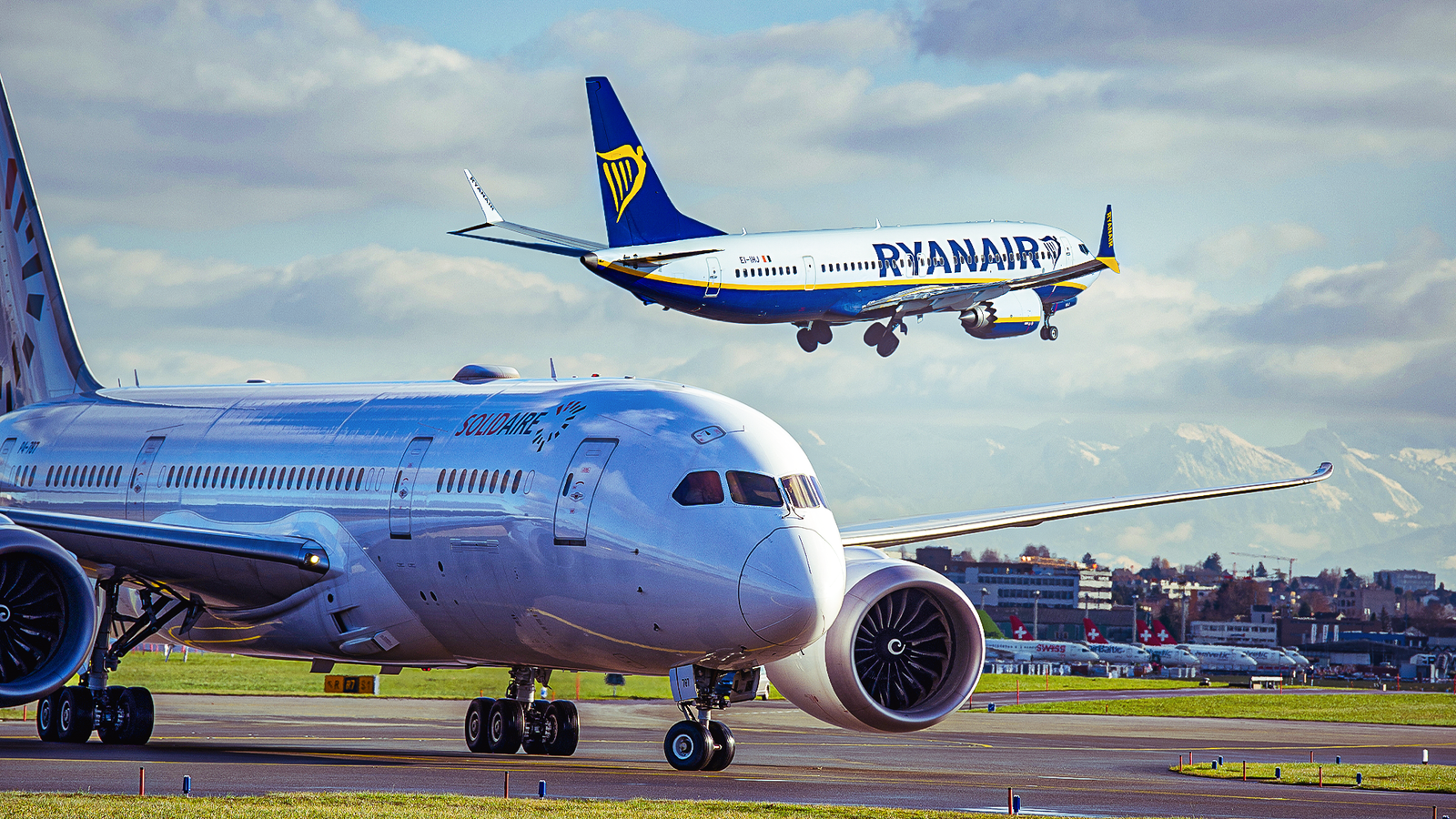
Boeing's three most modern commercial aircraft, the Boeing 737 MAX, Boeing 787 Dreamliner, and Boeing 777X, share a common objective when it comes to their wing designs: reducing aerodynamic drag and improving fuel efficiency. However, despite pursuing the same goal, all three aircraft feature noticeably different wingtip designs, ranging from distinctive split-tip winglets to swept-back extensions and even enormous folding wingtips. The differences are not simply a matter of appearance or Boeing experimenting with alternative technologies. Instead, each design reflects a combination of aerodynamic performance, aircraft dimensions, and the practical limitations imposed by airports. Understanding why these aircraft have such different wingtips provides an interesting insight into the compromises involved in modern aircraft engineering. Why Aircraft Need Specially Designed Wingtips Credit: Aerospace Trek | Shutterstock An aircraft's wingtips play an important role in determining how efficiently it flies, particularly during cruise. As air moves around a wing, higher-pressure air beneath the wing attempts to move toward the lower-pressure region above it. This movement creates swirling vortices around the wingtips, which contribute to a phenomenon known as induced drag. The resulting resistance makes it harder for an aircraft to maintain speed and requires additional engine thrust. Reducing induced drag is therefore a major consideration when manufacturers design new commercial aircraft. One of the most straightforward ways to achieve this is by increasing the wingspan, effectively distributing lift across a longer wing and reducing the strength of the vortices produced at its extremities. However, making wings longer introduces another challenge, since airports have strict limits on how much space aircraft can occupy. The International Civil Aviation Organization (ICAO) establishes aircraft size categories that help airports determine which aircraft can use particular gates, taxiways, and other infrastructure. These categories are largely determined by wingspan, meaning manufacturers cannot simply make every aircraft's wings as long as they would ideally like. An aircraft that exceeds the relevant dimensions could require different airport facilities, potentially limiting its operational flexibility. Boeing's engineers must consequently balance aerodynamic efficiency against the practical requirements of commercial aviation. Different wingtip devices offer different ways to manage this compromise. Some extend the effective wing vertically, while others increase the actual wingspan or combine both approaches. The three aircraft demonstrate how these engineering decisions can produce substantially different solutions to essentially the same aerodynamic problem. The Boeing 737 MAX Uses Distinctive Split-Tip Winglets Credit: Marco Menezes | Shutterstock The Boeing 737 MAX features perhaps the most visually distinctive wingtip arrangement of the three aircraft. Its Advanced Technology winglets have two separate extensions, with one pointing upward and another extending downward. This split-tip configuration gives the aircraft a distinctive appearance while helping reduce induced drag without requiring a substantial increase in its overall wingspan. The reason Boeing selected this particular arrangement becomes clearer when considering the aircraft's relationship with the 737 Next Generation family. The Boeing 737 MAX was developed to retain considerable operational commonality with its predecessors, allowing airlines to introduce the newer aircraft without requiring significant changes to their existing airport infrastructure. Keeping its wingspan within the ICAO Code C limit of 118 feet (36 meters) was therefore an important design consideration. A conventional raked wingtip, such as the arrangement found on the Boeing 787, would have extended the 737 MAX's wings too far horizontally. This could have pushed the aircraft outside the dimensions associated with its existing airport category, creating complications for airlines operating it alongside older 737 variants. The split-tip design improved aerodynamic performance while keeping the aircraft within its required dimensional limits. The winglets also incorporate carefully shaped surfaces designed to manage airflow and reduce aerodynamic losses. Rather than simply adding extensions to the existing wing, Boeing developed a more sophisticated arrangement intended to improve overall efficiency. This was particularly important for an aircraft that needed to deliver better fuel economy while retaining much of the operational flexibility that had made earlier 737 generations attractive to airlines. The latest data from ch-aviation shows that Southwest Airlines is currently the world's largest operator of the Boeing 737 MAX, with a total of 300 in its fleet, followed by United Airlines with 243. The Boeing 787 Has Swept-Back Raked Wingtips Credit: A Periam Photography l Shutterstock Unlike the 737 MAX, the Boeing 787 was developed as an entirely new aircraft family, giving Boeing considerably more freedom when designing its wings. Rather than adopting conventional vertical winglets, the manufacturer opted for long, swept-back raked wingtips that extend the wing horizontally. The result is a particularly elegant design that contributes to the 787's distinctive appearance. The Boeing 787's wing design was developed with aerodynamic efficiency as a central priority, rather than being constrained by the dimensional requirements associated with an existing narrowbody aircraft family. Its larger wingspan allows the aircraft to benefit from the reduced induced drag associated with longer wings. Boeing was therefore able to pursue a solution that offered aerodynamic advantages without introducing conventional upward-pointing winglets. Research from Boeing and NASA indicates that raked wingtips can reduce drag by approximately 5.5%, compared with improvements of around 3.5% to 4.5% for conventional winglets. Although the precise benefits depend on the aircraft and operating conditions, these figures help explain why Boeing selected this configuration for its widebody aircraft. The design also avoids some of the additional structural weight associated with separate winglet structures. United Airlines is currently the world's largest operator of the Boeing 787, as outlined in the table below: Ranking Airline Boeing 787-8 Boeing 787-9 Boeing 787-10 Total 1 United Airlines 12 64 21 97 2 All Nippon Airways 36 44 10 90 3 American Airlines 37 33 - 70 4 Qatar Airways 31 20 - 51 5 Etihad Airlines - 37 10 47 Another important characteristic of the Boeing 787's wings is their composite construction. Built primarily from advanced carbon-fiber-reinforced materials, they are designed to be long, relatively thin, and flexible. This flexibility allows the wings to respond to aerodynamic forces during flight, while their overall shape contributes to improved efficiency. Combined with the raked wingtips, the design helps the 787 achieve the aerodynamic performance required for long-distance commercial operations. The Boeing 777X Introduces Folding Wingtips Credit: Coby Wayne | Shutterstock The Boeing 777X takes the concept of longer wings considerably further, featuring the largest wingspan of any commercial airliner currently designed for airline service. Its wings extend 235 feet (72 meters) when fully deployed. This substantial span helps reduce induced drag and supports the aircraft's objective of delivering improved fuel efficiency on long-haul routes. However, the Boeing 777X faces a practical problem that the 787 does not encounter to the same extent. Its enormous wingspan would exceed the dimensions permitted within the ICAO Code E category used by many large commercial aircraft. This could make it difficult for the aircraft to operate at airports designed around the existing infrastructure used by conventional widebody aircraft, potentially restricting where airlines could deploy it. Boeing's solution was to develop folding wingtips that allow the outer sections of the wings to rotate upward while the aircraft is on the ground. Once folded, the 777X's wingspan is reduced to just under 213 feet (65 m), bringing it within the dimensional requirements associated with Code E airport operations. Before take-off, the wingtips extend into their normal flight positions, restoring the aircraft's full aerodynamic configuration. This arrangement is particularly interesting because it allows Boeing to avoid choosing between aerodynamic performance and airport compatibility. The aircraft can benefit from an exceptionally long wing during flight without requiring airports to accommodate its entire wingspan while parked or taxiing. The folding mechanism adds engineering complexity, but it provides a practical solution to a problem that would otherwise have required substantial compromises in wing design. All About The Boeing 777X Credit: Falcons Spotters l Shutterstock The Boeing 777X is set to become the latest and largest member of the manufacturer's successful 777 family. Designed to offer improved efficiency, greater range, and increased passenger comfort, the aircraft will be available in three variants: the 777-8 and 777-9 passenger models, along with the 777-8F cargo aircraft. The Boeing 777-9 will be the first variant to enter service, offering airlines a high-capacity long-haul aircraft. The smaller 777-8 will provide greater range, while the freighter version targets the growing cargo market. However, the program has experienced considerable delays. Originally expected to enter service in 2020, the Boeing 777X has faced certification challenges, flight-testing setbacks, and issues involving its new GE9X engines. As of November 2026, Boeing is targeting the first 777-9 delivery in 2027. The 777-8F is expected around two years later, while the passenger 777-8 is not anticipated before 2030. Despite the setbacks, the 777X remains an important part of Boeing's future long-haul aircraft plans. Emirates is set to be the world's largest operator of the Boeing 777X, with a staggering 270 on order. The carriers with the largest firm orders for the passenger variants of the 777X (777-8 and 777-9) are outlined in the table below: Ranking Airline Boeing 777-8 Boeing 777-9 Total 1 Emirates 35 235 270 2 Qatar Airways - 124 124 3 Korean Air - 40 40 4 Cathay Pacific - 35 35 5 Singapore Airlines - 31 31 Why The Three Designs Are So Different Although the three Boeing aircraft use different solutions, their wingtip designs are based on the same aerodynamic principles. All three aim to reduce induced drag, improve lift distribution, and lower the amount of energy required to maintain efficient flight. The differences emerge because each aircraft operates within a different set of dimensional and engineering constraints, rather than because Boeing has changed its overall approach to aerodynamic efficiency. For the Boeing 737 MAX, airport compatibility was particularly important because the aircraft needed to retain the operational flexibility of the previous 737 generation. Its split-tip winglets provide aerodynamic improvements without substantially increasing its wingspan, making them a practical solution for a narrowbody aircraft operating across a wide variety of airports. The Boeing 787 had greater design freedom, allowing Boeing to prioritize aerodynamic performance through a longer wing and swept-back raked wingtips. Its composite construction also makes it possible to develop a lightweight, flexible wing structure that works particularly well with this configuration. The absence of conventional winglets is therefore a deliberate engineering decision, not an omission. Meanwhile, the Boeing 777X represents a different approach altogether, combining the aerodynamic advantages of an exceptionally long wing with a folding mechanism that addresses airport limitations. Its design demonstrates how manufacturers can use mechanical innovation to overcome restrictions that would otherwise prevent them from pursuing more ambitious aerodynamic improvements. Together, these three aircraft show that there is no single ideal wingtip design for every commercial aircraft, since the most effective solution ultimately depends on the aircraft's size, intended operations, and the infrastructure it must use.
Why All 3 Of Boeing's Most Modern Aircraft Have Drastically Different Wingtip Designs
Full Article
Original Source
Read the full article at Simpleflying →KhanList aggregates and links to publicly available news content. We do not host full articles from third-party sources. Always verify important information with original sources.