
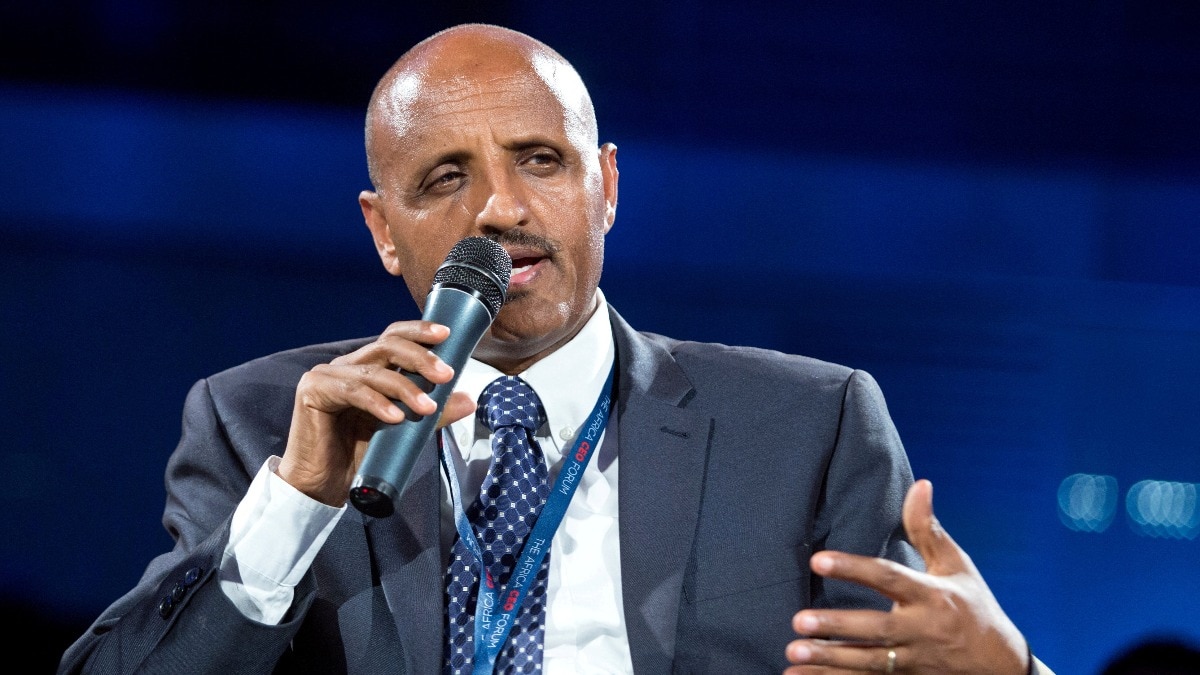
Air India has a new boss, and he comes with an unusual CV: he spent nearly 37 years at one airline, starting as a cargo clerk and ending up as the man who turned it into Africa's biggest carrier.That is why Gebremariam might fit the bill, because when Tata Group began searching for Air India's next chief executive, it wasn't looking for someone who had simply run a successful airline. It wanted a leader who had rebuilt one.Tewolde Gebremariam takes charge of Air India from October, stepping into a job that his predecessor, Campbell Wilson left after nearly four years of trying to fix a loss-making airline. Wilson resigned in April this year, worn down by mounting losses and the fallout from the AI171 crash in Ahmedabad, which killed 260 people in June 2025.Air India's troubles run deep. The airline has piled up losses since Tata took it back from the government in 2022. The FY26 loss alone came in at Rs 22,238 crore, more than double the Rs 10,859 crore lost the year before. A DGCA audit after the crash flagged 51 safety lapses, ranging from crew training gaps to unapproved simulators. Tata's chairman N Chandrasekaran has called this a "critical execution and expansion era" for Air India. Translation: the airline needs someone who has actually built a global carrier before, not just managed one.That is where Gebremariam comes in.FROM CARGO CLERK TO CEO Gebremariam is not a career aviation executive who moved between airlines picking up top jobs. He joined Ethiopian Airlines in 1985, handling cargo traffic, and never left until his retirement 37 years later.He worked his way up through the ranks. He was Ethiopian's Regional Director for India and South East Asia, based out of Bombay. He then ran the airline's Saudi Arabia operations from Jeddah, and later headed its business in the north-eastern United States and Canada from New York, when Ethiopian first launched direct US flights.By 2004, he was heading marketing and sales at the head office. Two years later, in 2006, he became Chief Operating Officer. In January 2011, he was made CEO, taking over from Girma Wake.He holds a bachelor's degree in Economics from Addis Ababa University and an MBA from the Open University in the UK.WHAT ETHIOPIAN AIRLINES LOOKED LIKE WHEN HE TOOK OVERWhen Gebremariam became CEO in 2011, Ethiopian Airlines was a solid regional player, but nowhere close to the global name it is today. The airline had a workforce of roughly 6,300 people at the time.His first year in the job was rough. Oil prices shot up from an average of $79 a barrel to a peak of $122, driven by the Arab Spring. Europe's economy was weak, and unrest across North Africa and the Middle East was squeezing revenues just as Ethiopian was gearing up for its biggest expansion yet.That expansion had a name: Vision 2025. Launched in 2010, just before Gebremariam formally took charge, it set out to grow the airline fourfold within 15 years, to 120 aircraft, 90 destinations, 18 million passengers and 720,000 tonnes of cargo a year.Most people in the industry thought the targets were unrealistic.THE ETHIOPIAN AIRLINES TURNAROUNDEthiopian did not just hit those targets. It beat them, seven years ahead of schedule. By 2018, the airline already had 126 aircraft flying to 127 destinations, numbers it was not meant to reach until 2025.Under Gebremariam, Ethiopian's revenue grew from $1 billion to $4.5 billion. Its fleet expanded from 33 aircraft to 130. The airline's international network doubled to around 128 destinations, and annual passengers grew from 3 million to 12 million.What set his approach apart, according to industry watchers, was that he never ran the airline quarter to quarter. He built for the long term, and rather than simply buying more planes, he invested at the same time in maintenance, pilot training, engineering, cargo infrastructure and airport facilities. That meant Ethiopian's growth did not depend heavily on outside contractors.The approach was tested twice. In 2019, an Ethiopian Boeing 737 MAX crashed shortly after take-off, killing all 157 people on board and triggering a worldwide grounding of the aircraft type. A year later came Covid-19. Ethiopian got through both crises without a government bailout, a rare feat among airlines its size.By the time Gebremariam retired in March 2022, citing health reasons, Ethiopian had more than 120 aircraft, served over 127 destinations, and had become the undisputed leader in African aviation.AFRICA'S BIGGEST, AND CLIMBING GLOBALLYEthiopian Airlines remains Africa's largest carrier today by a wide margin. As of July 2026, it operates 2.1 million seats a month, well ahead of South Africa's Safair at 1.01 million and Egyptair at 871,000, according to aviation data firm OAG.On fleet size, Ethiopian's 170 aircraft dwarf the next biggest African airlines: Egyptair with 71, Royal Air Maroc with 65, Air Algerie with 58 and Air Cairo with 38.Globally, Ethiopian has also been climbing the rankings for service quality. In the 2025 Skytrax World Airline Awards, often called the Oscars of the aviation industry, Ethiopian was ranked 38th in the world, up from 35th the year before. That is well ahead of every other African airline in the list, including Air Mauritius, RwandAir, South African Airways, Egyptair, Royal Air Maroc and Kenya Airways.Ethiopian is now chasing an even bigger target under a new roadmap called Vision 2035: 271 aircraft, 207 international destinations, 65 to 67 million passengers a year, and $25 billion in revenue.THE AIR INDIA HE IS WALKING INTOGebremariam's new job will look very different from the one he just left.Air India is grappling with mounting losses, driven partly by Pakistan's decision to shut its airspace to Indian carriers, which has forced longer and more expensive routes to Europe and North America, and partly by rising fuel costs linked to conflict in the Middle East.The airline is also dealing with the aftermath of the AI171 crash, the deadliest aviation disaster in India in over a decade. Regulatory scrutiny has intensified since, with the DGCA citing Air India for lapses including flying an aircraft without a valid airworthiness certificate and not properly checking emergency equipment.The board has already discussed capacity cuts of more than 20%, along with bonus freezes and furloughs, as it tries to control costs. Singapore Airlines, which owns 25.1% of Air India, has been in direct talks with Tata Sons over the financial crisis.WHY HIM, THEN?Campbell Wilson came to Air India with 26 years at Singapore Airlines, one of the world's most polished carriers. He knew how to run a good airline. What he did not have was experience of building one from the ground up in a market working against him.Gebremariam does. He took over an airline in 2011 that was respected but regional, and built it into a continental giant without cutting corners on safety, training or infrastructure along the way. He also has first-hand experience of steering an airline through two major crises, a fatal crash and a pandemic, without government support.There is an obvious parallel here. Just as Ethiopian invested in fleet, engineering and training all at once under Vision 2025, Air India is now trying to do the same, renewing its fleet, overhauling engineering, and rebuilding training standards simultaneously.But the comparison only goes so far. Ethiopian was a state-backed flag carrier with limited domestic competition, building up from a low base. Air India is fighting for market share in one of the world's most price-sensitive aviation markets, under intense public scrutiny, and in the shadow of a crash that killed 260 people.Whether Gebremariam can pull off in India what he pulled off in Ethiopia may be the biggest test of his career yet.- EndsPublished On: Aug 6, 2026 15:49 IST
Why Air India picked Tewolde Gebremariam for its toughest turnaround yet
Full Article
Original Source
Read the full article at Indiatoday →KhanList aggregates and links to publicly available news content. We do not host full articles from third-party sources. Always verify important information with original sources.