
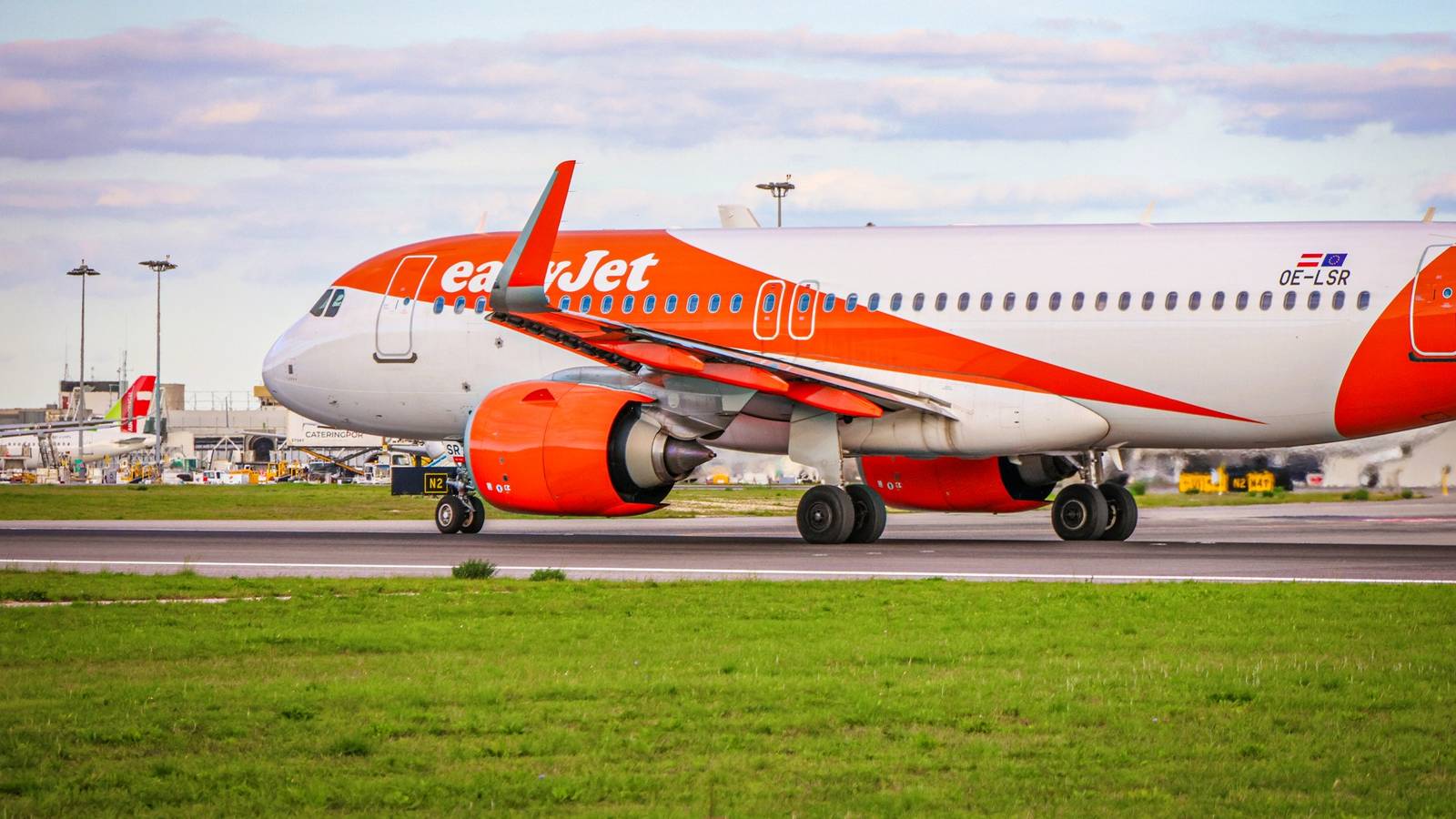
Published Aug 20, 2026, 2:00 PM EDT Paul has had a career of 25+ years focused on the international technology sector, which has taken him to over 100 countries. Along the way, he developed a deep love for aviation, with a travel bucket list measured by aircraft types flown rather than destinations reached. Now he brings that avgeek passion, along with the journalism experience he accumulated early in his career, to write insightful pieces for Simple Flying. Apollo Global Management appeared to pull off something remarkably straightforward this week: the New York-based investment giant agreed to buy easyJet for £5.7 billion ($7.7 billion), beating out fellow US investor Castlelake to one of Europe’s largest low-cost airlines. Reuters reports that Apollo’s £7.15-per-share offer represented an 81% premium to easyJet’s closing price before investor interest became public, while easyJet founder Sir Stelios Haji-Ioannou and the airline’s board backed the transaction. Except Apollo cannot simply acquire easyJet in the same way that an American private-equity firm could acquire most other European or British businesses. Apollo-managed funds will hold no more than 49.9% of the purchasing structure, while qualifying continuing investors, including Haji-Ioannou, will retain much of the remainder, and an EU management trust can hold up to 5%. That unusual construction exposes a fundamental feature of international aviation: airlines have nationalities, and owning the economic value of an airline is not necessarily the same thing as being allowed to control it. US Investors Have Been Buying Into European Airlines For Decades Credit: Shutterstock American investment in European aviation is hardly new. Delta Air Lines paid $360 million for 49% of Virgin Atlantic more than a decade ago; Phoenix-based Indigo Partners backed Wizz Air from its formative years; Apollo supplied restructuring finance to Scandinavian Airlines (SAS); and Minneapolis-based Castlelake subsequently became SAS’ largest shareholder. The objectives varied enormously — strategic network access for Delta, ultra-low-cost growth for Indigo and turnaround returns for alternative-asset managers — but large amounts of US capital have nevertheless flowed into European carriers. US Investor Airline Date Initial Transaction Stake Acquired Nature Of Investment Apollo easyJet 2026 $7.7bn takeover valuation Up to 49.9% Take-private acquisition Castlelake SAS 2023 Part of a $1.2bn restructuring package, including $500m DIP refinancing. 32% Restructuring equity/debt Indigo Partners Wizz Air 2003 $49 million Estimated 20% - 30% (not disclosed) Founding/growth capital Delta Air Lines Virgin Atlantic 2012 $360 million 49% Strategic equity investment Delta Air Lines Air France-KLM 2017 $440 million 10% Strategic equity investment Apollo SAS 2022 $700 million financing No equity stake Chapter 11 DIP financing Apollo itself had encountered SAS before competing against Castlelake for easyJet. Funds managed by Apollo provided SAS with a $700 million debtor-in-possession (DIP) facility, of which an initial $350 million was drawn in September 2022. Castlelake later provided a $500 million facility to refinance it as part of the winning restructuring proposal and emerged with approximately 32% of SAS. Indigo Partners, meanwhile, still held around 14.2% of Wizz Air’s ordinary shares after selling 10 million shares for roughly £125 million in February 2026. US investors can therefore hold large stakes, provide decisive financing, and wield considerable commercial influence. But straightforward majority ownership and effective control of an EU airline is another matter entirely. Even Wizz Air has had to restrict the voting rights attached to shares held by non-qualifying nationals in order to preserve its EU operating status. The reason lies not in ordinary corporate law, but in the regulations governing who is allowed to call itself a European airline. Europe Has A 50% Rule — And Ownership Is Only Half The Test Credit: Shutterstock Regulation (EC) No. 1008/2008 establishes the basic rule. For an airline to hold an EU operating license, EU member states and/or EU nationals must own more than 50% of the undertaking and effectively control it. Those are separate tests: satisfying the numerical shareholding threshold is not enough if a foreign investor actually holds decisive influence over matters such as strategy, governance or the use of assets. That distinction between nominal ownership and effective control is precisely what European regulators are now examining as foreign capital becomes increasingly creative in airline investment structures. Regulatory Requirement What It Means Why It Matters To easyJet More than 50% EU ownership Majority qualifying ownership must be preserved Apollo funds cannot simply hold 100% Effective EU control EU interests must retain genuine decisive influence Nominal 50.1% EU ownership may not be enough EU operating licence Required to operate as an EU carrier easyJet Europe depends on its Austrian licence Principal place of business Licensed airline must meet home-state requirements easyJet Europe is headquartered in Austria Continuing compliance Ownership must remain compliant after the deal Regulators can scrutinize subsequent changes The implications go far beyond where the company happens to be incorporated. EU airline status is what allows a carrier to exploit the bloc’s liberalized internal aviation market, including flights between and within member states. easyJet knows this unusually well: anticipating Brexit, it established easyJet Europe in Austria in 2017 specifically so it could continue flying across and domestically within EU countries after Britain left the bloc. Today the group’s flights are operated by separate airlines based in the UK, Austria and Switzerland. easyJet has also had to police its shareholder register. When UK nationals ceased to count as EU nationals after Brexit, the airline activated a contingency plan allowing it to suspend voting rights attached to certain non-EU holdings. Its permitted maximum for non-EU ownership was set at 49.5%, demonstrating how directly a seemingly technical ownership rule can affect ordinary shareholders. The UK applies a similar principle to its own licensed airlines: the Civil Aviation Authority says a UK license holder must be majority owned and effectively controlled by qualifying UK nationals. Apollo’s answer is to separate economic acquisition from unrestricted American control. Reuters reports that its funds are capped at 49.9%, while qualifying continuing shareholders and, if necessary, an EU management trust to provide the remainder of the ownership structure. Apollo’s £7.15 offer was already higher than Castlelake’s £6.90 proposal, but its structure also offered existing eligible investors the opportunity to roll over their holdings and included a firmer commitment to satisfying EU requirements. Those regulatory arrangements ended up being one of Apollo’s advantages over Castlelake. More importantly, if the structure passes scrutiny, it could offer US private capital a significant new blueprint for European airline investment. Apollo Wants To Accelerate The easyJet That Already Exists Credit: Unsplash Apollo is not looking to reinvent easyJet. The Financial Times reports that it has explicitly endorsed the airline’s existing strategy, including fleet modernization and upgauging, stronger ancillary and loyalty products, and further expansion of easyJet holidays. Apollo argues that taking easyJet private will provide incremental capital and allow management to plan further ahead without the short-term demands of public markets. easyJet itself says Apollo supports the direction already being pursued by management rather than a wholesale strategic reversal. Growth Area easyJet Position Opportunity Under Apollo Fleet 359 aircraft, with 290 on order Continued modernization and upgauging NEO fleet 100th A320neo-family aircraft delivered in June Lower fuel burn and unit costs Future deliveries New seats planned across 237 aircraft orders from 2028 Exploit secured Airbus delivery pipeline easyJet holidays £250m FY25 headline PBT £450m PBT target by FY30 Loyalty Structured program planned for 2027 Higher retention and customer monetization Ancillaries Bags, seats, boarding and onboard extras Technology-led revenue growth Connectivity Predominantly point-to-point Potential interline/codeshare partnerships Fleet renewal is particularly attractive because the benefits are structural rather than cosmetic. easyJet received its 100th A320neo-family aircraft in June, taking its fleet to 359 aircraft, with NEOs already accounting for more than a quarter of the total. The airline says the new-generation aircraft use up to 20% less fuel, while the 235-seat A321neo also lets easyJet spread costs across more passengers at constrained airports. From 2028, newly delivered aircraft will receive seats more than 20% lighter than those currently installed, across an order pipeline covering 237 aircraft. Some of the most attractive growth may sit outside the basic airfare. easyJet holidays generated £250 million of headline pre-tax profit in FY2025, reaching its previous medium-term ambition ahead of schedule, after which the airline lifted the target to £450 million by FY2030. Apollo also wants to enhance ancillary revenues and roll out a "structured, commercially integrated loyalty program" that goes well beyond the current Flight Club program, potentially allowing easyJet to extract more value from customers without relying solely on operating additional flights. More intriguingly, Apollo is considering premium or business-focused features on selected routes and potential interline or codeshare arrangements with long-haul airlines. That could exploit easyJet’s positions at major airports such as London Gatwick Airport (LGW), Paris Charles De Gaulle Airport (CDG) and Amsterdam Schiphol Airport (AMS), while improving connectivity and winter aircraft utilization. But there is a balancing act: adding connections, baggage transfers or premium seating introduces complexity into a business model whose economics depend heavily on simplicity, density and efficient aircraft turns. Castlelake Has Already Helped Turn Around SAS Credit: SAS The firm that lost easyJet is no stranger to European airlines. Castlelake emerged as the largest shareholder of SAS following a restructuring that began when the Scandinavian carrier entered Chapter 11 in July 2022. The final investment agreement provided approximately $1.2 billion, comprising $475 million of new equity and $725 million of secured convertible debt. Castlelake received around 32% of SAS’s equity, alongside the Danish state, Air France-KLM, Danish investor Lind Invest, with creditors receiving shares. SAS owner after restructuring Approximate equity stake Castlelake 32.0% Danish state 25.8% Air France-KLM 19.9% Lind Invest 8.6% Other creditors/investors 13.6% Castlelake did more than purchase equity. It also supplied the $500 million DIP facility that refinanced Apollo’s earlier $700 million commitment and held 55.2% of SAS’s secured convertible debt under the finalized structure. The investment therefore placed Castlelake at the center of both SAS’s ownership and its recapitalization without giving the American firm outright majority ownership. SAS emerged from its restructuring in August 2024 after receiving $1.2 billion of new investment and subsequently moved from Star Alliance to SkyTeam, which it joined in September. The airline’s new relationship with Air France-KLM included expanded codesharing and interlining, giving the French-Dutch group an increasingly strategic role alongside Castlelake’s financial one. Castlelake may now be approaching the other end of the investment cycle. Air France-KLM intends to acquire the stakes held by Castlelake and Lind Invest, increasing its SAS ownership from 19.9% to 60.5%, with completion targeted for the second half of 2026, subject to approval. The proposed transaction neatly reinforces the central distinction: Castlelake, a US financial investor, stopped at 32%, whereas a qualifying European airline group can pursue majority ownership and control. Indigo Partners Helped Build Wizz Air From The Beginning Credit: Wizz Air Wizz Air provides a very different example. Rather than entering a mature carrier during a restructuring, US investment firm Indigo Partners was involved almost from the beginning. Wizz’s annual reports identify Indigo founder Bill Franke as one of the airline’s founders in 2003, bringing decades of airline experience from America West Airlines and later assembled a portfolio that has included Wizz Air, Frontier Airlines, Volaris, and JetSmart. Wizz Air/Indigo Milestone Detail Wizz Air founded 2003 First flights 2004 Key US backer Indigo Partners London IPO 2015 Indigo shares sold Feb. 2026 10 million Sale price £12.50 per share Gross proceeds Approx. £125 million Remaining ordinary stake Approx. 14.2% The precise lifetime return on Indigo’s investment is difficult to reduce to one figure because the holding evolved over more than two decades and involved several instruments. However, there have been multiple transactions that give clues to how Indigo has extracted value from the investment. In 2021, it sold 9% of Wizz Air for $550 million, while just earlier this year it sold 10 million ordinary shares at £12.50 each, generating approximately £125 million, while retaining around 14.2% of the company, as well as convertible instruments. Indigo also brought more than cash. Franke’s background in ultra-low-cost aviation and Indigo’s investments in carriers including Frontier and Volaris gave it expertise in dense narrowbody fleets, and buying power for aircraft procurement. Wizz therefore demonstrates how specialist airline capital can contribute to building a carrier rather than simply financing one after the fact. It also ultimately illustrates the same regulatory limit, with Indigo never having attained majority control of the airline. Delta Found Another Way: Own Less, Gain More Credit: Shutterstock Private-equity firms ultimately seek investment returns; another airline often wants something different. Delta’s European investments demonstrate how a US airline can extract enormous strategic value without requiring majority ownership. When Delta agreed in December 2012 to pay Singapore Airlines $360 million for 49% of Virgin Atlantic. Virgin Group retained 51%, while Delta and Virgin simultaneously created a metal-neutral transatlantic joint venture under which the carriers would share costs and revenues on qualifying flights.. The strategic prize was considerably larger than the shareholding alone suggested. Virgin Atlantic gave Delta a much stronger position at capacity-constrained London Heathrow Airport (LHR), and helped it compete with the British Airways-American Airlines partnership. Over time, Virgin, Delta, Air France and KLM became part of a wider transatlantic joint venture, demonstrating that airline partnerships can deliver extensive schedule, revenue and network integration without one carrier needing to own another outright. Delta also became an investor in Air France-KLM, although its holding has subsequently been diluted and stood at 2.8% at the end of 2025. Air France-KLM’s proposed increase from 19.9% to 60.5% of SAS provides a useful contrast: the French-Dutch group is pursuing majority control of another European carrier, something Delta could not simply replicate while retaining that airline’s European regulatory nationality. That brings the story back to easyJet. For decades, American investors have accommodated Europe’s airline nationality rules by stopping below straightforward majority control, partnering with European shareholders, supplying debt rather than equity, or using commercial agreements to obtain much of the strategic value they wanted. Apollo is attempting something more ambitious: taking easyJet private and capturing much of its economic value while preserving sufficient qualifying European ownership and genuine control to protect its operating rights. With Brussels already reconsidering how such structures should be assessed, the £5.7 billion deal could become either a blueprint for a new generation of private-equity airline acquisitions — or the transaction that forces Europe to decide exactly where foreign investment ends and effective control begins.
Why A US Firm Cannot Simply Buy A European Airline Outright
Full Article
Original Source
Read the full article at Simpleflying →KhanList aggregates and links to publicly available news content. We do not host full articles from third-party sources. Always verify important information with original sources.