
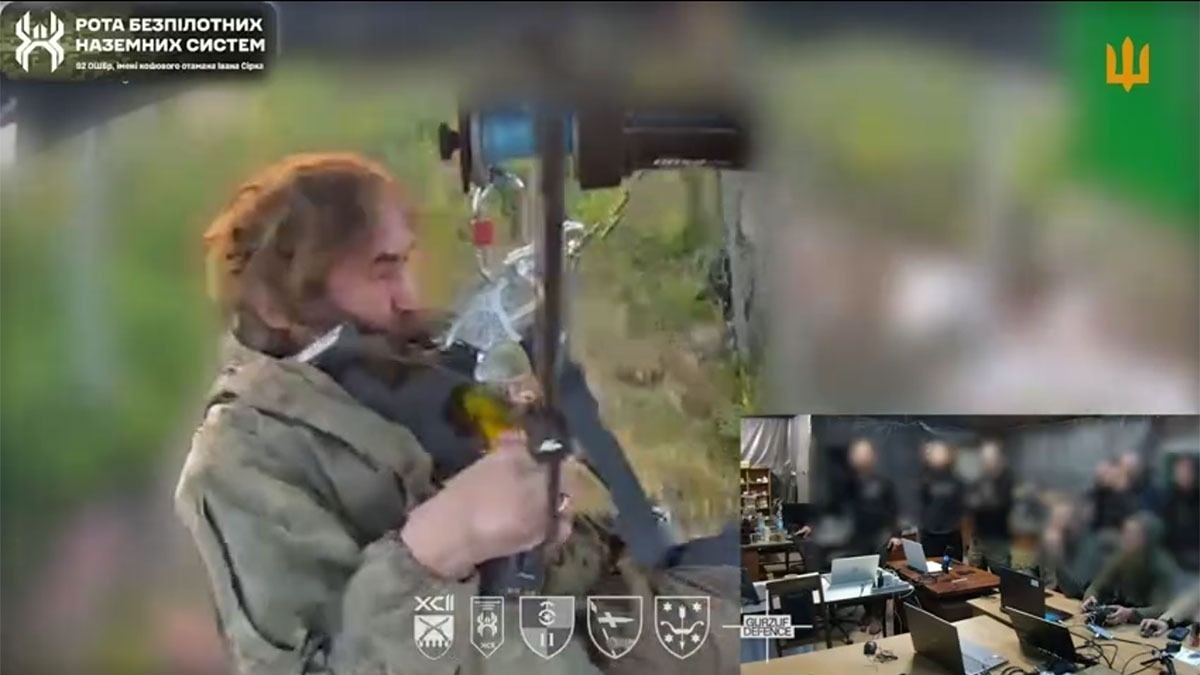
On Monday, the Ukrainian Ground Forces’ 92nd Assault Brigade released video footage showing an aerial drone transporting a wounded soldier during a medical evacuation mission. While the full-scale Russian invasion approaches its fifth year, Ukraine’s military has described this frontline evacuation by drone as an apparent world first for the drone-savvy country. If that claim stands, it marks a significant evolution in the role of drones in modern warfare: from hunting soldiers to rescuing them.Ukraine’s dramatic rescue of a soldier trapped for nearly 500 days illustrates how drones could transform battlefield medical evacuation. India has comparable technologies under development, but turning indigenous innovation into a viable operational capability will require sustained military ownership, realistic testing and long-term institutional support.For nearly 500 days, the battlefield had become a prison for Konstantyn Vlasenko. Isolated in a position surrounded by mines and under constant observation from Russian drones, the wounded Ukrainian soldier was beyond the reach of his comrades. Even a ground robot reportedly sent to rescue him failed. As days turned into months, survival became a desperate struggle.Then came a rescue mission that lasted just one hour and 15 minutes. Instead of sending soldiers into a deadly trap or risking another ground vehicle, the Ukrainian military turned to a heavy-lift drone. Originally designed to bomb Russian positions, the aircraft was modified to carry a human passenger. After seven days of preparation, the unmanned aircraft flew nearly 40 miles to bring the wounded soldier to safety. For India, military observers say, the operation offers a timely lesson. Along the Himalayan frontier, where high-altitude terrain, unpredictable weather and the growing threat of drones complicate military operations, evacuating a wounded soldier can be very challenging. The question is whether India can convert its emerging indigenous drone capabilities into dependable medical evacuation systems before the next major conflict tests them.According to Ukrainian media reports, Vlasenko, a soldier with the 30th Separate Brigade, had been trapped in an inaccessible position. He was reportedly wounded in a Russian drone attack earlier this year. With rescue routes blocked and the risks of a ground operation judged too high, he resorted to partially amputating both legs in an attempt to survive, the reports said.His eventual evacuation involved four Ukrainian brigades, with close cooperation between military specialists and the drone’s manufacturer. The Ukrainian-made heavy-lift hexacopter developed by Gurzuf Defence was supplied to the military free of charge, according to the 92nd Brigade. Engineers modified the platform to carry a person, while minimising dangerous swinging and maintaining flight stability. The configuration was tested before the mission proceeded. Supporting drones were used to distract Russian forces, the brigade said, underscoring how even medical rescues on drone-saturated battlefields require deception, coordination and meticulous planning.The significance of the operation lies not merely in the drone’s ability to lift a person. It lies in the possibility of reaching casualties when conventional rescue methods become too dangerous or impractical. In a conflict where surveillance drones can expose troop movements and turn predictable routes into killing zones, unmanned aircraft could provide commanders with an additional option.India’s armed forces currently rely on a combination of ground transport, combat medics and helicopters for casualty evacuation. In difficult terrain, particularly along the Himalayan frontier, military helicopters remain indispensable for reaching isolated positions and transporting injured personnel. Advanced Light Helicopters and other aviation assets routinely support evacuation missions, including winching operations where conditions permit.However, the battlefield is changing rapidly. Drones, loitering munitions and precision-guided strikes have made movement across exposed terrain increasingly hazardous. A rescue team dispatched to recover a wounded soldier can itself become a target, potentially leading to more casualties. At high altitudes, thin air, severe weather, narrow valleys and limited landing sites further complicate helicopter operations.This is where heavy-lift drones could fill a critical gap. They are not a replacement for helicopters, which can transport multiple casualties, medical personnel and equipment over much greater distances. Nor can every drone safely carry a seriously injured soldier. Payload limitations, battery endurance, wind conditions, communications reliability and vulnerability to electronic interference remain significant challenges. Yet for selected short-range extractions from inaccessible or contested positions, unmanned aircraft could reduce the exposure of additional personnel.Indian industry is already developing comparable platforms. Project Varuna, created by the Pune-based aerospace startup Sagar Defence Engineering, is described as India’s first indigenous human-carrying passenger and heavy-lift utility drone. Designed primarily for the Indian Navy and other defence users, it is intended for casualty evacuation (CASEVAC), emergency medical response and tactical logistics.The platform can transport either a person or stretcher-borne loads and offers a payload capacity of approximately 100-130 kg, with higher capacities available in heavier variants. It has an operational range of about 25 km and flight endurance of 25-33 minutes. The system features autonomous vertical take-off and landing, is rated for operations in high sea states during ship-to-ship missions, and incorporates a high-altitude variant, Varuna HA, as well as an autonomous ballistic parachute recovery system.A parallel effort under Project ADITI, part of the Ministry of Defence’s iDEX (Innovations for Defence Excellence) framework, aims to develop autonomous platforms and aerial vehicles for logistics, casualty evacuation and surveillance in rugged high-altitude environments.For the armed forces, the potential applications extend well beyond transporting personnel between ships. Properly configured platforms could eventually support the evacuation of injured troops from difficult terrain and other locations where conventional rescue methods are constrained. High-altitude adaptations could further expand those possibilities, provided they demonstrate the necessary performance and safety under operational conditions.“There is a considerable difference between a drone that can carry a person during a controlled demonstration and one that can evacuate a wounded soldier under fire,” says a senior Indian military official. “A battlefield medical platform must provide secure restraint, stable flight, reliable communications and appropriate emergency safeguards. It must also be tested against the realities of weather, terrain, electronic warfare and the physical condition of the casualty.”Technology is only part of the challenge, he adds. The larger question is whether the military is prepared to work closely enough with Indian industry to transform prototypes into operational systems. “True Indian innovators capable of solving these problems are around us, waiting to be discovered by military users, acquisition entities and decision-makers,” says a veteran Indian Air Force helicopter pilot, who has conducted evacuations under difficult conditions.His concern is that promising technologies cannot advance without ownership and leadership from their eventual users. Companies require clear operational requirements, opportunities to test systems under realistic conditions and sustained engagement with the services. The pool of innovators capable of addressing such specialised challenges may be small, making long-term support particularly important.Without that support, a prototype can remain little more than a demonstration project: impressive in a controlled environment but never integrated into frontline operations. For casualty-evacuation drones, the military must identify missions where such systems could make a meaningful difference, establish performance benchmarks, and involve combat medics, pilots and frontline commanders throughout testing and evaluation.Not everyone in the Indian drone industry believes the country is close to matching the capability demonstrated in Ukraine. A drone manufacturer offers a more cautious assessment, arguing that Indian companies are still overcoming the challenges of reliably transporting cargo. Carrying a human being, the manufacturer says, represents a substantially greater technological milestone.That caution is justified. A cargo drone can tolerate movements and landing conditions that would be unacceptable when carrying an injured person. A human-carrying drone must account for the consequences of power failure, control-system malfunctions, unstable loads and emergency landings. In combat, it must also contend with hostile surveillance, signal jamming and the risk of being shot down.Military experts note that funding alone cannot guarantee deployment. The services must articulate the operational requirement, test systems under demanding conditions and establish a credible pathway to procurement. For medical evacuation drones, this includes determining how casualties will be secured and monitored, what level of autonomy is acceptable, how the aircraft will communicate in contested environments, and who will operate and maintain them in the field.Ukraine’s experience demonstrates why these questions matter. The drone used to rescue Vlasenko was originally designed for attack missions. Its conversion into a medical evacuation platform was driven by an urgent battlefield need, and enabled by close cooperation between military specialists and industry. The innovation was not simply the drone itself; it was the willingness to adapt an existing capability to save a life.For India, the lesson is not that drones will replace helicopters or that human-carrying systems are ready for every battlefield. Rather, it is that the armed forces need more options when traditional evacuation routes are blocked, aircraft cannot safely approach and sending additional soldiers would create unacceptable risks. India already has indigenous companies exploring the technology and programmes designed to foster defence innovation. What remains essential is sustained military ownership, rigorous testing and a clear pathway from prototype to operational deployment.On the modern battlefield, the measure of a drone is no longer defined solely by how far it can fly, how much it can carry or how accurately it can strike. It may also be measured by whether it can reach a soldier whom no one else can reach and bring him home alive.Subscribe to India Today Magazine- Ends
Why a Ukrainian rescue by drone holds lessons for India
Full Article
Original Source
Read the full article at Indiatoday →KhanList aggregates and links to publicly available news content. We do not host full articles from third-party sources. Always verify important information with original sources.