
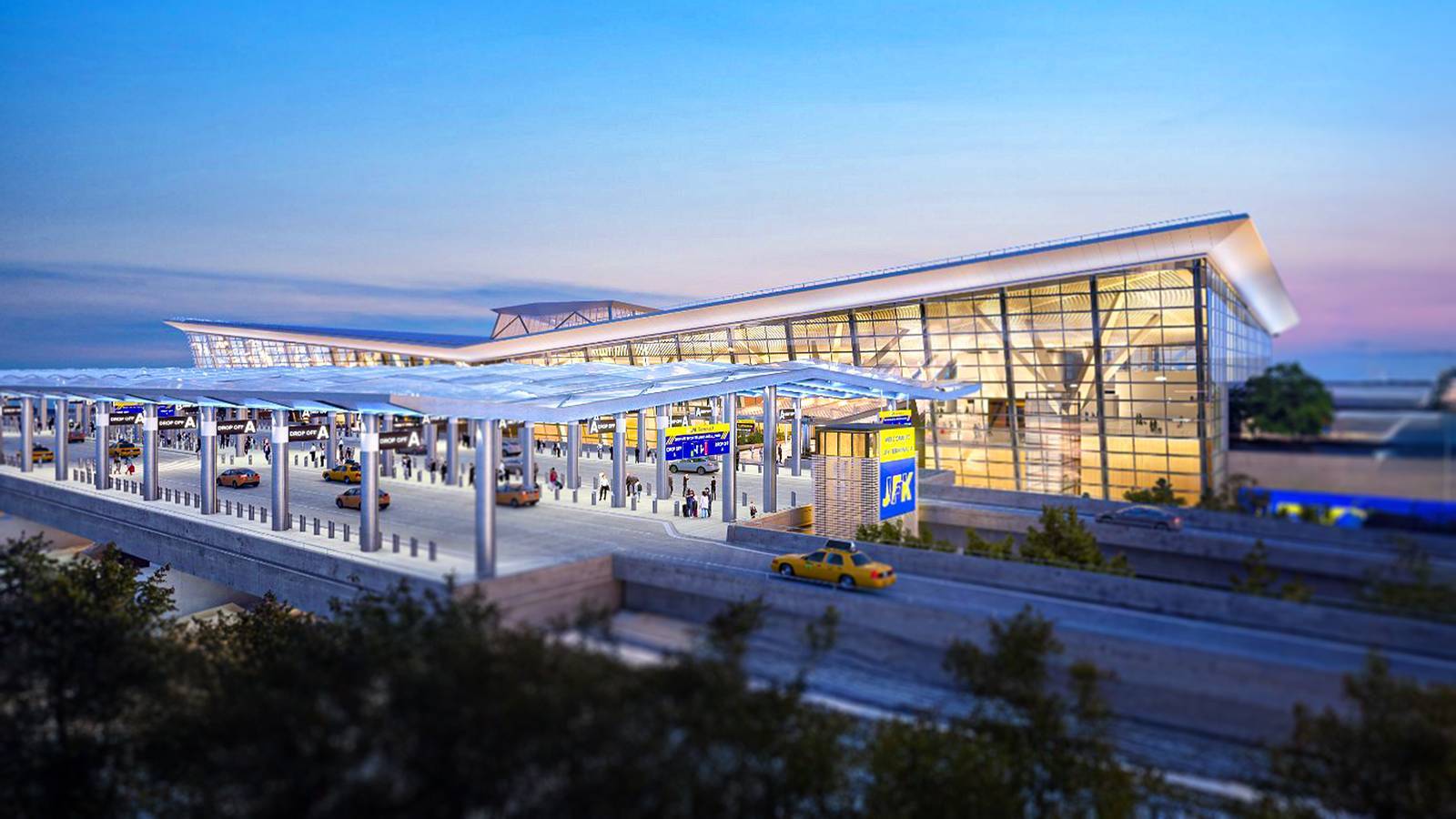
Published Sep 22, 2026, 11:00 AM EDT Journalist - Steven has a varied background in communications, and it was this passion for writing combined with his in-depth knowledge of the aviation industry that led him to Simple Flying. A keen linguist, he also has experience in translation and interpreting. Based in Palma, Spain The countdown to the New Terminal One at New York John F. Kennedy International Airport (JFK) is no longer really about whether the building will be finished in 2026. With the original June 2026 milestone missed, the project's latest plan points to March 2027 for the opening date of Phase A, leaving 14 widebody-capable gates unavailable while airlines continue operating from older facilities. That delay has turned what looked like a construction story into something much larger. Fitch Ratings has placed $5.9 billion of New Terminal One bonds on Rating Watch Negative. Meanwhile, KBRA has moved its outlook to negative, as higher costs, schedule slippage, and weaker international traffic combine inside a privately financed project whose investors carry much of the commercial risk. The June 2026 Deadline Has Become A March 2027 Countdown Credit: New York Port Authority The original plan called for Phase A to become operational on June 1, 2026, a date that became increasingly difficult to defend as construction and integration work continued later than expected. The project's construction company, Ferrovial, still pointed to fall 2026 in its first-quarter reporting. However, its second-quarter results confirmed the June milestone had been missed and that New Terminal One had submitted a completion remedial plan using March 2027 as the new Phase A opening date. That distinction matters because the project is not simply waiting for workers to finish a few remaining walls or gates. Ferrovial said construction was 92% complete by June, with the remaining work concentrated on systems integration, coordination between stakeholders, testing and commissioning, operational readiness, activation, and regulatory approvals. At this stage, a terminal can look substantially finished while still being unable to accept passengers at scale because every interconnected airport system must work reliably. The financial clock is also running. The project's contractual framework had June 1, 2026, as the Phase A milestone, although it does allow for one year of delays, with a maximum opening date of June 1, 2027. That means there are only a few months of additional room before the financing timetable becomes an even more serious issue. 14 Gates Are Waiting For The Terminal To Open Credit: viper-zero | Shutterstock Phase A was designed around 14 widebody-capable gates, consisting of 13 Widebody contact gates and one temporary widebody gate, allowing the first portion of New Terminal One to begin replacing the existing international facilities before the entire 23-gate terminal is completed. The completed project is a $9.5 billion, 23-gate terminal that will ultimately become the largest terminal at New York John F. Kennedy International Airport. Those gates therefore represent more than empty pieces of concrete. They are the physical capacity that airlines and the consortium expected to turn into passenger fees, terminal rents, retail spending and other operating revenue once the first phase became active. Instead, the carriers expected to use the new facility remain distributed around JFK, extending a fragmented operating model that the redevelopment was specifically intended to eliminate. Ranking Airline Market Share 1 Delta Air Lines 29.7% 2 JetBlue 23.4% 3 American Airlines 11.8% 4 British Airways 2.1% 5 avianca 1.9% The largest airline at the airport by market share last year was Delta Air Lines, according to data from the US Bureau of Transportation Statistics and detailed above. The result is particularly visible among international airlines that have committed to the project. SkyTeam members including Air France, KLM, Korean Air, Turkish Airlines, and Air Europa, as well as Qatar Airways, are among the carriers planning to move to New Terminal One. However, the delayed opening means their operations remain in existing facilities such as Terminal 1 and Terminal 4 for longer than anticipated. Ferrovial reported 32 airline agreements by July, including 24 confirmed agreements and eight letters of intent, demonstrating that airline demand for the terminal has not disappeared even though the physical transfer has been delayed. The Bigger Problem Is Not Just Construction Credit: New York Port Authority The bond market's immediate concern is straightforward: a later opening means the terminal starts generating its full operating revenues later, while construction and financing costs continue to exist. Fitch's July action cited construction delays, cost overruns, and slower-than-expected international passenger growth when it placed approximately $5.9 billion of New Terminal One special facilities revenue bonds on Rating Watch Negative. KBRA reached a similar conclusion later in July, affirming its BBB- rating but moving the outlook from stable to negative. Its assessment said the expected Phase A opening date had shifted from the original June 1 to a window between December 6, 2026, and March 31, 2027, increasing the execution risk associated with completing the project and moving it into stable operations. That combination creates an awkward situation for a project that is supposed to be an infrastructure success story. New Terminal One can be 92% complete and still be financially exposed because the remaining eight percent contains some of the work needed to unlock the revenue-producing asset. At the same time, the consortium has already been spending contingency resources to absorb late-stage pressures, leaving less financial cushioning if another delay or cost increase appears before opening. International Demand Has Become A Wild Card Credit: Michael Derrer Fuchs | Shutterstock The most difficult part of the problem is that construction managers cannot solve every factor depressing the project's financial outlook. Fitch specifically pointed to weaker international passenger growth and expected near- to medium-term demand pressure linked to geopolitical conditions, including conflicts in the Middle East and restricted US-China airline traffic. Those factors directly affect the kind of long-haul flying for which New Terminal One was designed. This is where the story becomes different from an ordinary airport construction delay. A builder can accelerate certain work, reorganize crews, or resequence installation. However, it cannot manufacture international passengers when geopolitical tensions cause airlines to reduce capacity or when major long-haul markets remain constrained. Ranking Destination Passengers 1 London Heathrow Airport (LHR) 3,055,000 2 Paris Charles de Gaulle Airport (CDG) 1,717,000 3 Los Angeles International Airport (LAX) 1,494,000 4 Santiago de los Caballeros (STI) 1,044,000 5 Rome Fiumicino Airport (FCO) 1,019,000 Widebody gates only produce economic value when aircraft, passengers, and commercial activity actually move through them. The busiest routes from the airport last year are outlined in the table above. For a demand-risk project, that distinction is particularly important. New Terminal One's financing is tied to the revenues generated by the terminal rather than a broad Port Authority guarantee of the project's debt. This means that weaker passenger volumes ultimately matter to the private project itself. The terminal's projected revenue mix is heavily dependent on aviation activity, with common-use facility charges forming a major portion of aeronautical revenue, while commercial revenues provide an additional stream. Ferrovial Has Already Put Serious Money Into The Bet Credit: New York Port Authority Ferrovial's own exposure illustrates why the delay matters beyond the bondholders. In the first half of 2026, the Spanish infrastructure company completed its remaining €63 million ($73 million) equity contribution to New Terminal One, bringing its total investment to over €1 billion ($1.16 billion), while reporting that the project had reached 92% physical completion. The additional capital arrived even as the scheduled opening milestone was being replaced by the March 2027 remedial date. That investment makes the project a substantial corporate commitment rather than a peripheral airport holding. Ferrovial owns 49% of New Terminal One on an equity-accounted basis, while the wider consortium includes Carlyle, JLC Infrastructure and Ullico. The financing model combines sponsor equity with billions of dollars of capital-market debt, placing significant importance on the terminal eventually reaching the traffic and revenue levels needed to support long-term debt service. The consortium therefore faces two separate tests that happen to arrive at the same time. First, it must complete and certify a highly complex international terminal before the June 1, 2027 longstop. Second, it must open into an international aviation market strong enough to support its financial projections. The first problem is primarily an engineering and execution challenge; the second is heavily influenced by events far beyond the construction site. Airlines Are Waiting While The Financial Clock Ticks Credit: Airbus For airlines, the delay is frustrating because the new terminal was designed to consolidate international operations into a substantially more modern facility rather than simply add another collection of gates. When completed, New Terminal One will eventually cover about 2.6 million square feet and provide 23 gates, with 22 designed for widebody aircraft, creating capacity intended to support international carriers and long-haul growth at New York JFK Airport. The irony is that the airlines' patience is now valuable to the consortium. Their agreements demonstrate that there is a committed customer base waiting for the facility, but those commitments do not eliminate the financial consequences of delayed operations or guarantee that international traffic will rebound on the schedule originally assumed. The likes of Air France, KLM, Korean Air, Turkish Airlines, and Air Europa can remain in their current terminals, but every month before the move represents another month in which New Terminal One's new capacity is not producing the expected operating economics. By March 2027, the construction story should therefore be much clearer, but the demand question may still be unresolved. The 14 Phase A gates can be completed, tested, and ready to receive widebody aircraft, yet the project's financial performance will depend on how quickly airlines restore international capacity, and passengers return to the markets that generate the terminal's revenue. For the private consortium, that is the uncomfortable reality behind the ratings warnings: it can engineer a building, finance a building, and accelerate a building, but it cannot engineer away geopolitical demand risk.
Why 14 Widebody Gates At JFK's New Terminal One Will Sit Empty Well Into 2027
Full Article
Original Source
Read the full article at Simpleflying →KhanList aggregates and links to publicly available news content. We do not host full articles from third-party sources. Always verify important information with original sources.