
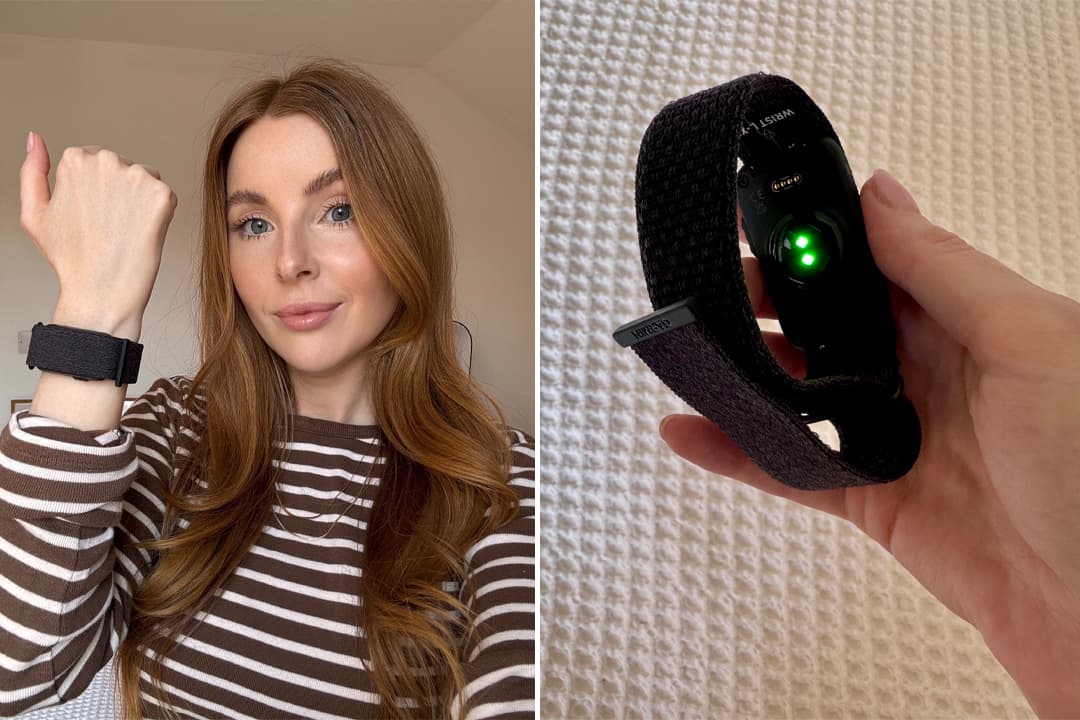
Garmin is a respected name in the health and wellness world – its products feel more specialised than other wearables. In many cases, its watches are tailored to specific sports. I’ve personally never been a Garmin wearer, but I do love to track my sleep and other lifestyle habits, so when the brand announced a new product that sits at the intersection of fitness and wellness, my interest was piqued.Over the years, I’ve used various wearables to track my sleep, hormones, habits and energy levels and my go-to for the last two years has been WHOOP. From the screenless fabric band to the provision of daily scores and recommendations inside the app, Garmin looks incredibly similar to the WHOOP in its design. However, I found there to be distinctive differences between the two devices. But would I swap my WHOOP for a Cirqa? Read on to find out.How I tested The Garmin cirqa looks near-identical to Whoop Emilie Lavinia/The Standard I tested the Garmin Cirqa for a month, wearing it on one wrist while I wore my WHOOP MG on the other. I did all the things I would usually do and checked my scores daily, updating habits and testing the in-app features. I judged the Cirqa not only against the WHOOP but in terms of its overall accuracy, user experience and design. I also took price point and accessibility into account and spoke with other users testing out the wearable for the first time. Garmin ★★★★☆What we love: Lightweight and comfortable, app is free to use, more accessible price point, syncs with other health apps, women’s health tracking, 10 days of charge, tracks 80+ exercise styles, and community features Take note: Band isn’t waterproof, generous with step count, some app features behind paywall, and has to charge off bodyThe first thing I noticed about the Cirqa was how simple the unboxing experience was. Inside the box, you have a fabric band, a small plastic tracker and a small USB-C charging cable. The band is comfortable and easily adjustable with a Velcro strap to ensure the device’s sensors make good contact with the skin. Sometimes a non-fabric strap with limited sizing can interfere with that contact, which can mess with your data – no chance of that here. The band comes in two sizes: S-M and L-XL.However, one thing that always bothered me about fabric straps is their tendency to soak up water – so I would have appreciated a waterproof strap option. While the Garmin Cirqa is technically water-resistant to 5 ATM and rated for swimming, I personally dislike having a soggy wrist. The Cirqa is screenless, very lightweight, and boasts up to 10 days of battery life. It doesn't require a subscription for the core Garmin Connect experience, which tracks variables like your sleep, stress, HRV, Body Battery, blood oxygen levels, skin temperature and more. Logged and presented in the app, where you can tailor your dashboard and build a deck showing the metrics that are most important to you. Community is key to Garmin, so there are also in-app challenges, clubs and groups to join. You can also create your own challenges – a feature I liked. When it comes to women’s health, I found the Cirqa useful for tracking your cycle, mood and symptoms, alongside your other stats so you can notice patterns in your data, rather than going to a separate period tracking or fertility app. However, you can also link the Cirqa with the Natural Cycles app.Emilie Lavinia/The StandardWith these lifestyle-focused features, Cirqa is obviously much closer to WHOOP than a traditional Garmin watch, but it applies Garmin’s existing vast fitness ecosystem, which is unique. It can track 80+ physical activities, connect to Garmin's sports technology and feed into metrics such as training readiness and VO2 max. Garmin watches already give you a score for your “body battery” and “training readiness” – body battery, for example, combines activity, stress, rest and sleep into an estimate of your available energy. The Cirqa offers these scores and a range of more in-depth scores and data points. While I find WHOOP’s in-app experience to be slightly more sophisticated, the trade-off here is that the device comes with a hefty subscription fee. The Garmin Connect app is free, and Cirqa's core tracking doesn't require a subscription. However, be warned that Garmin is increasingly putting advanced insights behind Connect+, which makes the "no subscription" advantage more complex depending on what you’re looking for. Still, it’s a much more affordable piece of tech at £179.99 with a largely free app. The Cirqa offers a decent battery life too. Although I love the Oura ring, I always struggled with the short battery life of previous iterations, and this made me an incidental WHOOP user. While WHOOP’s 14-day charge is impressive, Cirqa isn’t far behind with 10 days of charge. The only difference is that the device has to charge off the body using a USB-C charger, which can interfere with continuous tracking, as opposed to WHOOP’s portable charger, which makes it possible to charge on the go. The major difference I observed when wearing both trackers at the same time was that the Cirqa also clocked in around 2K more steps daily than the WHOOP did when I wore them together. It’s important to say that step counts are algorithmic estimates, and unless you manually validate the numbers by counting every step yourself, it’s hard to know how accurate a tracker actually is. Different devices can legitimately produce different totals because they use different sensor data, sampling, filtering and algorithms, so it’s hard to know what this says about the quality of both brands’ sensors. I happen to know that WHOOP recalibrated its step counter to ensure it offered a more conservative estimate, and alongside this, Garmin may be counting more incidental movements – small movements throughout the day that WHOOP's algorithm filters out. Differences in how both wearables detect wrist movement during everyday tasks like cooking can tip the scale here. The only other drawback I could find is that the Cirqa doesn’t have a built-in GPS like most Garmin watches do, so the device relies on your phone to track your location and map and record routes for runs and so on. The device is pretty intuitive, but you can make it easier for it to sync with your phone by telling the app you’re about to begin an activity like a hike so it knows what you’re up to. Even the smartest tech can sometimes make mistakes – I’ll never forget the day I wore flip-flops that gave me a blister and my WHOOP logged my limp as lacrosse. Is the Garmin cirqa fitness watch worth it?It’s important to note that Cirqa isn't reproducing WHOOP's experience, despite the two devices looking alike. The tech makes quite different decisions about both the data it captures and how that data is processed. The Cirqa is probably too fitness-oriented for someone who rarely exercises but wants to track sleep and habits, but compared with a proper Garmin sports watch, it’s far more stripped back.Would I swap my WHOOP for a Cirqa? Not necessarily. I'd choose the Cirqa if I wanted access to Garmin's sports ecosystem and community, a screenless device, a comfy lightweight wearable, long battery life and no mandatory membership. If you want Garmin data without wearing chunky sports watches to bed or to dinner, you’ll absolutely love the Cirqa. You can wear it continuously, and it gives you form and function with very few compromises. If you’re an Apple Watch wearer and want to break up with the habit of looking at your wrist all the time, I’d also recommend this as a brilliant alternative. The lack of a screen on your body can be really freeing. You can also make the band bigger and scoot the Cirqa up your arm to wear it on your bicep if you do want to wear a traditional watch on your wrist too – the sensors will track in the same way. I'd choose WHOOP if my primary interest was having an app to continually interpret what my data means and coach me on a daily basis, and if cost wasn’t a barrier. I might also pick WHOOP for its aesthetics, given the new straps make the wearable look like designer jewellery. But for most, this isn’t important in a wellness tracker, and Garmin’s selection of four band colours for the Cirqa is a great starting point if you actually care about matching a wearable to your outfit. Overall, the Cirqa is a great challenger in the wellness wearable space and offers a far more holistic view of health that isn’t limited to workouts and sports. It would make a great first tracker if you’ve never tried one before. Why trust me?I’ve been testing wearables for years, and as a wellness editor, I know how to separate useful data gathering and a seamless user experience from marketing jargon. I put wellness tech through its paces to give you the facts and consult with experts to ensure nothing is missed. Whether it’s a smart ring, a sauna or a red light device, I spend months testing the latest launches to help you swerve wellness washing and dud products and make good choices.
Whoop VS Garmin Cirqa – which fitness watch is best?
Full Article
Original Source
Read the full article at Standard →KhanList aggregates and links to publicly available news content. We do not host full articles from third-party sources. Always verify important information with original sources.