
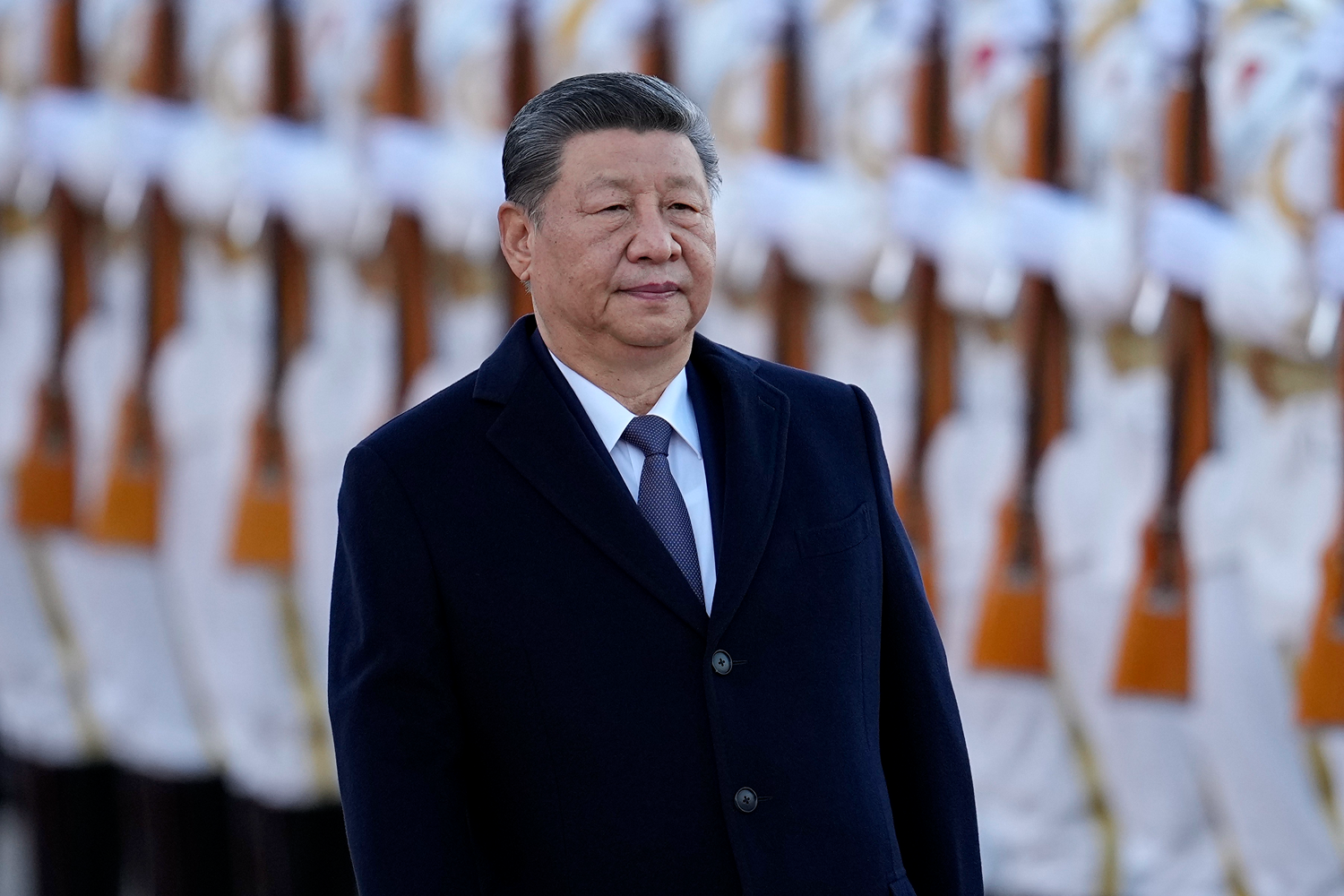
Ever since Xi Jinping bucked norms and made it clear he would not be held to a two-term limit as president of China and general secretary of the Chinese Communist Party (CCP), there has been intense interest in who could succeed him. Xi has purged several possible successors, but he is also aging—and even if he tries to hold onto power, he may find it easier to appoint a chosen favorite. Although there is still no broadly recognized successor—and no such figure is likely to emerge before the CCP’s 21st National Congress late next year, if then—the intensive reshuffling of provincial officials on the eve of the Fifth Plenum may offer some clues. On Sept. 4, Zhu Zhongming, born in 1972, was promoted from deputy party secretary of Shanghai to acting mayor, making him head of the government of China’s largest city. For a time, many observers took the move as evidence that Beijing was deliberately grooming Zhu as Xi’s future successor. But matters are not so simple. Provincial personnel changes have since accelerated. On Sept. 23, Anhui, Henan, and Fujian all got new party secretaries. Li Lecheng and Zhou Zuyi, both born in 1965, took over Anhui and Henan, respectively, while Zhao Long, born in 1967, was promoted from governor of Fujian to provincial party secretary. (In China’s system, the party secretary is a more important figure than the governor.) Then, on Oct. 24, two days before the Fifth Plenum opened, the pace quickened further. Wang Zhijun, born in 1965, became party secretary of Hunan, while Mo Gaoyi, born in 1964, took over in Yunnan. At the same time, younger officials moved into position for governorships: Guo Ningning, born in 1970, in Fujian; Zhuge Yujie, born in 1971, in Qinghai; and Xie Weijiang, born in 1973, in Hunan. This reveals a clear generational shift. Provincial party secretary positions are increasingly going to officials born between 1964 and 1969, while governorships are opening up to officials born in the 1970s. The trend becomes even clearer if we look at the officials who have already risen to full provincial or ministerial rank. Zhejiang Gov. Liu Jie, Jiangsu Gov. Liu Xiaotao, and Guangxi Chairman Wei Tao were all born in 1970. Shanxi Gov. Lu Dongliang was born in 1973. Zhu, Guo, Zhuge, and Xie have now joined this cohort. At the central level, Emergency Management Minister Zhang Chengzhong; Cheng Fubo, the chairman of China’s state-owned assets regulator; and Communist Youth League First Secretary A Dong were all born in 1970. Only a few years ago, officials born in the 1970s were still notable enough to be labeled “young cadres.” Now they are beginning to enter the real core of senior officialdom en masse. A candidate pool is gradually taking shape, but the real question is, what kind of person does Xi want to inherit his role? Xi’s standards for officials in general are well known: Political criteria come first; cadres must be loyal, clean, and willing to shoulder responsibility; and they must possess professional competence, a problem-solving ability, and the capacity to deal with major risks. But choosing a general secretary involves additional considerations that do not apply to ordinary senior appointments. Discussion of Xi’s succession often falls into two extremes. One assumes that Xi cares only about loyalty. The other looks for the candidate with the strongest abilities and most complete résumé. Both matter, but for a leader who has ruled for more than a decade and tied his own name, theory, and political line so closely to an era, the first criterion is the protection of his political legacy. A successor must be politically reliable, but reliability does not simply mean being personally close to Xi. Xi must believe that once this person takes power, he will not repudiate Xi’s legacy. He cannot be someone who, like Nikita Khrushchev after Joseph Stalin, sucks up to his predecessor in life but denounces him in death. Nor can he be someone who, like Deng Xiaoping after Mao Zedong, preserves the status of his predecessor while fundamentally changing the system and political ideology he inherited. The second criterion is political predictability. An official who obeys Xi today may not behave the same way after becoming general secretary. Supreme power changes political behavior. Xi understands this better than most. As a designated successor, he was mild and cooperative with others. It was only after being granted power that he rapidly constructed a political order centered on him. That creates a dilemma. A genuinely capable and decisive successor may eventually develop his own judgment and power base rather than remain the agent of a retired predecessor. Xi may want both: a successor strong enough to control the system and one who remains politically predictable. The third criterion is the ability to govern. China’s leader in the 2030s will not simply be managing GDP growth. He will have to deal with complex economic and social problems, long-term technological and geopolitical competition with the United States, possible military and security risks involving Taiwan, and a party-state containing more than 100 million CCP members, an enormous bureaucracy, complicated local interests, and a vast state-owned economy. Someone who is loyal but incapable may ultimately be unable to preserve Xi’s political legacy. Yet someone too powerful and independent may eventually escape Xi’s influence and create a political era of his own. The successor therefore has to walk a very narrow path. That requires experience in sensitive positions. If Xi has time to evaluate potential successors, he is likely to place the most promising candidates in different kinds of demanding posts. This is why Beijing, Shanghai, Guangdong, Jiangsu, and Zhejiang matter. Some are economic powerhouses, some are exceptional political important, and some combine both. Running these provinces is a test, especially of performance in crisis. Routine work, after all, matters less than how an official performs during an economic downturn, a major accident, social unrest, or a confrontation with a foreign power. Another issue shapes the candidate pool: When does Xi intend to step down? For several years, I have argued that Xi is likely to remain in power for another two terms, roughly from 2027 to 2037. If that judgment is correct, he has no need to choose a specific successor now. Naming an heir too early would bring few benefits and could create a second center of power other than Xi himself. Officials would begin gravitating toward that person, while the heir’s status would give him influence well beyond his formal position. For a leader like Xi, who places such emphasis on centralized party leadership and his own dominating role, that would be an unattractive arrangement. Xi is therefore more likely at this stage not to choose one person but to construct a pool of possible successors. All else being broadly equal, officials born between 1967 and 1975 appear to form the most realistic group to watch. If Xi hands over power around 2037, they would be between 65 and 70 years old—a plausible age range for the leadership, albeit older than either Xi or his predecessors like Hu Jintao when they took power. That might be to Xi’s advantage; an older leader would be less likely to stray from Xi’s own legacy. I expect the age center of gravity of the 21st Central Committee to shift clearly toward those born between 1964 and 1974. Except for Xi and a small number of other top leaders, officials born in the 1950s will largely disappear from the Central Committee. Officials born in the late 1960s will become the backbone of full membership, while officials born in the 1970s will increase significantly. If figures such as Zhao, Beijing Mayor Yin Yong, and Shaanxi Gov. Zhao Gang—born between 1967 and 1969—begin entering in significant numbers, they will naturally become important members of the top-level candidate pool for the 2030s. If post-1970 officials such as Zhu, Lu, Liu Jie, or Liu Xiaotao enter the Politburo as early as the 21st Party Congress, the signal would be stronger still. But whatever happens, I do not believe the 21st Party Congress will clearly tell the outside world whom Xi’s successor will be. All it may tell us is who is in the final stretch of the race.
Who Will Succeed Xi Jinping?
Full Article
Original Source
Read the full article at Foreignpolicy →KhanList aggregates and links to publicly available news content. We do not host full articles from third-party sources. Always verify important information with original sources.