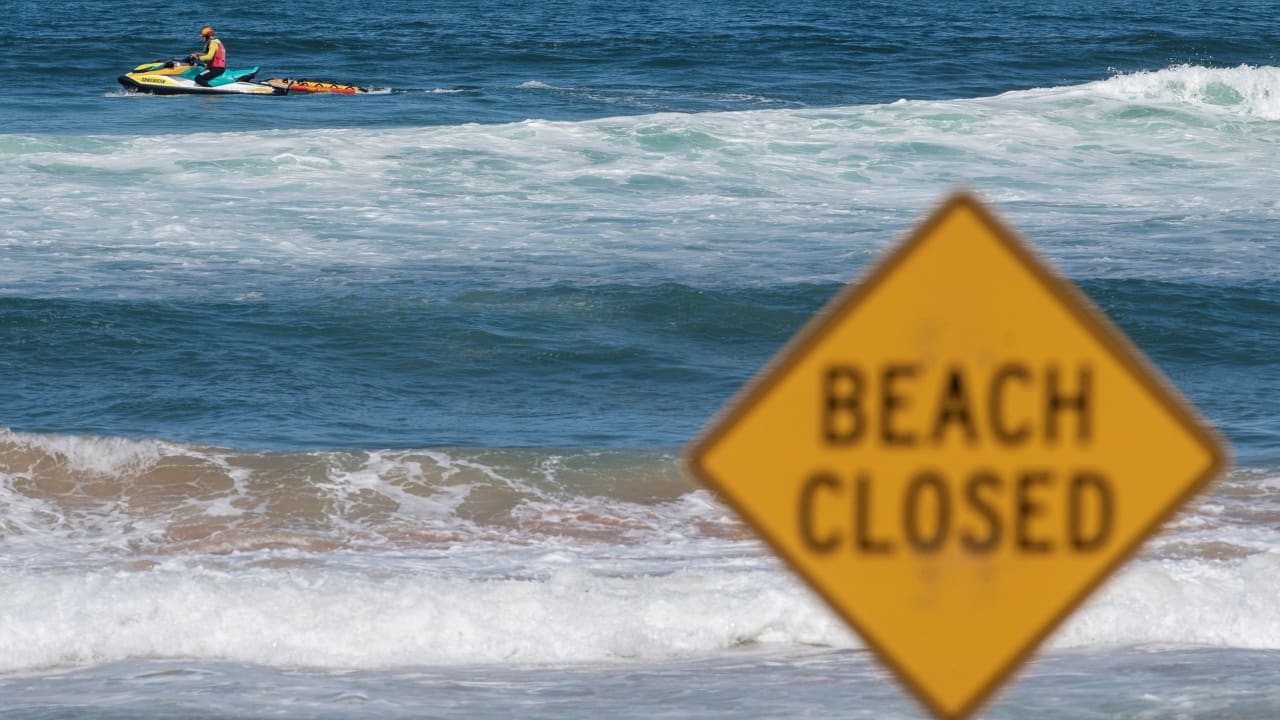
ByDR. ITAY GALJULY 25, 2026 23:38Ahead of World Drowning Prevention Day on Saturday, the World Health Organization (WHO) published a new seven-point policy package aimed at reducing drownings, as the Israel Meteorological Service warned of especially rough seas and waves of up to 2.5 meters over the weekend.According to WHO data, about 300,000 people die from drowning every year. Children and young people under the age of 29 account for 57% of all victims, and children under age 5 account for nearly a quarter of all deaths. Drowning is the fourth most common cause of death worldwide among children ages 1 to 4, and the third among children ages 5 to 14.More than 90% of deaths occur in low- and middle-income countries, where children and adults are exposed to open water sources as part of daily life. Drownings occur not only at sea, but also in rivers, lakes, wells, household water reservoirs, swimming pools, canals, and floods.The new policy package includes seven main areas: adapting infrastructure around water sources, improving rescue and resuscitation capabilities, protecting workers near water, setting safety standards for water transport, teaching swimming and water safety, creating safe supervision frameworks for children, and preparing for floods and extreme weather events.World Health Organization Director-General Dr. Tedros Adhanom Ghebreyesus said that "every drowning is a tragedy, and most of them can be prevented."A view of a Jerusalem swimming pool. (credit: YONATAN SINDEL/FLASH 90)He said responsibility for preventing drownings does not rest with just one government ministry, but requires cooperation among health, education, transport, welfare, local authorities, and emergency bodies.One of the central steps in the plan is preventing children from gaining unsupervised access to water. The organization is calling on countries to require pool fencing, well and water reservoir coverings, self-closing and self-latching gates, and protected play areas for toddlers.According to the organization, physically separating children from the water source significantly reduces the risk of drowning.Expanding supervision aids child safetyAnother recommendation concerns expanding supervision frameworks for young children, especially in areas where parents work near rivers, lakes, or water sources. In places where community day-care programs for children were introduced, drownings declined, alongside improvements in other health and development indicators.The World Health Organization is also calling for broader swimming instruction and the teaching of water survival skills to school-age children. At the same time, the organization stresses that a child who knows how to swim can still drown, and that swimming lessons do not replace adult supervision or swimming in a location where rescue services operate.According to the organization's estimates, a global investment in just two measures, operating supervision frameworks for toddlers and teaching basic swimming to children, could prevent the deaths of about 774,000 children by 2050. An additional 178,000 children could be spared severe and long-lasting injuries caused by nonfatal drowning.Drowning begins when submersion of the face in water prevents proper breathing. A lack of oxygen can quickly lead to loss of consciousness, heart rhythm disturbances, brain damage, and cardiac arrest.Contrary to the familiar image from movies, a person who is drowning usually cannot shout, wave their hands, or call for help. The struggle to breathe is sometimes silent and lasts only a short time.Even a person rescued alive may suffer severe injury. Oxygen deprivation can cause permanent brain damage, impaired memory and movement, seizures, and the need for prolonged nursing care. The severity of the injury is affected by the time spent in the water, the water temperature, the victim's medical condition, and the speed of rescue and resuscitation.Drowning rates increase in IsraelThe data from Israel are especially worrying. According to data published in early July by Beterem, Safe Kids Israel, 12 children and teenagers had drowned to death since the start of 2026. By the end of June, the number of victims stood at 11, compared with just two children during the same period in 2025, a 5.5-fold increase.The rise was recorded even before the peak of the summer vacation, the period when children and teenagers spend more time at the sea, in pools, at guesthouses, and at open water sources. Data from recent years show that toddlers are at particularly high risk of drowning in private pools, bathtubs, and water reservoirs around the home, while teenagers are more often harmed at beaches, streams, and lakes.For toddlers, even a shallow layer of water is enough to create a life-threatening danger. Their center of gravity is high, and their heads are relatively heavy compared with their bodies, so when they fall face-first into water, they may be unable to lift themselves back up. Drowning can happen while an adult looks down at a phone, speaks with another person, or leaves the area for a short time.Among teenagers, the risk mechanism is different. Entering the water at an unregulated beach, swimming after drinking alcohol, jumping from a height, moving far from shore, peer pressure, and overestimating swimming ability can all lead to distress. Sea currents can sweep away even experienced swimmers, especially at hours when no lifeguard is present or on beaches where swimming is prohibited.The new plan also addresses the impact of the climate crisis. Floods account for about 75% of deaths in flood disasters, and heat waves cause more people to seek relief in the sea, rivers, and lakes. A study conducted in Britain found that the number of drowning cases rose by 7.2% with every increase of one degree in temperature, and the risk was nearly five times higher on days when the temperature exceeded 25 degrees.Water transport safetyAnother area covered by the plan is water transport safety. In many countries, ferries and boats are used as a daily means of transportation, sometimes without sufficient oversight, life jackets, passenger limits, or emergency-trained crews. The organization is calling for licensing standards, load limits, mandatory lifesaving equipment, periodic inspections, and crew training.In the event of a drowning, rescue services should be called immediately, and the victim should be removed from the water only without endangering the rescuer. If the victim is not breathing, resuscitation should begin in accordance with emergency dispatch instructions, and a defibrillator should be used where available. A child who has been rescued and continues to cough, has trouble breathing, is drowsy, confused, or vomiting needs urgent medical evaluation, even if at first it seems that their condition is improving.In private pools, guesthouses, and vacation homes, the main recommendation is to make sure in advance that the pool is fenced on all sides and fitted with a gate that closes and locks automatically. When toddlers are nearby, one adult should be assigned at every moment to supervise within arm's reach, with no phone, conversation, reading, or any other distraction.In Israel, Dr. Amir Givati, director of the Meteorological Service, said on Friday that from the afternoon hours and on Saturday, winds, strong currents, and high waves are expected. He said westerly winds are to blame, bringing waves of 2 to 2.5 meters and strong currents along the Mediterranean coast.According to Dr. Givati, the forecast is for the highest waves of the current summer season so far, which led the Meteorological Service to issue a "high and dangerous sea" warning for Friday and Saturday.After a short break, the heat wave is expected to return in full force in the middle of next week, with temperatures higher than usual for the season.Follow us on Google
WHO releases new guidelines to prevent drowning as 2.5 meter waves expected in Israel
Full Article
Original Source
Read the full article at Jpost →KhanList aggregates and links to publicly available news content. We do not host full articles from third-party sources. Always verify important information with original sources.