
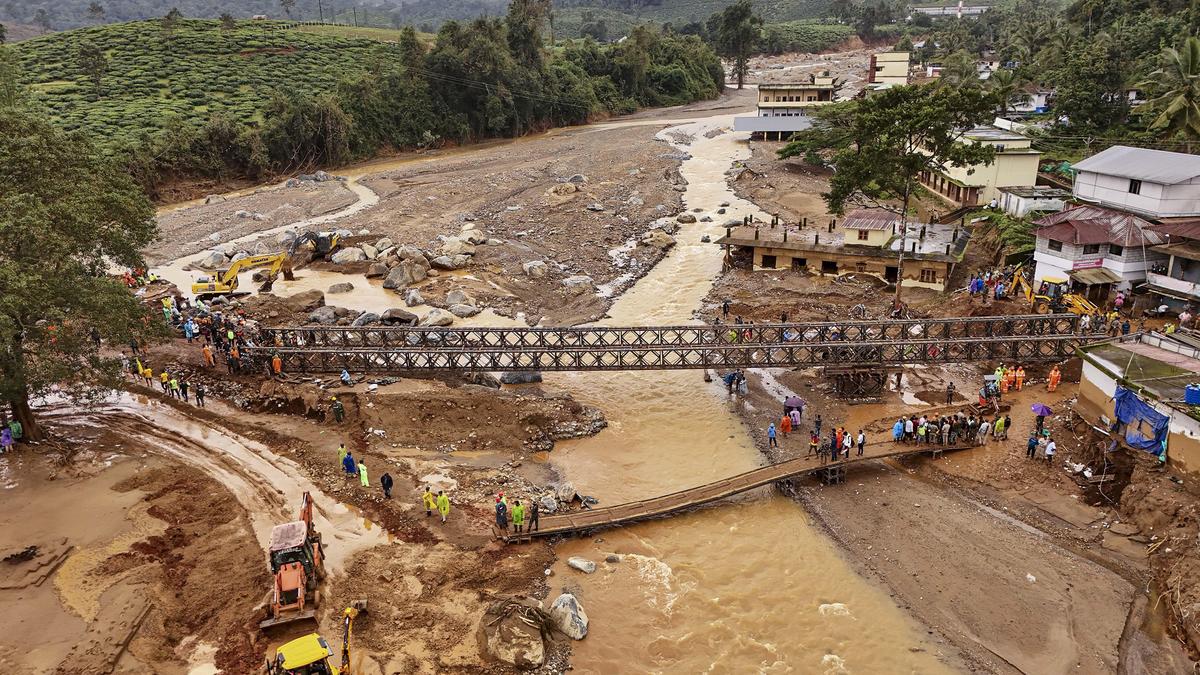
‘We are confronting a climate crisis and the need of the hour is a decentralised system in climate governance’ | Photo Credit: PTI In the 1990s, several U.S. States sued the tobacco companies to hold them accountable for the health hazards of cigarettes. This litigation led to a 1998 Master Settlement Agreement, under which the companies committed at least $206 billion over 25 years as compensation for the harmful effects of cigarettes. Inspired by the famous tobacco litigation case of the 1990s, a small county called Boulder in Colorado, U.S., initiated a major litigation under the State law, in 2018, to fix liability on major oil and gas companies for the impact of climate change.The suit claimed compensation for recovering the costs of coping with wildfires, floods and heat by building a case on public nuisance and consumer protection. In May 2025, the Colorado Supreme Court allowed the suit to proceed, holding that federal law did not pre-empt Boulder’s claims for damages under State law.The oil companies, now backed by the Donald Trump administration, argue that federal law, including the Clean Air Act and the very structure of the American Constitution, forbids a State from applying its own law to global emissions.They argue that a State cannot use its own tort law to make companies pay for harm from global emissions. This case has now ended up in the U.S. Supreme Court which recently heard arguments on the most important question in climate governance: who pays for climate disasters, and whether States have a role in formulating climate policy?Since climate change is an international phenomenon, the issue in the U.S. has a direct nexus with India. When climate disasters affect India, its States are left to its own devices, with little help from any direction. When landslides tore through Mundakkai and Chooralmala in Wayanad on July 30, 2024, the Keralam government reported 298 deaths and 32 missing people. The Union took nearly five months to declare the tragedy a “disaster of severe nature”, and when assistance for rehabilitation came, it came not as a grant but as a 50-year interest-free loan of ₹529.50 crore. After the 2023 floods in Himachal Pradesh, the State government pegged the losses at ₹9,042 crore. Even though the Union Government released ₹633.73 crore in NDRF assistance for immediate relief, it sanctioned only a meagre ₹2,006.40 crore for recovery and reconstruction plan nearly two years after the disaster. In Punjab, after the floods of August and September 2025, the State government demanded ₹20,000 crore in immediate relief. The Union government announced only ₹1,600 crore as the relief. Like in Boulder, the governments that bear the costs of climate disasters are not the ones that control the climate policy. Published - November 25, 2026 12:16 am IST
Who pays for climate change is a federal question
Full Article
Original Source
Read the full article at Thehindu →KhanList aggregates and links to publicly available news content. We do not host full articles from third-party sources. Always verify important information with original sources.