
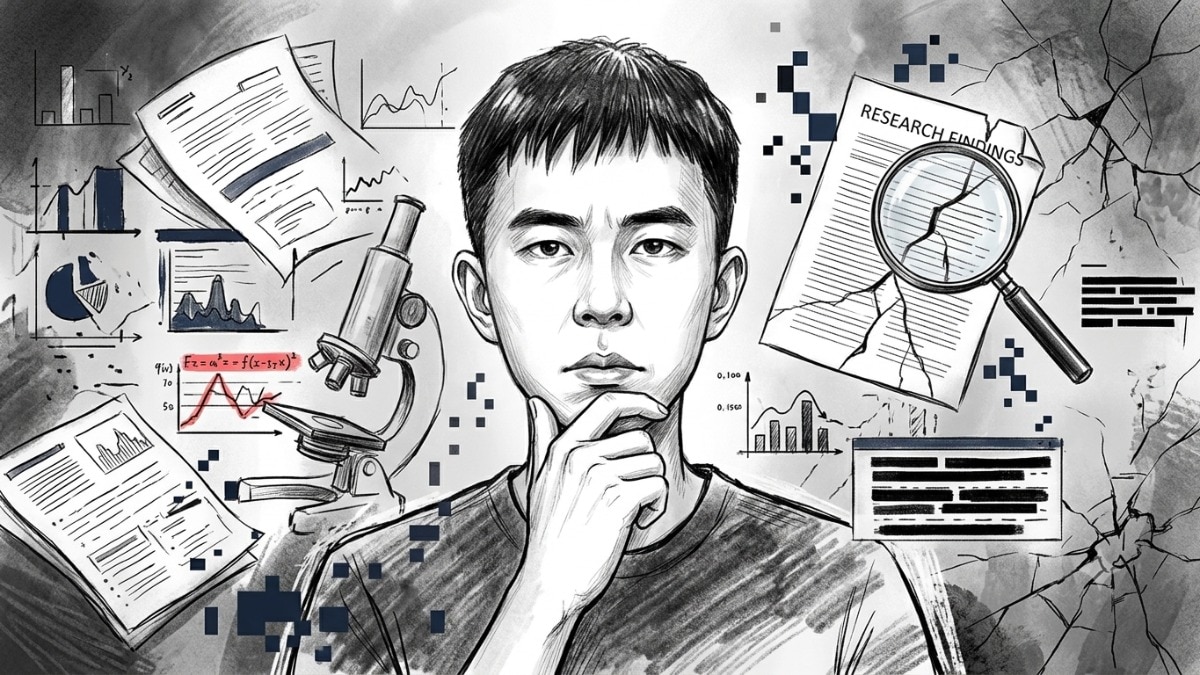
Student Geng, a former Chinese PhD student turned science blogger, went from examining suspicious research papers online to triggering investigations into prominent academics. His April allegations are now linked to China's largest public disclosure of academic misconduct by the country's leading basic research funding body.Student Geng, a former Chinese PhD student turned science blogger, went from examining suspicious research papers online to triggering investigations into prominent academics. (AI-generated image)A former PhD student has become one of the most talked-about figures in China's research community after questioning the credibility of papers published by prominent scientists.Known online as Student Geng, Geng Hongwei was a doctoral student in biomedical engineering at Beihang University before leaving his PhD in 2025. He had already started making science videos during his doctoral years, eventually turning the account 'Geng Tongxue Jiang Gushi', or 'Student Geng Tells Stories', into a full-time career.His Bilibili profile describes him as a "cyber graduate student" who shares research developments and occasionally discusses controversies in academia. The account has grown to more than two million followers.Before the current scandal, he had already made videos about questionable research and academic controversies. In a May 2026 interview, he said that many leads came from followers in the academic community, who would send him papers and suspected problems for examination. HOW HE CHECKS RESEARCH PAPERSGeng's investigations focus largely on data and images in biomedical research.He examines published figures, statistical patterns and underlying data for signs that results may have been manipulated or duplicated. Nature reported in June that his videos examining papers from Nature and other Nature-branded journals had been viewed millions of times. One example involved numerical patterns in experimental data that he argued were unlikely to occur naturally. His investigations eventually drew attention to papers involving senior academics at several Chinese universities.Importantly, Geng's online accusations are allegations until confirmed by institutional investigations or other evidence. In several cases, universities subsequently announced disciplinary action.THE APRIL POSTS THAT CHANGED EVERYTHINGIn April 2026, Geng publicly questioned research by five academics linked to four Chinese universities.The first major case involved Wang Ping, then dean of Tongji University's School of Life Sciences and Technology. Tongji later said an investigation had found academic misconduct involving experimental data in a Nature paper and removed Wang from his position.Other universities subsequently announced action involving researchers Geng had scrutinised. By June, Nature reported that four senior Chinese academics had been disciplined after his allegations.WHY THE LATEST NSFC ACTION MATTERSThe story has now moved beyond individual universities.According to the South China Morning Post, China's National Natural Science Foundation published details on August 26 of 31 new academic misconduct cases involving more than 40 researchers at universities and hospitals. SCMP described it as the foundation's largest public disclosure of misconduct cases to date.Four prominent professors previously named by Geng in April were among those facing official action. The four had received the National Science Fund for Distinguished Young Scholars.Their funding and related honours were revoked, they were ordered to return more than 10 million yuan in grants and were barred from applying for NSFC funding for between three and seven years, SCMP reported.BUT THE STORY IS NOT OVERGeng's rise has also raised questions about how academic misconduct is detected in the first place.His case is unusual because a social-media creator, rather than an institution or journal, brought several alleged problems into the public eye before formal investigations followed.In May, Geng also said his Douyin account had been permanently restricted, according to reporting by The Epoch Times.For now, his biggest impact may be that research papers once scrutinised mainly by reviewers and specialists are being examined by a much larger online audience.And while the NSFC's latest disclosure marks a major official response, many of the claims raised by Geng have not received a public determination. That leaves an important distinction between what he has alleged online and what Chinese institutions have formally established.- EndsPublished On: Sep 5, 2026 14:39 IST
Who is Student Geng? PhD dropout sparks China's biggest academic misconduct probe
Full Article
Original Source
Read the full article at Indiatoday →KhanList aggregates and links to publicly available news content. We do not host full articles from third-party sources. Always verify important information with original sources.