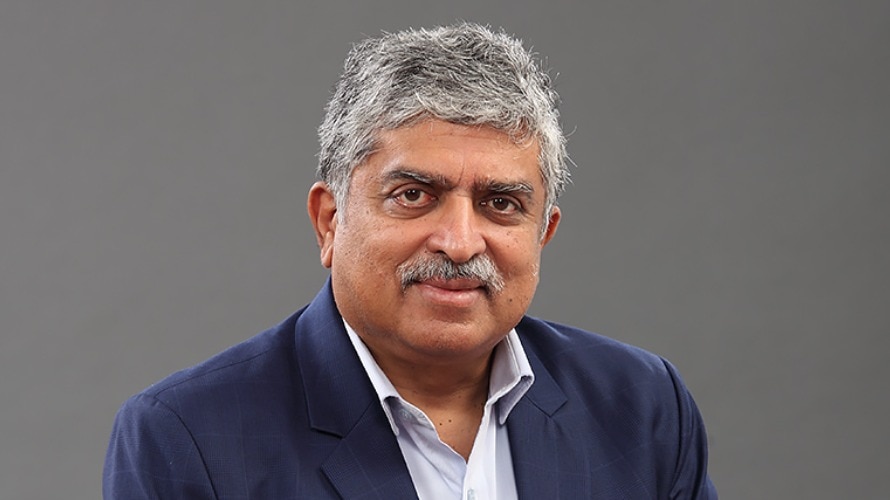
Prime Minister Narendra Modi has named Infosys co-founder Nandan Nilekani to lead a task force tasked with leveraging technology to make public examinations leak-proof and more transparent. Having played a pivotal role in building India's digital public infrastructure, Nilekani now takes on another key national assignment. Here's a look at his journey.Prime Minister Narendra Modi on Sunday evening released another social media video in his now-familiar conversational format aimed at younger audiences, continuing the "Gen Z-style" outreach he has adopted in recent days. While the Prime Minister touched upon the issue of paper leak, he announced the constitution of a task force under the leadership of Infosys co-founder Nandan Mohanrao Nilekani to explore the use of technology in making India's public examination system leak-proof and more transparent.The high-powered task force will also include former ISRO Chairman S Somanath, Intelligence Bureau Director Tapan Deka, IIT Madras Director V Kamakoti, former School Education Secretary Anita Karwal, and Higher Education Secretary Amrit Lal Meena.Modi said technology should become a key instrument in restoring trust in competitive examinations, which have been under scrutiny following allegations of paper leaks and irregularities in exams such as NEET-UG and UGC-NET.The task force, he said, would work towards developing technology-driven solutions to strengthen the integrity of the examination process. The government is also planning to introduce a new bill on the floor of parliament to curb paper leaks and make the punishment harder. FROM INFOSYS CO-FOUNDER TO INDIA'S DIGITAL ARCHITECTBorn on June 2, 1955 in Bengalauru, Nandan Mohanrao Nilekani is among India's most influential technology leaders. Born in Bengaluru, he graduated with a bachelor's degree in electrical engineering from the Indian Institute of Technology (IIT) Bombay before beginning his career at Patni Computer Systems in Mumbai in 1978.In 1981, Nilekani joined NR Narayana Murthy and five other colleagues to establish Infosys, a company that would go on to become one of India's largest IT services firms. He served in multiple leadership roles before becoming the company's Chief Executive Officer in 2002. During his five-year tenure as CEO, Infosys' revenues grew sixfold to nearly $3 billion. Following the departure of former CEO Vishal Sikka in 2017, Nilekani returned to Infosys as its non-executive chairman, steering the company through a critical leadership transition.THE MAN BEHIND ADHAARWhile Nilekani is best known in the corporate world for building Infosys, his most significant contribution to public administration came in 2009 when then Prime Minister Manmohan Singh invited him to head the Unique Identification Authority of India (UIDAI) with Cabinet rank.As chairman of UIDAI, Nilekani led the creation and implementation of Aadhaar, the world's largest biometric identity programme. Today, Aadhaar has become the backbone of India's digital governance ecosystem, enabling direct benefit transfers, financial inclusion and identity verification for over a billion residents.The programme has also attracted debate over privacy and data protection, but globally it has often been cited as one of the most ambitious digital identity initiatives undertaken by any country.A DRIVING FORCE BEHIND INDIA'S DIGITA PUBLIC INFRASTRUCTURENilekani has also played a pivotal role in shaping India's digital public infrastructure. He was instrumental in promoting the framework that eventually led to the development of the Unified Payments Interface (UPI), which transformed digital payments across the country and has since become one of India's most successful technology exports.Over the years, he has chaired government technology committees, served on the boards of leading policy institutions, advised international organisations and invested in several Indian technology startups.In 2014, Nilekani entered electoral politics by joining the Indian National Congress and contesting the Lok Sabha election from Bengaluru South. He lost to BJP candidate Ananth Kumar and has remained largely inactive in active politics since then, returning his focus to technology, public policy and philanthropy.WHY MODI CHOSE NILEKANINilekani's selection comes as the Centre seeks to restore confidence in public examinations after repeated controversies over paper leaks and alleged irregularities.His experience in building nationwide digital platforms such as Aadhaar and contributing to India's digital payments ecosystem makes him one of the country's foremost experts in deploying technology at population scale.The announcement also coincides with the government's decision to strengthen the Public Examinations (Prevention of Unfair Means) Act, 2024 through proposed amendments that seek to tighten the legal framework against examination malpractice.PROPOSED CHANGES TO THE PUBLIC EXAMINATIONS ACTThe proposed amendments aim to make investigations and trials faster while imposing stricter punishments for those involved in paper leaks and unfair practices.Key proposals include:Harsher punishments, with fines increased up to 10 crore and imprisonment extended to as much as eight years for serious offences.Creation of a Special Task Force (STF) that can be constituted by the government to exclusively investigate examination-related offences.Mandatory completion of investigations within two months from the registration of an FIR or notification.Special Fast Track Courts to conduct day-to-day hearings and complete trials within three months of the filing of a chargesheet.A dedicated appeal mechanism, requiring High Courts to dispose of appeals from Special Fast Track Courts within three months.The objective of the proposed amendments is to deter organised paper leak rackets, ensure time-bound investigations and trials, and restore public confidence in competitive examinations through stronger enforcement and greater technological oversight.With Nilekani at the helm of the proposed technology task force, the government is signalling that the next phase of examination reforms will rely not only on stricter laws but also on digital systems designed to make public examinations more secure, transparent and accountable.- EndsPublished By: Rishab ChauhanPublished On: Jul 26, 2026 19:22 IST
Who is Nandan Nilekani? Infosys co-founder to lead PM's exam security task force
Full Article
Original Source
Read the full article at Indiatoday →KhanList aggregates and links to publicly available news content. We do not host full articles from third-party sources. Always verify important information with original sources.