
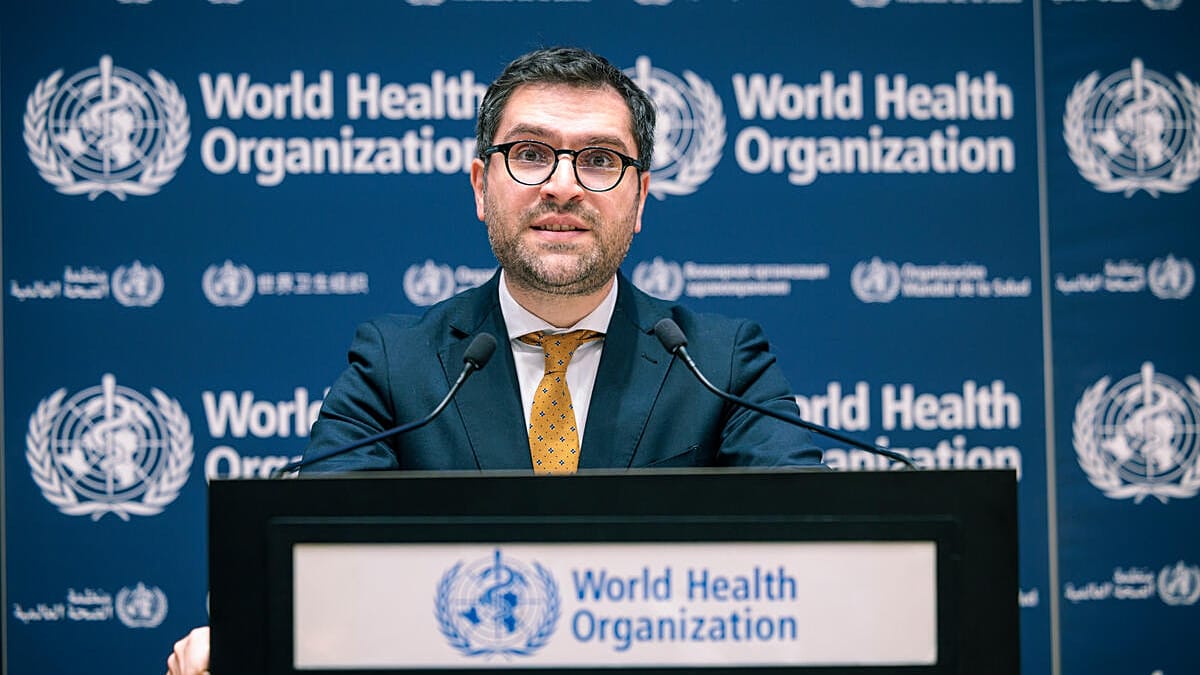
After a decade at the helm of the World Health Organization, Tedros Adhanom Ghebreyesus will step down in August 2027. ADVERTISEMENT ADVERTISEMENT Now, the international health organisation has to choose his successor at a moment when global health and international cooperation are increasingly fraught. Seven candidates, each nominated by a different country, are competing to lead the UN health agency. The WHO’s Executive Board will narrow the field to its top three candidates by early February, and the WHO’s next leader will be selected at the World Health Assembly in May 2027. At 39, Gevorg Tamamyan, an Armenian paediatric oncologist, is the youngest contender for the WHO's top job. Nominated by Botswana, Tamamyan is also the only candidate who has never held a position within the United Nations. He is positioning himself as an outsider who could bring a fresh perspective to the organisation. “I'm coming kind of outside of the box. I'm coming with different experience,” he told Euronews from Geneva, where the WHO Candidate Forum took place this week. As a working doctor, he says he had to translate WHO guidance from decree to the clinic, where "the consequences, or the failure, had real consequences for the actual people, actual patients, actual families”. He argued his outsider perspective will be particularly important because people working within an organisation can sometimes struggle to see its shortcomings. His career spans clinical practice, the development of national health systems, global diplomacy and humanitarian work in conflict zones. “Throughout my career, I have observed that there are things which can be done much better, which affect people's lives, and I saw that WHO has most of the tools to make that happen,” Tamamyan said. He is campaigning under the slogan “Geography must not decide who lives.” He said his commitment to equal access to health was rooted in his own experience of coming from a small, lower-middle-income country, and that it had shaped his career. "Human is human. It doesn't matter where they come from," Tamamyan said, arguing that equity should be central to the global health infrastructure. That principle is central to the WHO leaders' race as the organisation faces growing questions about its role, effectiveness and ability to maintain international cooperation. New era for global health The challenges facing the next WHO director-general extend beyond improving the organisation's work, with the agency also facing a crisis of confidence among some of its biggest member states. In 2026, the United States, the organisation’s biggest historical donor, officially withdrew from the WHO. Argentina has also announced its withdrawal. At the World Economic Forum in Davos earlier this year, Tedros said that the first two decades of this century were a golden age for global health, but that this period had now come to an end. If elected, Tamamyan has pledged to visit the U.S. and Argentina during his first 100 days in office, in an attempt to bring them back to the table. “We are stronger when we are united, and even if we disagree on things, we need to keep everyone at the table. The disagreement in the discussion is better than having no discussion,” he said. Both countries have criticised the WHO's transparency and its handling of the COVID-19 pandemic. They have also pointed to what they described as "serious structural and operational shortcomings that undermined global trust and highlighted the urgent need for independent, science-based leadership in global health". Tamamyan acknowledged that underlying problems in the organisation must be addressed to restore trust and accountability. “We are standing on the shoulders of giants, and there has been a huge, huge progress made in the health care field and medical field within these decades,” he said, adding that "it's always easy to criticise retrospectively”. It is important to understand how to ensure that the WHO stands firmly on its feet as a leader in global health, Tamamyan said.
Who is Gevorg Tamamyan, the youngest candidate to lead the WHO?
Full Article
Original Source
Read the full article at Euronews →KhanList aggregates and links to publicly available news content. We do not host full articles from third-party sources. Always verify important information with original sources.