
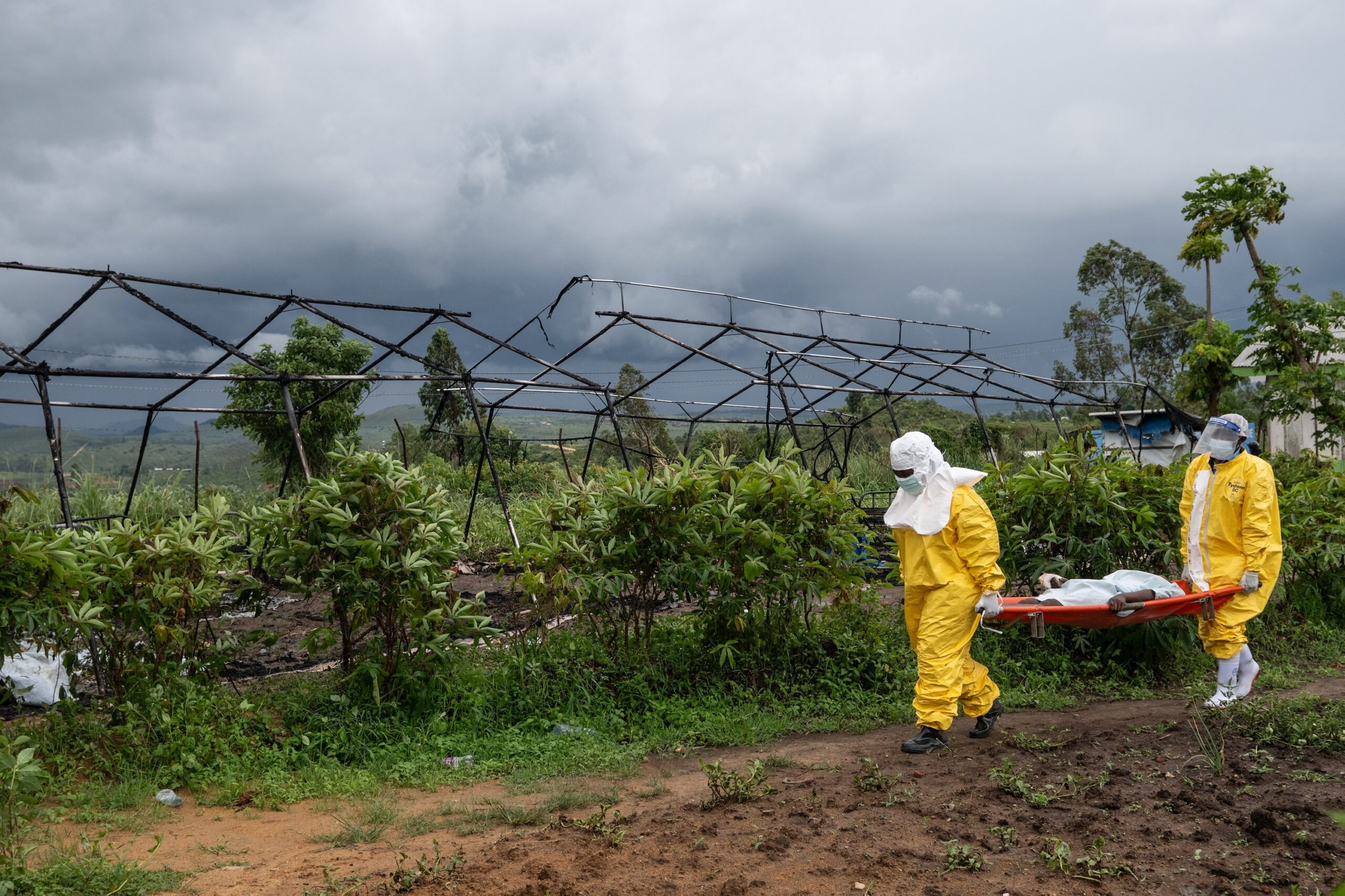
On July 15, gunfire erupted between armed groups near an Ebola Treatment Center (ETC) in Nyankunde (or Nyakunde), located 45 kilometers (28 miles) southwest of Bunia in the eastern Democratic Republic of Congo (DRC). Following the fighting, medical personnel from the World Health Organization (WHO), Africa CDC and the NGO Samaritan’s Purse evacuated from Nyankunde, further slowing the Ebola response there. “There was an attack yesterday and there are frequent attacks, actually since the end of 2025. The armed conflict has intensified,” said Tedros Adhanom Ghebreyesus, WHO director-general, during a press briefing the day after the attack. Since May 2026, the DRC has been enduring its 17th Ebola outbreak. Although the Bundibugyo strain is not considered the deadliest Ebola variant, cases continue to rise rapidly. In just two months, the U.S. Center for Disease Control (CDC) recorded 2,124 cases and 828 deaths, making it the fastest-spreading Ebola outbreak on record. The current outbreak is in a mining town populated by migrant workers that travel across the region, increasing spread of the disease. The area is also the site of ongoing armed conflict, which makes it difficult for aid workers to safely respond. “Due to this chronic conflict and other factors, the community mistrust is also serious. I have been to Beni during the 2018-2020 outbreak. I have traveled there many times. But compared to this one, I think Beni is nothing. North Kivu was nothing,” Ghebreyesus said. “The difficult environment that makes the response really complicated.” Dr. Desire Duabo, head of the Nyankunde health zone, told Mongabay that the exchange of gunfire began after the commander of the Patriotic and Integrationist Front of Congo (FPIC) militia and his bodyguards were killed by gunmen, who have not been identified, not far from the treatment center. Active since 2019, the FPIC is one of the many armed groups operating in the region. “The situation has been extremely tense over the past two days. We are under a lot of stress. The patients have remained at the Ebola Treatment Center and are being cared for by our local staff,” Duabo, who remained on site, told Mongabay by phone. Describing the situation as unprecedented, he added: “All Ebola response activities [in the area] have been brought to a standstill. Contact tracing for confirmed cases has stopped, alerts can no longer be investigated, and we are no longer able to conduct safe and dignified burials. The situation needs to change.” It is unclear when or if humanitarian workers will return to the area. Mongabay contacted WHO for further comment but didn’t receive a response by the time of publication. Despite the challenges, the agency’s head remained optimistic about eventually bringing the outbreak under control. “Even without approved vaccines and treatments, 377 people have recovered, showing that with early diagnosis and safe care, this disease can be survived and stopped,” Ghebreyesus said. Banner image: Health workers transporting an Ebola patient to a treatment center. Image by Moses Sawasawa/Associated Press. Credits Topics
WHO evacuated health workers from Ebola treatment center due to armed clashes
Full Article
Original Source
Read the full article at News →KhanList aggregates and links to publicly available news content. We do not host full articles from third-party sources. Always verify important information with original sources.