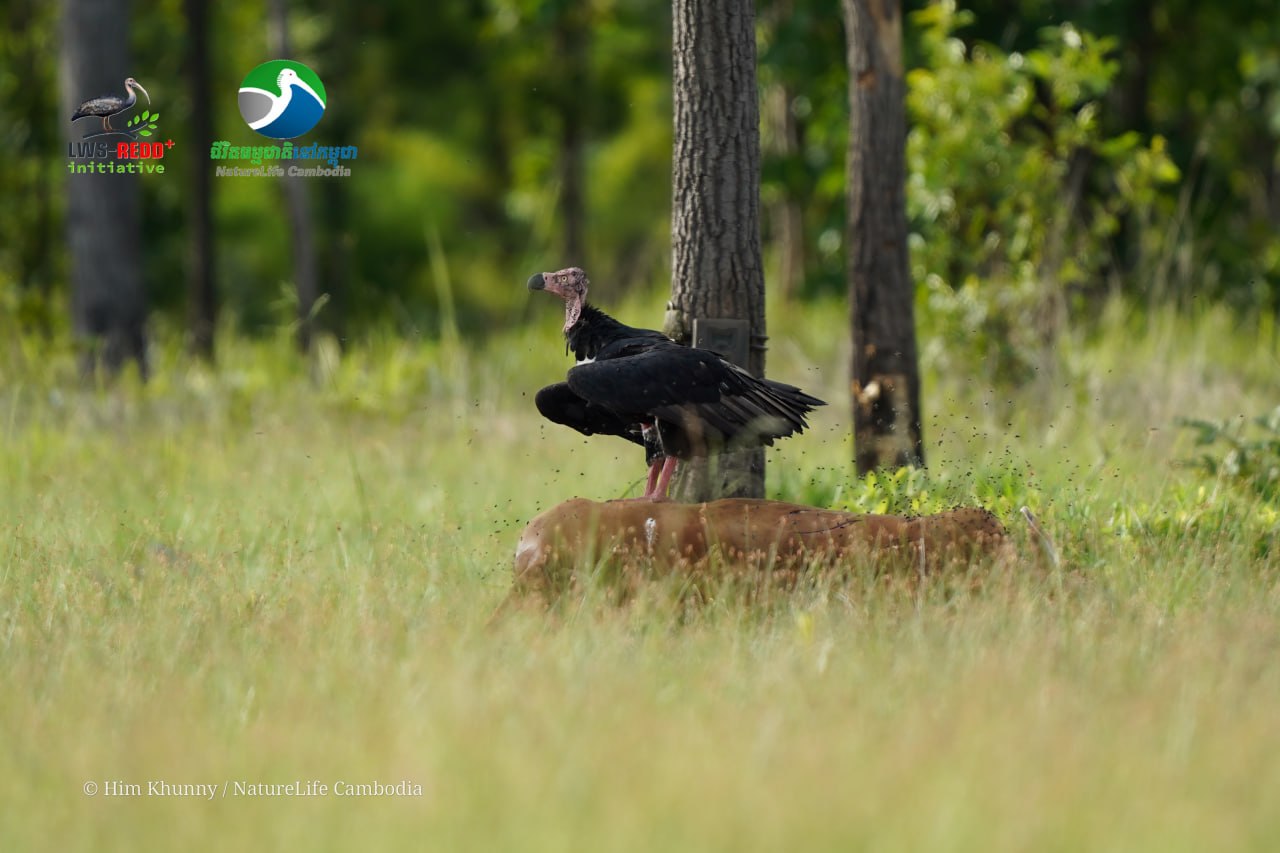
For the first time in 10 years, a critically endangered white-rumped vulture has been spotted in Cambodia’s Lomphat Wildlife Sanctuary. However, this conservation milestone is unfolding just as the sanctuary stares down new threats from mining operations and hydropower dams. During a June 2026 census, surveyors recorded the white-rumped vulture (Gyps bengalensis) at a supplementary feeding station, known as a “vulture restaurant,” operated by the NGO NatureLife Cambodia. The census also confirmed the presence of five red-headed vultures (Sarcogyps calvus), including two juveniles — a sign of successful breeding in the sanctuary. “The return of the white-rumped Vulture shows that our conservation efforts are making a difference by improving habitat conditions and ensuring reliable food source,” Bou Vorsak, CEO of NatureLife Cambodia, said as reported by local media. Yet the sanctuary’s Veal Kambor Community Protected Area (CPA), a zone designed to balance local livelihoods with forest management, is simultaneously being dismantled by industrial interests. Mongabay previously reported that since 2020, the Cambodian government has granted at least five companies mining concessions in designated community-protected areas adjoining the Lomphat sanctuary. Satellite imagery and on-the-ground reports indicate that firms such as CHHC Investment Co. have continued quarrying marble in conservation zones, despite licenses for the work reportedly expiring in 2022. Local residents were granted rights to manage these resources for 15 years, but have reported losing fallow rice fields and forest access with little to no compensation. Beyond the quarries, an even larger threat looms: the proposed 376-megawatt Lower Srepok 3 hydropower dam in northeastern Cambodia. If the development advances, the resulting reservoir would flood a core zone of the sanctuary, submerge the Veal Kambor CPA, and inundate areas currently protected under a carbon credit REDD+ project, severely threatening this fragile ecosystem. Beyond mining operations and hydropower dams, the 356,087-hectare sanctuary has long faced threats due to its relatively lowland forest being easily accessible to loggers and in the 2010s, the government awarded at least six land concessions inside the protected area spanning more than 47,500 hectares to rubber and palm oil plantations, accelerating the habitat degradation. Banner image of a critically endangered white-rumped Vulture recorded in Lomphat Wildlife Sanctuary for the first time in 10 years, courtesy of Him Khunny/NatureLife Cambodia. Credits Topics
White-rumped vulture returns to a Cambodian sanctuary after a decade’s absence
Full Article
Original Source
Read the full article at News →KhanList aggregates and links to publicly available news content. We do not host full articles from third-party sources. Always verify important information with original sources.