
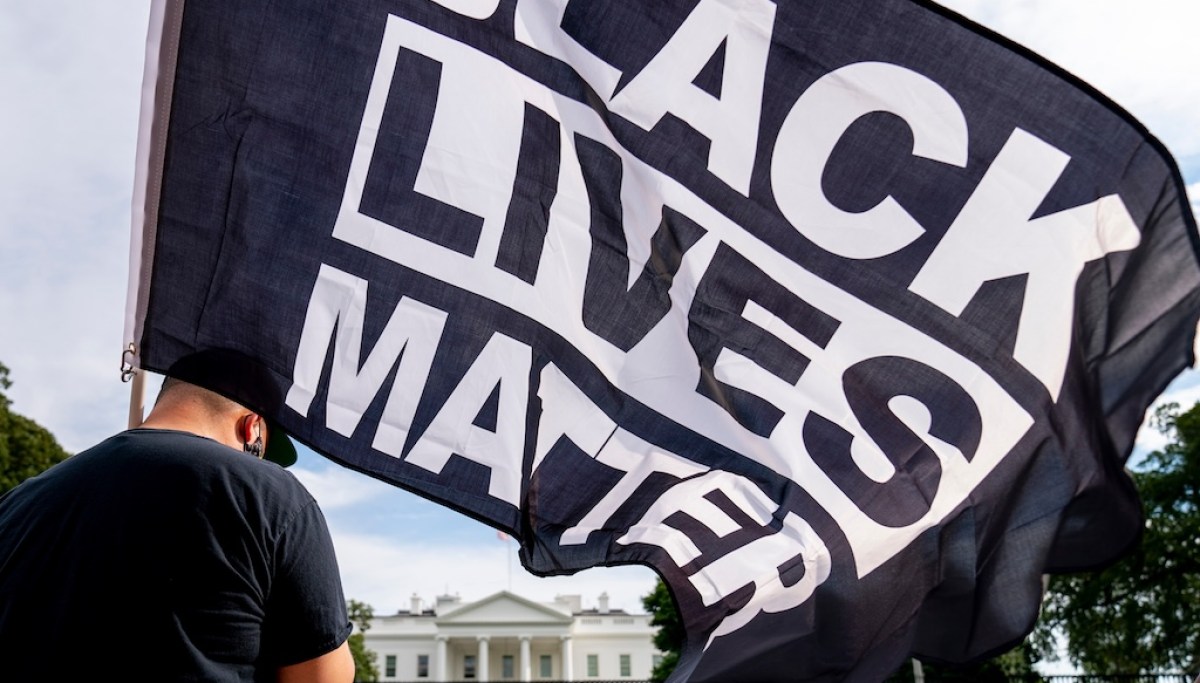
From a New York Times critic arguing against blind auditions for orchestras to Chicago’s former mayor offering interviews exclusively to nonwhite reporters, the insanities of what Rep. Alexandria Ocasio-Cortez (D-NY) recently dubbed “Woke 1.0” are legion. In White Guilt, filmmaker Eli Steele traces these peculiar manifestations of modern antiracism to an affliction his father diagnosed two decades ago.Based on Shelby Steele’s 2006 book of the same name, the documentary surveys the racial-grievance industry that has entrenched itself across American institutions, from universities and museums to corporate boardrooms. Born black, Jewish, and deaf, Eli Steele is a shoo-in for the oppression Olympics, a bona fide torchbearer. Yet, raised by the formidable Shelby Steele, he understands himself as something more than an inventory of identities: an individual.His father, a reformed black militant who grew up in segregated America, narrates the film with a scholarly calm that exudes his profound understanding of America’s racial history and the ideological maladies that have emerged in its wake. Shelby recounts the injustices of slavery and segregation, then traces how the moral reckoning they demanded gave way to what he calls “false innocence,” the conviction that white Americans can absolve themselves of historical guilt simply by aligning with those designated oppressed. Virtue becomes a matter of allegiance, untethered from truth, individual responsibility, or character. The liberal establishment, in Steele’s account, ends up reducing black Americans to the same immutable racial identity their oppressors once used to define them. Only individualism, he argues, begets freedom. Steele surveys the evolution of this racial order through Rodney King, Johnnie Cochran’s theatrics at the O.J. Simpson trial, Trayvon Martin, the Obama presidency, and the convulsions following George Floyd’s death. The riots of 2020, he argues, were animated by an accumulated sense of systemic grievance that dwarfed the circumstances of any individual incident.The Claremont Institute estimates corporate contributions and pledges to Black Lives Matter and related racial-equity initiatives at $82.9 billion, exceeding the GDP of 46 African countries. Corporate absolution does not come cheap — and neither, judging by the multimillion-dollar properties purchased by BLM organizations, does the race hustler lifestyle.Carefully chosen news clips punctuate Steele’s sonorous narration with moments of palpable absurdity. Rep. Nancy Pelosi (D-CA) and Sen. Chuck Schumer (D-NY) kneel in Kente cloth stoles in the Capitol’s Emancipation Hall, in a tableau that could easily be mistaken for a South Park sketch. Playwright David Mamet, meanwhile, skewers the ideological contortions of art curators, including the strained political commentary accompanying a Winslow Homer painting at the Metropolitan Museum of Art — “They’re f***ing ducks,” he exclaims, incredulous at the curator’s attempt to shoehorn an indictment of white people into a painting of waterfowl.The consequences become more sinister as the documentary turns to academia. At Smith College, an accusation of racial profiling that investigators could not substantiate nevertheless helped unleash an institutional frenzy of anti-bias training. Former teacher Paul Rossi recounts how his school’s social-justice orthodoxy transformed ostensibly admirable ideals such as inclusion and justice into nebulous, perpetually receding objectives. Andrew Gutmann describes comparable dogmas taking hold in schools, while Steele examines the intrusion of racial politics into medical education at the University of California, Los Angeles.Having endured a mandatory DEI class during my master’s program, complete with dutiful discussions of privilege, I found this institutional theater depressingly familiar. Steele connects it to the coercive rituals of ideological conformity, invoking China’s Cultural Revolution. Ibram X. Kendi’s conception of antiracism, with its insistence on active ideological commitment and opposition to capitalism, offers a particularly telling illustration.The film’s most ambitious turn comes with the aftermath of Hamas’s Oct. 7, 2023, massacre. Here, Steele’s notion of a compassion that pities the perpetrator more than the victim, provided the former belongs to a favored group, is projected globally. He follows the same oppressor-oppressed worldview from American campuses into the streets, where Hamas’s barbarism is romanticized as liberation.As Batya Ungar-Sargon observes, Hamas appeals to radicalized students through its rejection of the “building blocks of Western civilization.” Steele makes a persuasive case that the moral infantilization of favored groups has consequences well beyond American race relations.MAJOR COMPANIES ABANDON SPLC’S ‘HATE GROUPS’ SCREENING TOOL IN CORPORATE GIVING PROGRAMSI could have done without the clip of Nick Fuentes harping on white tribalism. Yet his presence illustrates the ugly pendulum swing Steele fears. A reactionary white identitarianism borrowing the same collectivist logic from its adversaries. Tolkien offered a useful warning about such temptations. The One Ring cannot be safely wielded in the service of individual liberty — it must be destroyed.White Guilt is unlikely to convert many devotees of the ideology it dissects. Still, Steele’s diagnosis is piercing, and the parade of institutional lunacy he assembles makes Zach Cregger’s films resemble a Nancy Meyers rom-com. Is there a cure for a society increasingly governed by asylum inmates? Perhaps we need only persuade the Left that ignoring Shelby Steele is, in fact, racist.Harry Khachatrian (@Harry1T6) is a film critic for the Washington Examiner. He is a software engineer, holds a master’s degree from the University of Toronto, and writes about wine at BetweenBottles.com.
White Guilt is a guided tour of America’s woke madhouse
Full Article
Original Source
Read the full article at Washingtonexaminer →KhanList aggregates and links to publicly available news content. We do not host full articles from third-party sources. Always verify important information with original sources.