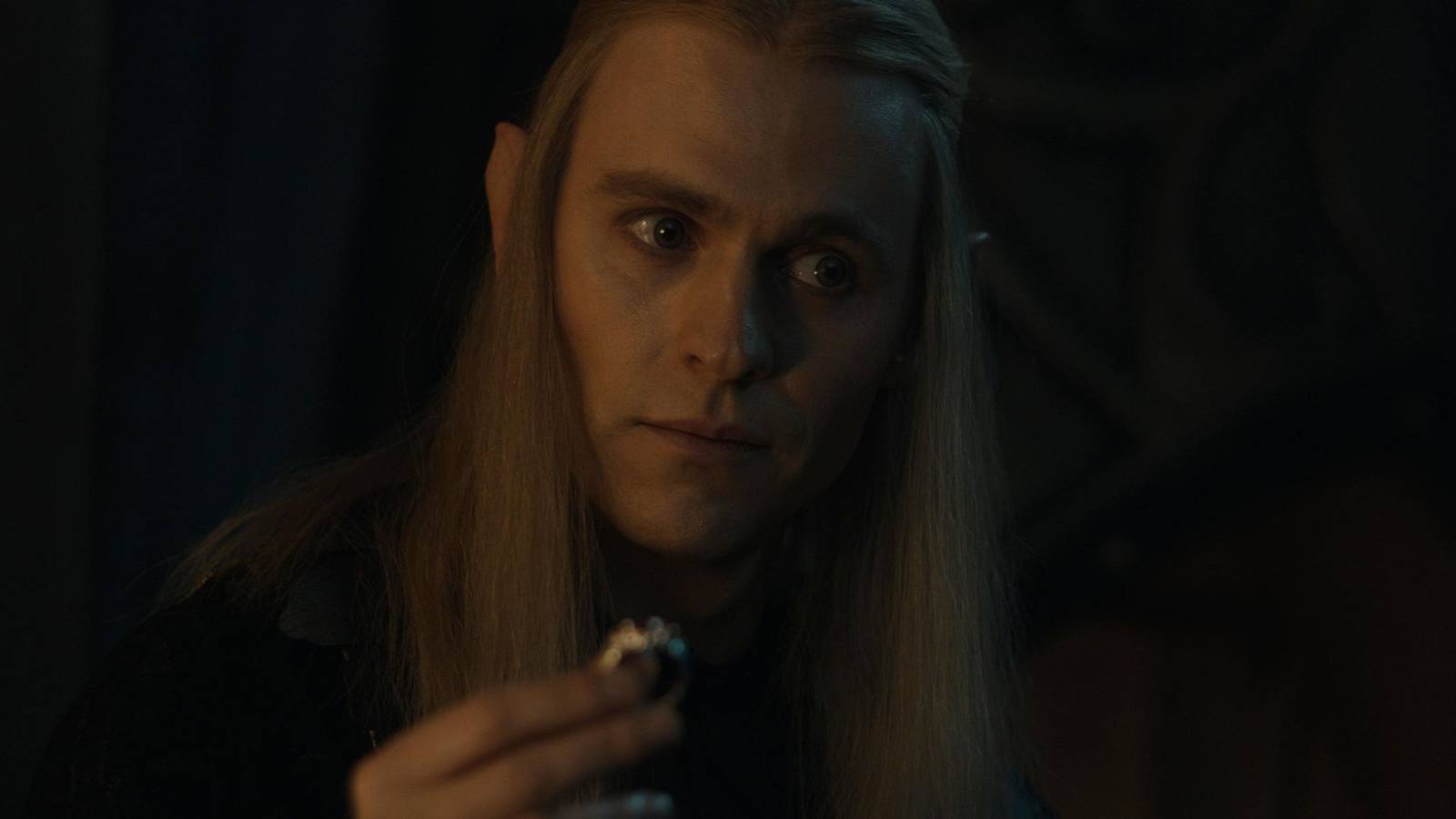
Published Jul 18, 2026, 11:51 PM EDT Angel Shaw is a Lead Writer and Critic on ScreenRant's TV team, covering new-release and classic TV shows across all major streaming platforms. She has been a writer with ScreenRant since 2022 and specializes in Harry Potter, The Lord of the Rings, and fantasy. Angel holds a bachelor's degree in language interpreting and is passionate about all things culture and communication—especially in how it relates to popular media throughout history (from Shakespeare to Friends to Game of Thrones). Sign in to your ScreenRant account There are few fantasy villains as iconic as The Lord of the Rings' Sauron, but when it really comes down to it, this Dark Lord wasn't very good at his job. In many ways, author J.R.R. Tolkien is the architect of the high-fantasy formula, so his memorable villain serves as a sort of template for other characters stretching even into modern fiction. Sauron is the fantastical Lucifer—a fallen, beautiful thing keen to rule over a perfect world of his own making. Of course, the whole idea is that this sort of blasphemy leads down only a single path. In Peter Jackson's Lord of the Rings film trilogy, Sauron is essentially an unseen force. In this version of the story, the villain has no real body and can only reclaim a physical form once he reclaims his One Ring. Until then, he appears as a flaming eye atop a dark tower. It's certainly a frightening visual, but given Sauron's incorporeal state, figures like Saruman, the Witch-king of Angmar, and the Uruk-hai serve as more traditional villains. Even in this central story, Sauron's heyday is a distant memory. In Tolkien's The Lord of the Rings, Sauron has a physical form throughout the entire trilogy, The whole point of Frodo's winding journey is to stop Sauron from returning to power and repeating the horrors of the First and Second Ages. Luckily, this small Hobbit is successful, and we never have a chance to see what a world ruled by the Dark Lord Sauron would look like. Still, even if we glance back in The Lord of the Rings' timeline, it's difficult to claim that this villain ever actually found much success. Sauron's Only Real Victory Is Relatively Brief Don't get me wrong, the beings of Middle-earth have a very good reason for not wanting Sauron to reclaim his power. For a hot minute during the Second Age, things got pretty bad for the forces of good. After centuries of working undercover and behind the scenes, Sauron finally had his Rings of Power and One Ring to Rule Them All, and with these weapons effectively distributed, the War of the Elves and Sauron was his. Bit by bit, Sauron overtook Eriador, and there was little hope left for the Elves. It was a victory for the Dark Lord. However, this really didn't last long. We know that Sauron ultimately falls at the Battle of the Last Alliance of Elves and Men, but the bulk of his victory crumbled away centuries before when the forces from Númenor arrived in Eriador to defend and liberate the Elves. They captured Sauron, along with his One Ring, and brought him back to their island kingdom as a prisoner. Going from being on top of the world to the wet dundgeons of Númenor was a real low point for Sauron, but he managed to figure himself out. He used his One Ring to corrupt Ar-Pharazôn, establish a Morgoth-worshiping cult, and convince the Númenóreans to wage war with the demigod-like Valar in Valinor. They do just as he hopes, but what Sauron didn't expect was for the god Eru Ilúvatar to get involved. Númenor was smote, and Sauron's body was destroyed. Once again formless, the villain was knocked right back off his pedestal. Sauron's Time In Middle-earth Is A Long Cycle Of Losing & Rebuilding This cycle of losses began long before Sauron's single moment of true victory. From the moment the Dark Lord began to establish himself in Middle-earth following his master, Morgoth's, downfall, it was an uphill battle. In those early days, Sauron's primary reliable power was shape-shifting and deception. He was attractive, cunning, and manipulative, but the trouble came from the fact that the most clever Elves of Eriador didn't trust him for a moment. Galadriel, Elrond, Gil-galad—each of these recognized something was off with "Annatar." It only took one powerful elf falling for Sauron's deception for things to really fall apart in Middle-earth, however. The smith Celebrimbor was too easily flattered by the villain, and, before long, the Rings of Power were created. Sauron was then able to claim some personal victories. After the fall of Eregion, he fully established himself as the Dark Lord, took up residence in Mordor, created his One Ring, and began conquering Middle-earth. It can't be denied that Sauron and his forces caused centuries of death and devastation. However, he always fell short of actually achieving his dream. Sauron basically wanted to be a god and rule over a perfect world, but for every city he took or army he crushed, his own forces, strongholds, and developing projects would take the same sort of hit in return. Sasuron couldn't rebuild fast enough, which is ultimately why he turned to Númenor. Sauron's Legacy Never Eclipsed Morgoth's Sauron wasn't always the Dark Lord. In fact, he only had the opportunity to claim the position because his previous master had fallen. Morgoth was several times more powerful than Sauron, since he was one of the demigod-like Valar, rather than an angel-like Maia like his subordinate. Additionally, Morgoth had a very different goal for Middle-earth than what Sauron had during his time on the dark throne. This great villain was a nihilistic maniac who wanted nothing more than to cause chaos and destruction. He was denied the ability to create life, so he aimed to end it instead. Morgoth had several more significant victories in Middle-earth than Sauron ever would, and his great battles reshaped the very structure of the earth. Men and Elves only found victory because they took great risks in reaching the Valar and begging for their help, and the resulting battle was fought between the gods. The Valar didn't get involved in the fight against Sauron as they did in the one with Morgoth, since they knew the Maia was within the people of Middle-earth's power to destroy. In The Lord Of The Rings Trilogy, Sauron Is Just An Avatar For Darkness While it's true that Sauron had far more losses than victories and never quite lived up to his dark master, it doesn't mean that he was an ineffective villain. In fact, he was just the guy to emphasize the themes of Tolkien's The Lord of the Rings. Frodo's story is a demonstration of internal moral struggle. It's all about temptation and desperation. The story explores how small people with small ambitions and a great love for life's simplest pleasures can have a massive impact against darkness. In Frodo's world, darkness is embodied by a villain who believes he can create and rule a better, more perfect existence. This same sort of darkness fills the real world as well. There's greed, ambition, and hatred, and, at times, it feels as if these things cannot be overcome. However, it's important to remember that, just as in The Lord of the Rings, evil doesn't win nearly as often as it might appear. It's a fight we will never stop fighting, but so long as goodness prevails, villains like Sauron will always be trapped in the cycle of losing and rebuilding. Movie(s) The Lord of the Rings (1978), The Lord of the Rings: The Fellowship of the Ring, The Lord of the Rings: The Two Towers, The Lord of the Rings: The Return of the King, The Hobbit: An Unexpected Journey, The Hobbit: The Desolation of Smaug, The Hobbit: The Battle of the Five Armies, The Lord of the Rings: The War of the Rohirrim TV Show(s) The Lord of the Rings: The Rings of Power Video Game(s) The Lord of the Rings Online (dupe), Middle-Earth: Shadow of War, The Lord Of The Rings: Gollum, The Lord of the Rings: Return to Moria First Film The Lord of the Rings (1978) Cast Norman Bird, Anthony Daniels, Elijah Wood, Ian McKellen, Liv Tyler, Viggo Mortensen, Sean Astin, Cate Blanchett, John Rhys-Davies, Billy Boyd, Dominic Monaghan, Orlando Bloom, Christopher Lee, Hugo Weaving, Sean Bean, Ian Holm, Andy Serkis, Brad Dourif, Karl Urban, Martin Freeman, Richard Armitage, James Nesbitt, Ken Stott, Benedict Cumberbatch, Evangeline Lilly, Lee Pace, Luke Evans, Morfydd Clark, Mike Wood, Ismael Cruz Cordova, Charlie Vickers, Markella Kavenagh, Megan Richards, Sara Zwangobani, Daniel Weyman, Cynthia Addai-Robinson, Lenny Henry, Brian Cox, Shaun Dooley, Miranda Otto, Bilal Hasna, Benjamin Wainwright, Luke Pasqualino, Christopher Guard, William Squire, Michael Scholes, John Hurt Created by J.R.R. Tolkien
Whisper It, But Sauron Is The Lord Of The Rings' Biggest Failure
Full Article
📰 Original Source
Read full article at Screenrant →KhanList aggregates and links to publicly available news content. We do not host full articles from third-party sources. Always verify important information with original sources.