
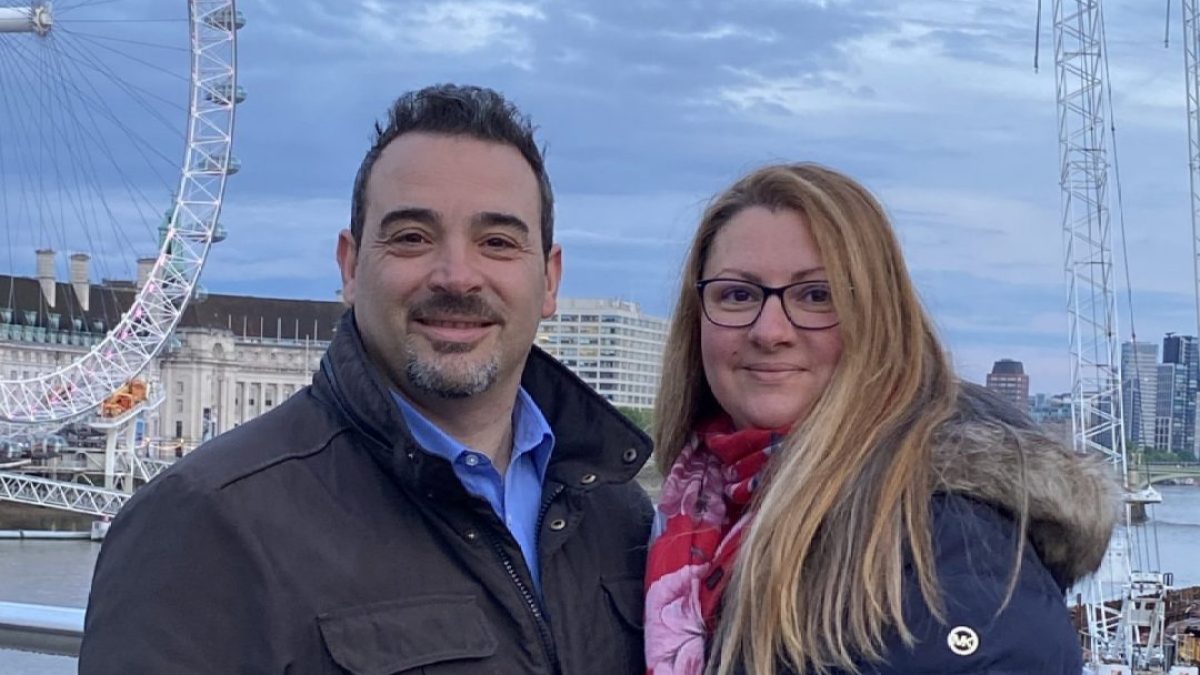
Simona Pappalardo says she was forced to think twice about using her toaster to save on energy costs as she struggled to afford heating for her terminally ill husband’s medical equipment. Simona’s husband David was diagnosed with glioblastoma, an aggressive form of brain cancer, in January 2024. The couple, who have two teenage children, were told he had between six and 12 months to live, which she wanted to ensure were as comfortable as possible for him. But because of the rising cost of energy and the increasingly cold weather, this wasn’t easy. The 48-year-old from North London said: “We were checking every little thing that used electricity, trying to save wherever we could. “It might sound extreme to have to think twice about using something as normal as a toaster, but that was our reality. “It was heartbreaking to have to think about money at a time when every moment should have been about making David as comfortable as possible.” Her experience comes as new research from Marie Curie reveals that 394,000 people in the UK have died in fuel poverty since 2023, equivalent to one person every four minutes. A further 310,000 have died in poverty over the same period, or one every five minutes, the figures produced by the Centre for Research in Social Policy at Loughborough University show. David was just 47 when he died on 26 June 2024, six months after his diagnosis. The illness had left him paralysed on his right side and unable to continue running his photography and videography business.Simona, who had worked alongside him, also had to give up her job to care for him full-time. Their household lost both incomes and they had to apply for universal credit and Personal Independence Payment (PIP), just as the costs of caring for David began to rise. Simona became a single mum when her husband passed away Energy bills became a particular burden. David’s body temperature dropped significantly during chemotherapy, leaving him shivering with cold, while essential medical equipment needed a constant electricity supply. This included an electric bed with a pressure-relief mattress, an oxygen generator and a suction machine to clear his airways. David also wanted the lights left on throughout the night. She added: “He used to say, ‘Please don’t leave me in the dark, I already have too much darkness in my life right now.’ So, the light was on, no matter the costs, that light was the only comfort he could have at night, the only connection with his familiar environment.” David was granted fully funded NHS Continuing Healthcare, an ongoing care package that covered his eligible care needs but not the additional energy costs associated with his illness and medical equipment. The family received a one-off £200 payment from their energy company and an electric blanket, but Simona said this was nowhere near enough to cover the ongoing costs. They moved David into a south-facing room to make use of the sunlight, reduced their washing machine use and switched to battery-powered lights in some areas of the house. She said: “It is difficult to explain what that feels like. You are already facing the prospect of losing the person you love, yet you are also worrying about the cost of washing his clothes, keeping him warm and leaving a light on so he doesn’t feel disorientated.” Marie Curie’s research found that 28 per cent of working-age people die in poverty, compared with 15 per cent of those over pension age. Working-age couples where one partner is terminally ill are also likely to receive at least £500 a month less in benefits than couples of pension age. Simona spent her evenings searching online for financial grants and charitable support. Those hours should have been time for her to rest. Instead, “they became the time I would spend fighting for survival”, she said. “I was spending my days caring for my terminally ill husband and my nights searching for financial help. It was exhausting. “At a time when I should have been concentrating on spending precious time with David, I was constantly worrying about how we would afford the next bill.” According to energy regulator Ofgem, the annual energy bill for a typical household rose from £1,477 in April 2026 to £1,723 in October, with EDF forecasting it could reach £2,165 in January 2027, driven by higher wholesale gas prices linked to conflict in the Middle East. Although the Government is giving £100 to households in council tax bands A to D to help with energy bills, there are concerns this won’t be enough to offset the high costs for many. Simona said families need ongoing support rather than one-off payments, arguing that terminal illness brings additional costs that existing financial assistance does not adequately recognise. She also said there needs to be protection against energy debt built up during terminal illness, with eligible debts reviewed and written off after a death. Marie Curie is calling on the Government to introduce a dedicated energy social tariff for households affected by terminal illness, alongside better protection for working-age people through the benefits system. Matthew Reed, chief executive of Marie Curie, said it was deeply troubling that people were spending their final moments unable to afford heating or food. He said: “No one should have to spend their final days worrying about money – but for every single person across the UK right now a terminal diagnosis will mean they are more likely to face poverty.”
While my husband was dying, I was constantly worrying about how we’d pay our bills
Full Article
Original Source
Read the full article at Inews →KhanList aggregates and links to publicly available news content. We do not host full articles from third-party sources. Always verify important information with original sources.