
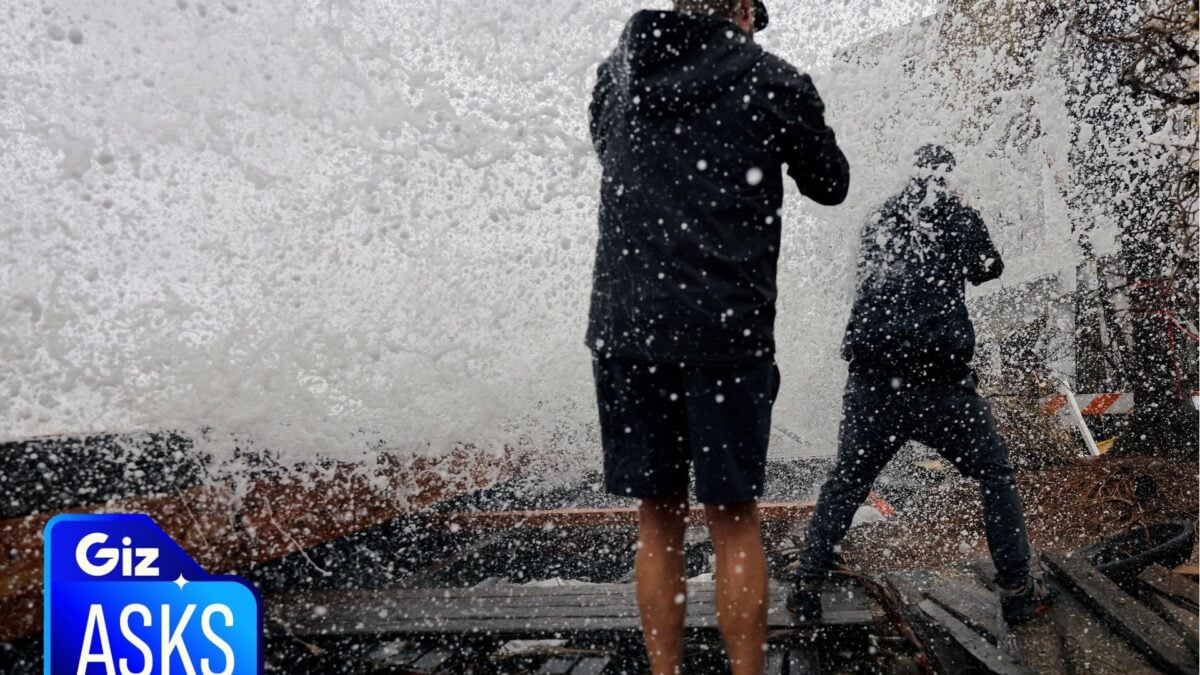
With each fraction of a degree Earth’s temperature rises, so does the threat of extreme weather. In the United States, climate change is exacerbating disasters that endanger the public and cost the nation hundreds of billions of dollars per year. Despite this, federal support for climate change mitigation and adaptation, as well as disaster preparedness and response, has crumbled under President Trump. His energy agenda has sought to destroy renewable energy growth and inject new life into the nation’s fossil fuel industry. In February, the Environmental Protection Agency (EPA) rescinded the legal basis for greenhouse gas regulation in the United States. The Federal Emergency Management Agency (FEMA) lost over 17% of its staff in 2025 alone, and the administration also withheld billions of dollars meant to help states protect residents, their homes, and the critical infrastructure they depend on from natural disasters. I could go on. As the risks mount and the resources for addressing them disappear, knowing where the biggest gaps in preparedness lie becomes all the more important. The urgency of this situation was laid bare this summer—the hottest on record for the United States—during which communities struggled to cope with life-threatening heat waves, rampant wildfires, powerful storms, and flash flooding. All of this got me wondering, which climate threat is the U.S. most underestimating? I posed this question to multiple experts, and while it’s clear that the federal government has hampered the nation’s ability to weather all kinds of climate-driven disasters, they pointed to several threats that may be particularly underappreciated. Andra Garner An assistant professor in the Department of Environmental Science at Rowan University. Garner’s research focuses on the impacts of climate change on natural hazards, including the effects of sea-level rise on tsunamis and the evolving characteristics of tropical cyclones and storm surge in a warming world. The short, blunt answer to this question is, “all of them.” Otherwise, we’d be doing much more to help our communities become more resilient in the face of climate-driven hazards. The U.S. would be working harder to assume a leadership role on the international stage in the effort to address climate change and to find a way to curb emissions. We would also be doing all that we could to eliminate one of the biggest barriers to climate action: funding from the fossil fuel industry that supports politicians and lobbyists to act in ways that prevent meaningful legislation that would otherwise help regulate the polluters that are driving this crisis. But, if I had to identify a particular type of climate-driven threat that is commonly underestimated, I’d again say that the answer is not any single type of event, but rather what the climate community calls “compound hazards,” climate-driven hazards that happen either concurrently or in close succession to one another. Consider the recent, powerful nor’easter that impacted the U.S. northeast, bringing strong winds, rainfall, and storm surge from Virginia to Maine. Climate-driven coastal flood impacts were certainly felt during this storm, but coastal defenses (including recently replenished beaches and dunes in many parts of New Jersey and Delaware) prevented complete devastation. However, many of these defenses were also heavily compromised, as erosion ate away at beaches and dunes. So, should another coastal storm occur in the coming months, many of these communities will be unprotected, potentially facing far worse impacts and more costly damages. Or consider hurricanes, which produce hazards like storm surge, rainfall, and exceptionally strong winds—all made worse in a warming climate. Similarly, heat waves are becoming more intense and lasting longer, with overnight lows that offer little relief, especially in humid regions. Protocols exist to prepare for an approaching hurricane, or to help keep residents safe during heat waves. But how do we prepare for and help a community that experiences a hurricane landfall, immediately followed by an extreme heat wave, when electricity might be out for millions? In a world where climate hazards are continuing to become more extreme, these types of compound hazards present a unique threat that remains difficult to address and requires more attention. Deepti Singh An associate professor in the School of the Environment at Washington State University Vancouver, where she leads the Climate Extremes and Impacts lab. Singh’s research aims to advance the physical understanding of climate extremes and their interactions that result in compound hazards, as well as their sources of predictability in the Earth system. It’s hard to name a single threat the U.S. is underestimating. To me, climate threats mean both climate hazards and their broader societal impacts. Climate threats are shaped by weather and climate events occurring and what lies in the places where extreme events happen and people’s ability to respond and recover. I think we’re underestimating the extreme events themselves and their toll on society, particularly on health and the economy. Heat is a big one. It is among the deadliest climate extremes globally and in the U.S., despite being reasonably well-understood and highly predictable, which enables timely early warnings. The ecological and human health impacts are very likely underestimated. Colder places are unprepared, as we saw from the acute and devastating impacts of the 2021 Pacific Northwest heat wave, which killed an estimated 1,400 people and a billion marine animals in the region. Meanwhile, places like Florida, Arizona, and Louisiana experience chronic heat—exposure to dangerous heat that seriously affects health, but whose impacts are not as immediate or visible. Many of these places don’t have early warning systems for heat, and images of people frolicking in water fountains or rivers often used in reporting don’t motivate people to take it as seriously as death and destruction from, say, a hurricane. Wildfires are another. Increasing heat and drought severity are fueling increasing wildfire activity across the West. Fires threaten infrastructure and ecosystems while producing smoke that is really harmful to human health near to and far beyond the burn areas. Fires also leave landscapes vulnerable for years, if not decades, and they are hard to anticipate. We can forecast high fire weather conditions, but not precisely when and where fires will ignite, whether from human activity or lightning, or how quickly they will spread, especially with the long lead times needed to prepare. The 2020 fire season was a preview—large fires burned across California, Oregon, and Washington, and smoke blanketed the entire country. That risk will continue, and we are not adequately planning for it. The impacts of these events are also underestimated. Billion-dollar weather disasters are increasing rapidly, with 21 already since the start of 2026. The human and ecological impacts unfold over months. Most importantly, there is limited data for tracking these impacts in the most vulnerable communities, including low-income communities, communities of color, and indigenous communities that lack monitoring infrastructure and resources. Our models to anticipate future risks are only as good as the data underlying them. So, threats to the communities most at risk are also the ones we are less likely to anticipate and be prepared for. Finally, communities are now facing compounding threats—multiple extremes happening at once or back-to-back disasters that hit communities while they are still recovering from a previous disaster. Our emergency resources are limited and are being depleted (for example, recent FEMA cuts), just as increasing extreme events are pushing communities beyond the boundaries of what they can manage. Jesse Keenan The Favrot II Associate Professor of Sustainable Real Estate and Favrot II Associate Professor of Sustainable Real Estate and Urban Planning, Director of the Center on Climate Change and Urbanism, and Director of the Climate Change Science and Practice Minor Program at Tulane University. Keenan’s research focuses on the intersection of climate change mitigation and adaptation in the built environment, including aspects of design, engineering, regulation, planning, and financing. Climate impacts come in all shapes and sizes, from highly disruptive extreme events to not-so-obvious chronic nuisances. In recent years, my colleagues and I have investigated a simple research question: To what extent is there an alignment between people’s actual risk exposure to climate impacts and their perception of those risks? In the first paper from this research, published in Nature Communications, we evaluated the alignment between heat risk and people’s worry about extreme heat. Our research showed significant misalignments in the Pacific Northwest and in Appalachia. This means that these areas have a fair amount of risk exposure, yet people do not seem to be too concerned. This presents a real problem if communities and local governments delay making heat-related adaptation investments because it is incorrectly viewed as an otherwise low-risk problem. Conversely, in places whose climate is already pretty hot, such as Texas, the alignment between risk and exposure is pretty robust. All across the country, people’s historical experience, existing risk exposure, and way of life have a lot do with how people evaluate and perceive their risk. But, existing research about people’s perception of risks tends to focus on known and likely risks. If you talk to most climate scientists, they will say that the biggest underappreciated near-term climate risk is extreme precipitation events. When it rains, it can really pour. However, there is category of risks called low-probability high-impact events that most people are grossly unaware of. In fact, if they knew more about these events, they would probably be more concerned with how we prepare for them. One event that keeps me up at night is associated with a scenario where we have an extreme heat wave that contributes to the collapse of the grid. Without power, people roast alive. With rapidly increasing loads from data centers in urban areas, we are facing a compound risk scenario that—in a place like Phoenix—could easily lead to more causalities and deaths than all American terrorist attacks and combat casualties this century—combined. Brad Udall A senior water and climate research scientist/scholar at Colorado State University’s Colorado Water Center. Udall’s expertise includes climate change, hydrology, and related policy issues of the American West. My fear is not a specific climate threat per se. It is, instead, that humans are failing to meaningfully reduce greenhouse gas emissions, let alone get to net zero emissions by mid-century. Despite 30 plus years of scientific outcry pleading for emissions reductions, we have yet to see an emissions peak, we don’t have the technologies nor are we making the investments to reach net zero, and the world is backsliding everywhere into new decades-long committed emissions. In the absence of significant efforts to curtail emissions, every potential threat is a worry. Only by reducing emissions will we reduce our overall risk from all threats. Arguing about which individual threat is worse is the wrong focus given our inability to deal with the root cause of the problem. Recent work by Carbon Brief suggests that, under current policies, global warming of 5.4 degrees F (3 degrees C) by 2100 has a 75% chance of occurring, and 7.2 degrees F (4 degrees C) of warming by 2150 occurs 25% of the time. In a rational world, a 5.4-degree F (3-degree C) rise should be completely unacceptable and 7.2 degrees F (4 degrees C) unthinkable, yet there is little discussion about these outcomes. Furthermore, the failure of the press and the scientific community to explain potential post-2100 emissions and warming trajectories has been a grave mistake. In addition, two recent studies show that since about 2015, the rate of warming has approximately doubled, heightening the long-term danger of destabilizing temperature increases. Capitalism, acceptable standards for consumer behavior, and our governance institutions are all major problems. We allow fossil fuel producers to sell a planet-wrecking product without any consideration of the costs of that product despite having cost-effective green alternatives available in many cases (for example, carbon-free electricity and vehicles). We are taught that freedom means being able to consume anything we want, no matter the climate consequences of those actions. And our democracies, under threat from authoritarians who almost universally oppose meaningful climate action, seem unable to rise to the occasion. It doesn’t have to be this way. We have the knowledge and many of the technologies to avoid the worst. A meaningful carbon tax would make capitalism our friend, instead of our enemy. We need to use our substantial collective wealth to protect us from what should be completely unacceptable risks, not sleepwalk into irreversible, dire outcomes. Giz Asks is a recurring Gizmodo series in which experts answer big questions in their own words, offering a range of perspectives on the ideas, discoveries, and debates that affect our lives and shape our understanding of the world.
Which Is the Most Underestimated Climate Threat in the US?
Full Article
Original Source
Read the full article at Gizmodo →KhanList aggregates and links to publicly available news content. We do not host full articles from third-party sources. Always verify important information with original sources.