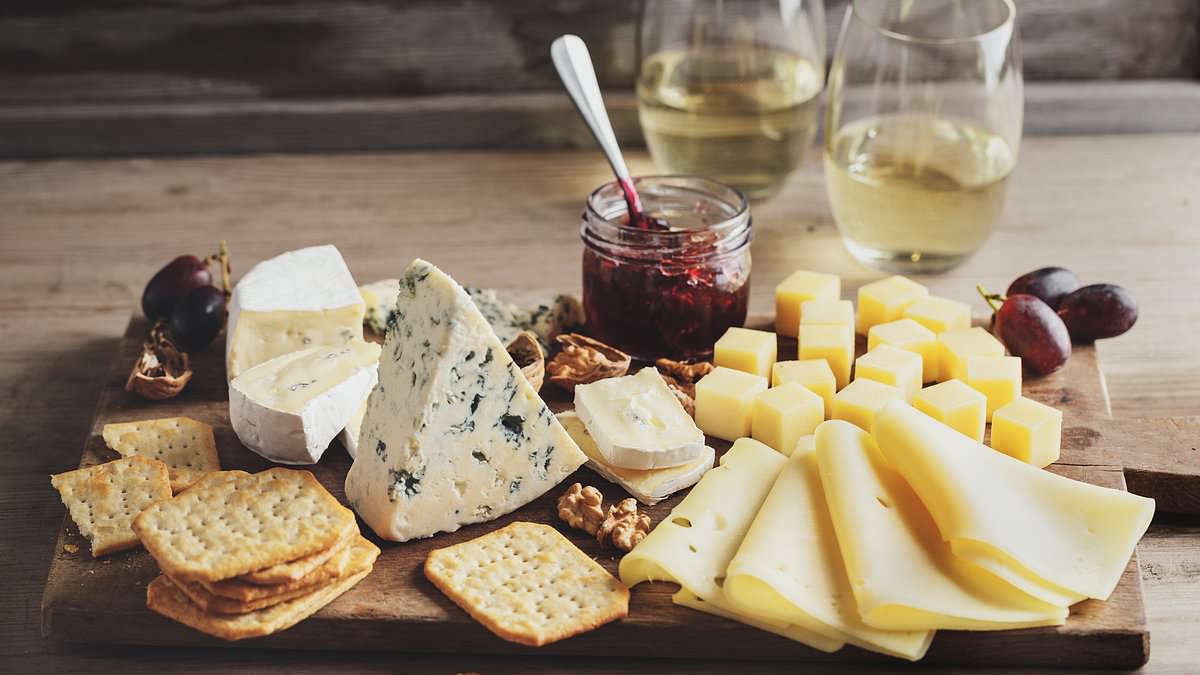
Cheese is among the foods with the worst health reputation. The delicious deli staple - whether spread on a cracker or grated on a bowl of pasta - is made mostly from full fat milk, making most types calorific, by nature. But in a bid to satisfy health conscious shoppers, supermarkets have upped their stock of supposedly 'lighter' versions, like low fat mozzarella.Even cottage cheese has seen a resurgence in popularity among gym bunnies and health gurus on social media, who claim the retro snack offers a low-fat, protein-heavy energy boost.But fat and calorie content isn't the only area of concern when it comes to cheese, experts say.Types can also vary hugely in their level of calcium - the nutrient essential for keeping bones strong throughout life.And some versions marketed as better for you are anything but, according to nutritionists.Here, diet experts reveal the cheeses that are the most nutritious - and the ones you should save for a Christmas treat. Cottage cheese has seen a boost in popularity due to its supposed exercise boosting benefitsCottage cheese lives up to its health claims Graham's Cottage Cheese Natural Full Fat, £1.65Per 100g serving: 104 calories, 4.5g fat, 12g protein, 0.43g salt All cheeses are made by fermenting milk and separating the curds - the solid protein and milk fat - from the whey, which is mostly water and some protein. But in soft cheeses, like cottage cheese and mozzarella, the curds are cut into large pieces and are only gently drained and pressed, meaning they retain moisture.They are also eaten fresh or after a short ripening period, compared to hard cheeses which are aged to boost flavour.Cottage cheese isn't pressed at all, which means it has a high water content - which, along with the low-fat milk typically used to make it, results in a relatively low calorie product. Experts say the fitness gurus are right to champion the cheesy snack.'For around 100 calories you get the same amount of protein as two eggs, which will not only keep you full but help maintain muscle mass,' says nutritionist Rob Hobson. It's estimated that around two thirds of Britons eat cheese at least once a weekFor context, the same amount of cheddar contains around three times the calories and twice as much fat. Although for that you get almost double the protein. However, Hobson cautions that flavoured versions on the market might hamper the health appeal.‘Products containing additions like pineapple are popular, but they contain excess sugar,' warns Hobson.'This can contribute to tooth decay and, in some cases, weight gain.'Verdict: 5/5 Blue cheese is super saltyDanish Blue Cheese, £2.55Per 30g serving: 109 calories, 9.4g fat, 6.1g protein, 0.99g saltThis notoriously smelly cheese is the highest in salt of all the cheeses, consisting of roughly one sixth of your daily allowance. The extra salt is added as a preservative, and to control mould growth, but it means the cheese has nearly double the amount of salt than cheddar and over five times that of Swiss cheese or mozzarella.'Regularly consuming too much salt can raise blood pressure, increasing your risk of heart disease and stroke,’ says Hobson.There's also far less filling protein than others, making you vulnerable to hunger pangs. However, those who struggle with digesting cheese might prefer a Blue. It's estimated that around one in 10 Britons are lactose intolerant; meaning the sugars in cow's milk result in uncomfortable symptoms like bloating and pain.‘Blue cheese may be easier to digest than fresh cheeses because a lot of its lactose is broken down in the ageing process,' says Hobson.Verdict: 2/5 Cheddar packs a calorific punch Tesco Mature Cheddar, £3.25 Per 30g serving: 125 calories, 10.5g fat, 7.6g protein, 0.54g salt Hobson warns that cheddar is one of the fattiest and most calorific of the bunch - so eat in moderation. It's also not as high in filling protein as parmesan and Swiss cheese, or as abundant in calcium.Hobson adds: 'Some studies suggest that cheese may have less of an impact on ‘bad’ cholesterol than expected, compared to other fatty foods.'This is thought to be due to the combination of nutrients and its molecular structure, which affects how your body digests and absorbs its fat.'Verdict: 2/5 Parmesan, the king of calcium...but watch the saltWaitrose Parmigiano Reggiano DOP Parmesan Cheese Strength 6, £5.95 Per serving: 119 calories, 8.9g fat, 9.7g protein, 0.48g salt ‘Of all the cheeses, Parmesan is one of the richest in calcium because it is a hard, aged cheese with very little water,' says Hobson.'It's also a great source of protein with just under 10g per 30g serve.’ Swiss cheese is the only type that beats this protein punch.And Hobson says a unique benefit is that you don’t need much Parmesan thanks to its strong flavour, meaning you're less likely to overeat it.‘The downside however is that parmesan is one of the higher-salt cheeses,' adds Hobson.Verdict: 4/5 Food additives and preservatives are found in ultra-processed foods found in many homes Mozzarella isn't as fatty as you might thinkTesco Mozzarella, £1.30Per serving: 71 calories, 4.5g fat, 5.4g protein, 0.12g saltYou may assume that the pizza topping favourite is among the unhealthiest - but the opposite is true. Hobson says even full fat versions of mozzarella are lower in saturated fat, calories and salt than hard cheeses - due to the high water content.It means if you eat double the portion, you're still only getting marginally more calories than half the amount of cheddar - and less fat. While you do get less protein and calcium, there's still a fair bit for a small portion; twice as much protein as a glass of milk, and five times as much calcium.Verdict: 4/5 If you're low in B12, go for Swiss cheese Tesco Finest Swiss Emmental, £4.50Per serving: 121 calories, 9.6g fat, 8.7g protein, 0.15g salt A similar nutritional profile to parmesan - but with considerably less salt. While a portion is fatty and relatively calorific, it is more likely than some other cheeses to keep you full due to its high protein content - about as much as a large handful of nuts. Hobson points to an added benefit: 'Swiss cheese provides more vitamin B12 than many other of the commonly eaten cheeses.'This is due to the specific bacterial cultures used to add the characteristic holes.The vitmain is vital for helping the body release energy from food and make healthy red blood cells. With few food sources of the vitamin, it can be hard to reach the daily recommended intake. It's estimated that nearly one in five older adults suffer a B12 deficiency.Per serve, Swiss cheese provides around half of your recommended daily intake of vitamin B12 whereas cheddar contains around 13 per cent. Verdict: 4/5 What about low-fat cheeses? Don't be scared off by claims that low fat versions are pumped full of additives and bad for you, Hobson says.'They are generally low in calories and fat, still offer plenty of protein and, in most cases, similar amounts of calcium to the full-fat versions.‘I think it's a common misconception that removing the fat also removes the calcium but this isn't true.'Calcium is actually found in the protein-rich part of the cheese and not the fatty bit.’While some reduced-fat cheeses might also contain a few extra ingredients to improve the texture or flavour, this isn't something to be overly concerned about.‘The nutritional differences between products are far more important than whether there are one or two additional ingredients on the label.’
Which cheese is the healthiest? Experts reveal the types with surprisingly few calories...and those that could carry hidden risks
Full Article
Original Source
Read the full article at Dailymail →KhanList aggregates and links to publicly available news content. We do not host full articles from third-party sources. Always verify important information with original sources.