
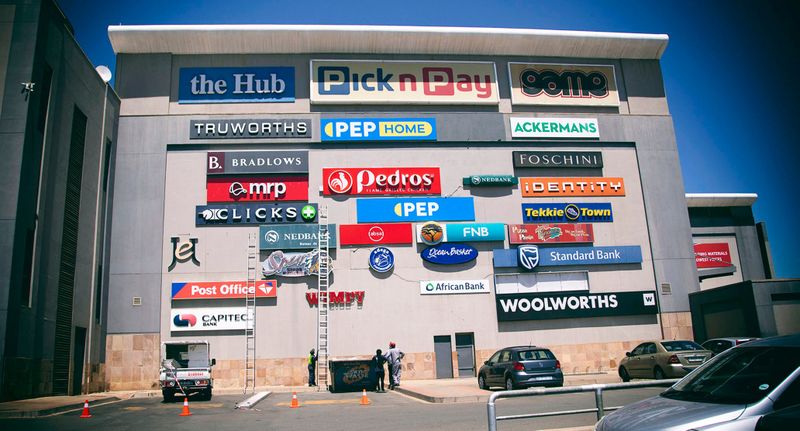
No matter who you are and what you earn, it feels like life has become a lot more expensive.That’s not just the measurable impact of fuel costs and look-through inflation in other areas. It’s also the perception of how long this could last for, particularly with Brent Crude back at the highs we saw at the onset of the war in Iran. I don’t know too many people right now who are brimming with short-term optimism about the world.This is an incredibly dangerous situation for local retailers as we head into the all-important Black Friday and festive shopping season. The summer holiday in South Africa is the seasonal high for many businesses. It’s a long wait until the following summer if this one turns out to be a disappointment.The government might be giving us a temporary fuel relief package, but it doesn’t change the facts: South African consumers are under immense pressure, even by our country’s standards.If you really think through what that means for your budget, you’ll get a better understanding of why most JSE consumer stocks have been crushed this year.Washed outEven Clicks, a market darling until fairly recently, just posted a further slowdown in growth. Things can get very nasty when a swan transforms into an ugly duckling, with the Clicks share price down 42% in the past year.Arch-rival Dis-Chem is down 17% over that period. The market is holding its breath to see if the weakness at Clicks is a sector-wide issue, or a result of stronger trading at Dis-Chem. We will find out when Dis-Chem releases results at the end of October.There are some winners in this environment, although they are few and far between. Growing volumes in this environment requires exceptional operational performance, with the strongest retailers able to put the squeeze on competitors by being more price competitive in a highly promotional environment.Put simply: South Africans are looking for deals, and only retailers with strong margins are able to provide them.This situation has driven incredible deviation in share price performance in the sector.In the past year, Shoprite and Boxer are up 18% and 10% respectively. Conversely, sector peers Pick n Pay and SPAR have tanked 35% and 56% respectively. The tide has gone out and we can see who has been swimming naked.Woolworths straddles the food and fashion markets, so it’s difficult to compare it directly to either group. This approach is set to change over time, with new management putting forward a strategy to lean into categories where they believe they can win (like food and beauty) rather than categories that are a blood-red ocean of competition (like apparel).Nonetheless, Woolworths is down 26% over 12 months, a performance that sounds revolting until you see The Foschini Group down 52%! Rival Truworths is down 18%, although that’s more to do with a modest starting valuation and a strong UK business than because of any excellence in South Africa.The value apparel retailers haven’t offered investors a place to hide, either. Pepkor is down 32% over 12 months, while Mr Price is down 22%.Some good surf still aboutDespite the underlying focus on furniture and the model built around credit, Lewis has been a relative winner. The share price is up 9.5% over 12 months. The modest valuation is really helping here, as Lewis didn’t come into the messy year on a shiny valuation multiple.The sector that feels confusing at the moment is restaurants. This feels like an “easy” thing to cut in a budget. It costs a fortune these days to take the family out for even a basic meal. Once a week has surely become once a month for many families. That “night off” takeaway treat may well have morphed into a Woolworths Food treat instead.We’re seeing signs of that at Famous Brands, where the latest results show a nasty slowdown in like-for-like turnover growth in Leading Brands SA. If we focus on the quick-service restaurants (the takeouts you know and love, like Steers), like-for-like growth of 2.6% in the first quarter slumped to just 0.4% in the second quarter. It’s even worse in the casual dining restaurants (with table service, like Mugg & Bean), where a dip of 0.1% in the first quarter worsened to a 1.0% decline in the second quarter.That’s not a pretty story at all.The Famous Brands share price has been more resilient than many of the consumer names, down 8.9% over 12 months. Spur Corporation has been the real surprise, up 14.9% in this crazy environment.The market seems to think that even in the tough times, parents will still seek out some refuge at their local Spur. A safe play area and a cold ale have been a winning combo for the iconic restaurant chain.But will it be enough for perhaps the toughest consumer environment we’ve seen in years?That’s a question that needs to be asked about every consumer-facing stock on the JSE right now. DMDisclosure: At the time of writing, the author holds shares in Pepkor, Mr Price and SPAR.
WHERE TO INVEST: The investment tide has gone out in South African retail
Full Article
Original Source
Read the full article at Dailymaverick →KhanList aggregates and links to publicly available news content. We do not host full articles from third-party sources. Always verify important information with original sources.