
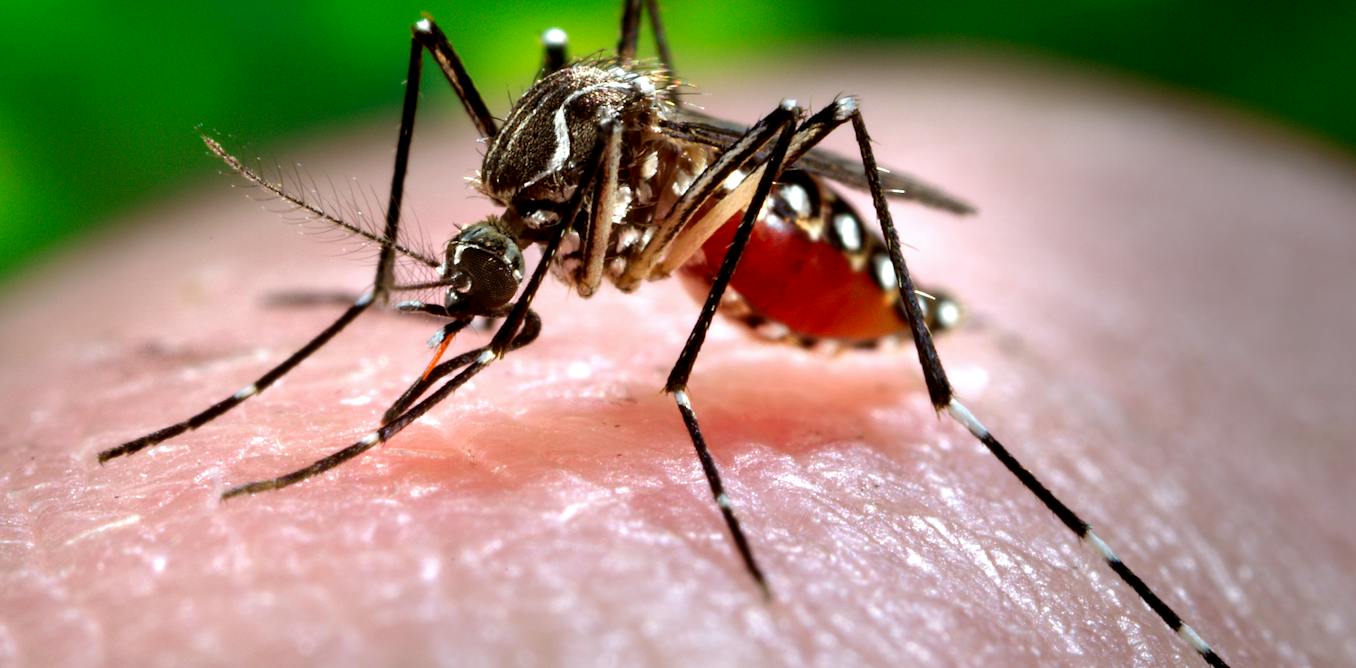
A mosquito buzzing in your backyard may seem like a minor annoyance. But these tiny insects, with their taste for human blood, are increasingly appearing in areas where they were once rare or absent, and that’s raising concerns about the spread of mosquito-borne diseases, including West Nile, Zika and dengue fever. Florida’s struggles with dengue fever in 2026 should be a warning. Hillsborough County, home to Tampa, had seen more than 350 dengue cases, at least one of them fatal, by late October. Miami-Dade County had reported more than 200 cases, and the statewide number was still rising in what has been described as the largest dengue outbreak in modern Florida history. More than 400 of the over 700 Florida cases, including many of those in Hillsborough County and at least seven in the Orlando area, were listed as locally acquired from mosquitoes in the area. Climate change is part of the reason people in many parts of the country are seeing more mosquitoes. Rising global temperatures and shorter winters expand the area suitable for mosquitoes to live in and transmit viruses that cause diseases. Climate change also brings increasingly erratic storm systems, heat and rainfall patterns that leave standing water, creating conditions ideal for mosquitoes to breed. The other major factor shaping where mosquitoes live, often overlooked, is humans themselves. Temperatures are becoming more conducive to disease-spreading mosquitoes. The map reflects the number of days in 2025 that a location was within temperature suitability range for dengue transmission by Aedes aegypti. Sadie Ryan, using gridMET data from Climatology Lab We study entomology and medical geography, including the spread of mosquito-borne diseases. To understand why you may be seeing more mosquitoes, and why communities like Hillsborough County are spending millions of dollars on attempts to control them, start by looking close to home. Mosquitoes follow when humans move in Mosquitoes such as Aedes aegypti – the primary transmitter of pathogens that cause dengue fever, yellow fever, Chikungunya and Zika in the Americas – likely arrived in the U.S. with the slave trade. Both Aedes aegypti and Aedes albopictus, a transmitter of many of the same diseases but a more recent arrival in the U.S., are moved by the global shipping network, which can take them to new locations and reintroduce them in parts of their ranges where they may have been controlled in the past. Aedes aegypti’s habits, including its ability to use household environments for living and breeding, have made it a very successful and established invader where climate conditions permit. The speedy lifecycle of Aedes mosquitoes. They don’t live long, but they reproduce quickly. CDC A flowerpot saucer, clogged gutter, discarded tire, birdbath or even a bottle cap can collect enough water for mosquito larvae to develop. A single Aedes aegypti mosquito can lay more than 100 eggs at a time up to five times during its lifespan, which is only about a month. As suburban neighborhoods expand, so do opportunities for mosquitoes to breed and find humans for their meals. How suburban growth can create mosquito habitat. Kylee Rae Noel Across the United States, new housing developments create thousands of these small water-holding containers and bring together the two things these mosquitoes need: standing water and people. This combination allows them to spread through transportation networks, establishing populations far from their original ranges, and explains why mosquito expansion is often linked to patterns of human movement and development. A map of Pennsylvania shows where mosquito traps were set (gray) and where Aedes albopictus was discovered from 2010 to 2018. The majority are in heavily populated areas around Philadelphia. Eliza A. H. Little, et al., 2022, CC BY A map of Pennsylvania’s population density in 2020 for comparison. Crossover1370/Wikimedia Commons, CC BY Aedes albopictus, originally native to Southeast Asia and now found in all habitable continents, provides a striking example of this spread. These mosquitoes arrived in the U.S. mostly because of human actions. They stowed away on boats and other vehicles, often riding in used tires or lucky bamboo. Their early dispersal in the U.S. has been linked to the interstate highway system. By 2017, Aedes albopictus was documented in 1,368 counties across 40 states, and it has continued to expand across much of the eastern and central U.S. One of Iowa’s first established Aedes albopictus populations, for example, appeared in the Des Moines metropolitan area, where it has continued to grow and expand to other communities. Its spread from southeast Asia all the way to the U.S. Midwest demonstrates how globalization and suburban growth can create opportunities for mosquitoes. A 2025 study led by Janey Messina found wide areas likely to be suitable for mosquitoes to transmit dengue by 2050 based on projections of future temperatures, rainfall and mosquito populations. Lauren Dauphin/NASA Earth Observatory; data from Janey Messina, University of Oxford US’s most common mosquito threat: West Nile West Nile virus remains the most widespread mosquito-borne disease in the continental United States. It is primarily transmitted by Culex mosquitoes, including common house mosquitoes, which are found in much of the country. Culex mosquitoes can breed in a wide range of habitats, including storm drains, roadside ditches, retention ponds, wetlands and other standing water. Their ability to thrive in both urban and rural environments has helped make West Nile virus an enduring public health concern in many states. Because Culex mosquitoes are already established across much of the country, climate change may not necessarily introduce them to new regions. Instead, research is increasingly focused on how changing temperatures and precipitation patterns could influence their abundance, seasonal activity and ability to transmit disease. How mosquitoes transmit West Nile virus from birds to humans and other animals. California Department of Public Health Researchers found that New York state’s season with temperatures suitable for mosquitoes to transmit West Nile virus lengthened by an average of 20 days between 1999 and 2024. A study conducted by one of us, Sadie Ryan, showed that in Florida, all 67 counties had a suitable season for mosquitoes spreading West Nile virus for five or more months in 2000, and 2.33 million people in Florida experienced a nine-month-long season. By the 2030s, as temperatures warm, the study projects that around 70% of Florida’s population is likely to have a chance of getting West Nile nine months out of the year. In 2025, for example, Florida took longer to cool down in the fall than usual, leaving moderate temperatures and enough standing water that Aedes mosquitoes could remain active late into the year. Florida saw a rise in dengue cases. Longer warm seasons means mosquitoes will become a growing public health issue, and controlling them will become increasingly crucial.
Where humans build, mosquitoes follow – bringing dengue, West Nile and other diseases with them
Full Article
Original Source
Read the full article at Theconversation →KhanList aggregates and links to publicly available news content. We do not host full articles from third-party sources. Always verify important information with original sources.