
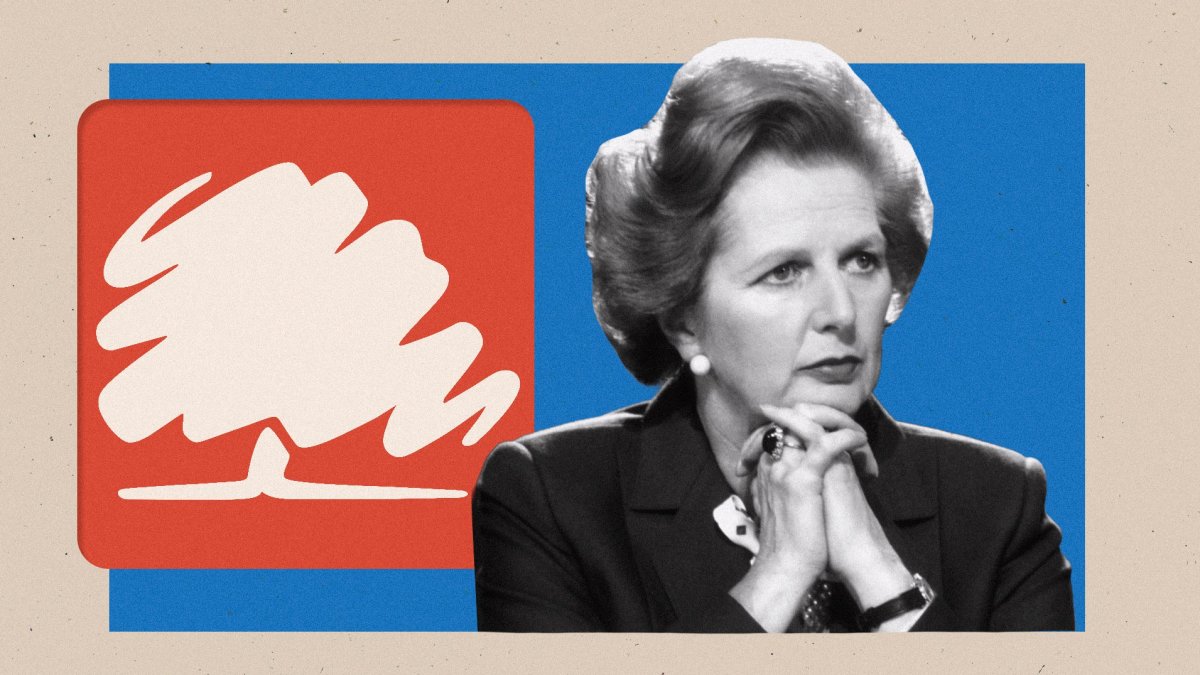
Welcome to The Fight for the Right, The i Paper’s opinion series exploring the ideas, personalities and parties battling to shape the right of British politics. • The Tories’ birthplace reveals a party fighting for its life• Farage’s Reform lieutenants are trading dog whistles for foghorns• The Facebook star wrecking Farage’s 30-year dream of power You can tell that moderate Conservatism is dead because they’re all doing podcasts. Rory Stewart is on The Rest is Politics. Ruth Davidson is on Electoral Dysfunction. David Gauke pops up regularly on the New Statesman podcast. These people should be leading the Conservative Party, or at least battling for its soul in parliament. Instead, they’re sat in recording studios. One Nation Conservatism is a proud political lineage, stretching back over nearly 200 years, from Disraeli to Stanley Baldwin, Harold Macmillan, Edward Heath and Kenneth Clarke. It respects tradition, but it is concerned about social injustice. It values fiscal responsibility but is socially liberal. It urges caution in policy-making, but tolerates an active state. It is patriotic, but it is comfortable with Europe, perhaps even likes it. There are millions of voters in Britain, particularly in well-off picture-postcard Tory-Lib Dem marginals, who believe in these things. But the Tory party is seemingly uninterested in their vote. The strange death of One Nation Toryism began under Margaret Thatcher. She killed it in terms of policy. But far more importantly, she killed it psychologically. She created a sense that success meant total ideological victory. Consensus was weakness. Crazed semi-religious conviction was the only respectable form of political activism. And once you adopt that sort of posture, all sense of moderation dies.Thatcher viewed the world in black and white. “If you’ve got a message, preach it,” she said at a party rally in 1979. “The Old Testament prophets didn’t go out into the highways saying ‘brothers, I want consensus’. They said: ‘This is my faith and my vision. This is what I passionately believe’.” This is the version of Thatcher that took hold of the Tory imagination. It is the Thatcher who was victorious in the Falklands, who defeated the miners, who privatised British industry, who won election after election, who embedded neoliberal economics into the foundations of the country. But there was another side to Thatcher, which they do not mention. Early in her career, Thatcher cut a quite different figure. She was always fundamentally an ideologue, but she was a more pragmatic, reasonable figure than she would later become. “There is always a temptation, not easily resisted, to identify our opponents with the devil,” she said in 1978, “to suggest that politics presents us with a series of clear and simple choices between good and evil, and to attribute base motives to all who disagree with us. These are dangerous and evil tendencies.” In this early period, she was much more cautious than her supporters remember and this was why she was successful. Thatcher was never a big believer in the European project, for instance, but she understood the fundamental logic of the argument and the need for British participation. “If Britain were to withdraw,” she said, “we might imagine that we could regain complete national sovereignty, but it would in fact be an illusion. Our lives would be increasingly influenced by the EEC, yet we would have no say in decisions which would directly affect us.” Wise words, which she, and the Tory party in general, would later forget. She went to war with Tory moderates, who she branded “wets“. This was the first purge of One Nation Tories and the most profound. Towards the end of her time in power, she began to see herself as a kind of absolute monarch. A revealing verbal tic crept into her language, in which she described herself using the royal “we”. In 1987, she said: “We are in the fortunate position in Britain of being, as it were, the senior person in power.” In 1989, she said: “We have become a grandmother.” It was at this point that she stopped listening to any criticism and began to make her biggest mistakes. She ignored warnings about the poll tax from figures like Nigel Lawson and Sir George Young. It turned into a policy disaster, triggering disturbances across the country and a riot in Trafalgar Square. Her view on Europe morphed from sceptical support to implacable xenophobic hostility. Her approach to disagreement became so severe that even figures like Geoffrey Howe, who supported her economic agenda, were considered too soft to have a place at the Cabinet. Politically, he was close to her. But temperamentally, he still believed in consensus, which she could no longer abide. It was this move which ended her political career. On 13 November 1990, Howe rose from the backbenches to deliver his resignation speech, having been isolated and humiliated by the prime minister. “The time has come,” he said, “for others to consider their own response to the tragic conflict of loyalties with which I have myself wrestled for perhaps too long.” After that, she was finished. It was the first domino to fall, ending in her resignation. Her desire to silence dissent extinguished her premiership. In the years that followed, all this was forgotten. The Tory Party came to associate Thatcher’s triumph-at-all-costs zeal with victory. The whole cultural personality of the Conservative Party was formatted into this vision of Thatcher. “The Iron Lady.” “The lady’s not for turning.” Stubbornness, pig-headedness, intolerance towards dissent and the crushing of moderation: these became the admired attributes of Conservatism. But in fact the precise opposite was true. As she lost her capacity for compromise and co-operation, she lost her effectiveness. But that fact was ignored, a forgotten detail of an era drifting slowly into history. In 2019, Tory leader Boris Johnson purged 21 pro-Europeans from the parliamentary party. Towering figures from the party’s recent history, like former chancellor Ken Clarke and Winston Churchill’s grandson Sir Nicholas Soames, were thrown out – essentially as heretics. Fast forward to the present day and a similar process is under way. Kemi Badenoch has announced that only those who back the Conservatives’ commitment to scrapping net zero and leaving the ECHR will be approved as parliamentary candidates. Anyone who won’t fall in line will be blocked. This is why so many sensible Tories sit in podcast studios rather than return to politics – because they know that there is no room for them in the parliamentary party. Those more moderate figures who do stay in parliament – like Tom Tugendhat or James Cleverly – have become parodies of their former selves, repeating wild claims about the ECHR, like a human meat-puppet, in exchange for continued tolerance of their presence. The hardening of the Tory soul is a disaster for the party. Instead of strength, it demonstrates fear: a leadership too insecure to believe it can win in a battle of ideas, a series of policy measures which cannot withstand sustained scrutiny, a conviction so brittle it is afraid of meeting its opponents. But its effect on the country is much more severe. Whether in government or opposition, the Tory Party veers constantly towards ever greater radicalisation, drifting further to the right almost year by year out of a structural inability to constrain its more belligerent voices. It cannot offer meaningful opposition to government policies because it is lost in the mythical fantasy lands of its own ideological programme. And it cannot provide the much-needed conservative restraint on progressive politics which a sensible centre-right party should offer. One Nation Toryism was the victimhood of the Thatcher leadership cult. If it is ever to come back, it will have to do more than challenge the hardline policies pursued by the current leadership. It’ll need to dismantle the mental architecture of the party in the post-Thatcher era.
Where did all the liberal Tories go? The answer starts with Thatcher
Full Article
Original Source
Read the full article at Inews →KhanList aggregates and links to publicly available news content. We do not host full articles from third-party sources. Always verify important information with original sources.