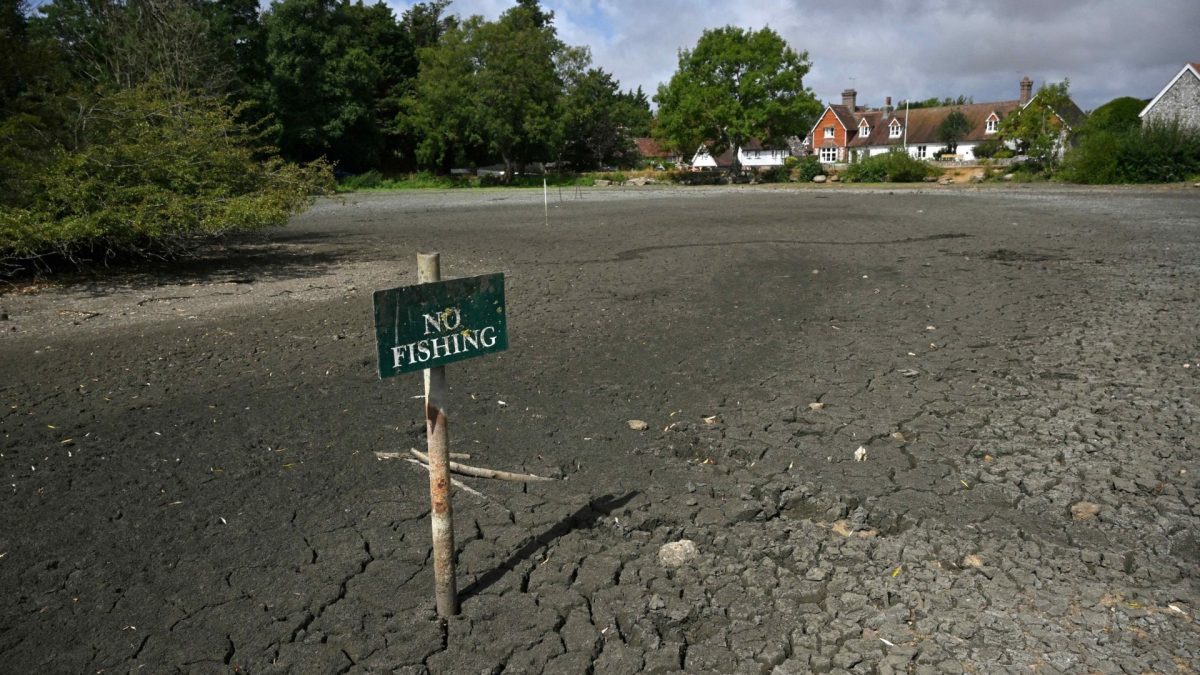
Drought conditions may last into September across large parts of the UK, with no substantial rainfall forecast in southern parts of the country during August. Some areas could experience a sixth heatwave next week. Although weather experts say this month will not be as dry as the record-breaking July, even a return to more normal levels of summer rainfall is unlikely to replenish low water levels in rivers and reservoirs in the short term. At a national level, “we’re not going to get the 31 days of completely dry conditions that we had in July”, says Will Lang, chief meteorologist at the Met Office. “Things are more unsettled already, back to more like normal summer weather, and there will be some rain around next week.” That will be mainly in northern Britain, however. In the south, “almost entirely dry conditions” are expected to continue for weeks and there could be more extreme heat this month. It means some places could be in drought for several more weeks at least. The UK had an unprecedented heatwave in May, before the hottest June day on record with a peak of 36.1°C. That was followed by the sunniest and driest July ever known in England and Wales, with just 10 per cent of the average rainfall throughout the month. The UK’s rainfall since the start of June is just 51 per cent of what we would expect across an average summer, albeit with a few weeks of the season still to come. “It is definitely going to be right up there as one of the most remarkable summers,” says Lang. But what could the impacts be? Water levels are low at Lockwood Reservoir near Walthamstow in north London (Photo: Henry Nicholls/AFP/Getty) How this compares to 1976’s scorching summer Some people have drawn comparisons with the infamous summer of 1976 when people had to queue for water from communal standpipes. This summer is nowhere near the country’s driest, however, and the UK is unlikely to face the challenges of 50 years ago for several important reasons. Because of a wet start to June, the UK has had a national average of 130.2mm of rain so far this summer, which is already well above the 107.3mm of 1976 – and the record low of 105.9mm in 1995. It’s often forgotten that the scorching summer of 1976 was the climax of a far longer drought. The dry period began in May the previous year. The following 16 months were the driest period of such a length for over 200 years. In contrast, 2026 began with one of the wettest winters on record and warnings of flood risks. Plus, we’re better able to manage supplies these days. “Investments in upgraded network infrastructure enable companies to move water more effectively between regions compared to the isolated systems of 50 years ago,” says Rob Wilby, professor of hydroclimatic modelling at Loughborough University. He adds that leakage has fallen by 43 per cent since privatisation in 1989, according to Ofwat. Sheep search for any remaining green grass in Bucknell, Shropshire (Photo: Mike Kemp/In Pictures via Getty) Although there have been localised problems this year, especially in Kent, there is “no prospect” of people across the country needing to line up for water in their streets because of national shortages, says Dr Glenn Watts of the UK Centre for Ecology & Hydrology. But Dr Watts says if it stays dry for the rest of the summer, low river levels may cause further mass fish deaths. These may pose problems for some farms and factories that take water directly from rivers, and can be “completely devastating” for small angling businesses. In England, 78 per cent of rivers were below normal levels last week, with one sixth being “exceptionally low”, according to official figures. Some lakes and rivers have hundreds of dead fish floating on their surfaces, due to algae, pollution and a lack of oxygen all worsened by the heat and lack of rainfall. If this winter is dry like 1975/76, “then next year would be increasingly difficult”, says Watts. However, he underlines that dry winters “are not that common”, especially as climate change is making the UK’s coldest months much wetter on average. The world is also entering an El Niño weather pattern, which tends to mean more rainfall in Britain towards a year’s end. A helicopter water bombs a Cairngorm wildfire (Photo: Jeff J Mitchell/Getty) Farming nightmares – and dangers when rain does arrive The National Farmers’ Union warns this is “one of the most severe droughts many farmers and growers have lived through”. The UK’s cereal harvest is set to be the worst since records began 41 years ago, according to the Energy and Climate Intelligence Unit, disrupting food supplies. Vegetables could be smaller and more expensive in the months to come. Crops of wheat and barley have been badly affected, according to the Agriculture and Horticulture Development Board, and shortages of cucumbers have been reported. Besides what we eat ourselves, it’s limiting supplies of livestock feed. Relying on imported food is tricky as much of Europe struggles too. Supermarkets won’t be empty but some items may run out and others will become pricier. Agriculture is struggling at sites including Shimpling park farm in Bury St Edmunds (Photo: Toby Shepheard/AFP via Getty) Another big question is whether the drought ends suddenly with huge downpours in thunderstorms. “The baked landscapes around us increase the likelihood of flash floods,” warns Prof Wilby. This is because harder ground absorbs less water, meaning it can pool far more quickly. In July 2021, flash floods closed emergency departments at two hospitals in east London. In August 2023, a downpour killed a couple in their 70s who became trapped inside their car in Liverpool. There are dangers for wildlife and river health too, says Paul Shaffer of the Chartered Institution of Water and Environmental Management explains. “The paving in our urban areas will have been collecting a month’s worth of pollution,” he explains. Oils, brake dust and other chemicals from cars are normally washed away every few days, meaning they’re relatively diluted. But if there is severe rainfall after a long period of dry weather, “that first flush can wash a lot of toxins into our water courses all at once”. More gradual ends to droughts can also be problematic, says Wilby. If people see that it’s started drizzling outside, they may immediately think it’s ok to start watering their gardens more freely again. But shortages can last for weeks or even months after rain has returned. @robhastings.bsky.social
When the drought could finally end as sixth heatwave looms
Full Article
Original Source
Read the full article at Inews →KhanList aggregates and links to publicly available news content. We do not host full articles from third-party sources. Always verify important information with original sources.