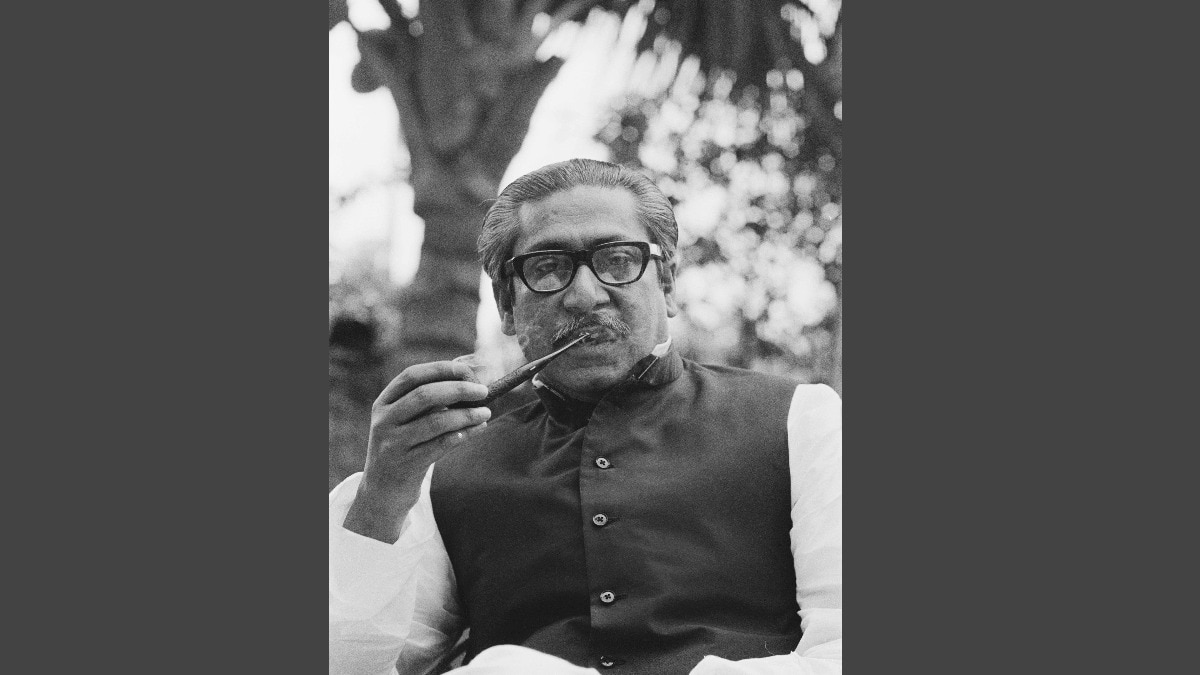
When soldiers from the Pakistan Army came to arrest Sheikh Mujibur Rahman during Operation Searchlight, he made an unexpected request before leaving. He asked them to wait because he had forgotten his pipe and tobacco. That quiet moment became one of the most remembered episodes of Bangladesh's liberation struggle.When soldiers from the Pakistan Army came to arrest Sheikh Mujibur Rahman during Operation Searchlight, he made an unexpected request before leaving. (Photo: Getty Images)Imagine soldiers arriving at your doorstep in the middle of the night.You know why they are there. You know you may never return.Most people would rush out, say a final goodbye, or simply freeze.Sheikh Mujibur Rahman did something nobody expected. He stopped, looked at the soldiers and said, "I have forgotten my pipe and tobacco. I must have my pipe and tobacco."For a few extraordinary moments, the arrest paused. Today, Sheikh Mujibur Rahman is widely remembered as the founding leader of Bangladesh and as the father of former Prime Minister Sheikh Hasina.But this small episode, recalled by Mujib himself after his release from prison in an interview reported by The New York Times in January 1972, has become one of the most striking stories from the country's birth. Sheikh Mujibur Rahman meeting in Dhaka for the 1970 general elections (Photo: Wikimedia Commons) THE NIGHT BANGLADESH CHANGEDIt was the early hours of March 26, 1971.The Pakistan Army had launched Operation Searchlight, a brutal military crackdown in East Pakistan aimed at crushing the Bengali independence movement.Mujib, leader of the Awami League, had become the central figure demanding greater autonomy after his party's sweeping victory in Pakistan's 1970 general election.Soldiers stormed his home in Dhanmondi, Dhaka.As later described in an interview with The New York Times, Mujib kissed his wife and children goodbye, knowing it could be the last time. As soldiers pushed him towards the waiting vehicle, he suddenly remembered something.His pipe.The soldiers, apparently surprised by the request, allowed him back inside. His wife handed him the pipe and his pouch of tobacco before he walked out to begin what became nine and a half months of imprisonment in Pakistan. Sheikh Mujibur Rahman with Gulf leaders (Algeria, Pakistan, and Saudi Arabia) attending the Organisation of Islamic Cooperation (OIC) summit in Lahore in February 1974. (Photo: Wikimedia Commons) WHY THE PIPE STILL MATTERSIt was not really about smoking.Friends and biographers often described the pipe as one of Mujib's trademarks. He carried it almost everywhere, whether at political meetings, during imprisonment or while meeting world leaders. Erinmore tobacco was said to be his favourite.That is why many historians remember this moment not as an amusing anecdote but as an act of remarkable composure.Even when facing an uncertain future, Mujib chose not to leave behind something that had become part of his identity.He was flown to West Pakistan soon after, where he was held in detention and later faced a secret military trial on charges including waging war against Pakistan; he was sentenced to death, though the execution was repeatedly deferred.Changing political events led to his release in January 1972 following Bangladesh's liberation.Today, the image of Sheikh Mujibur Rahman asking armed soldiers to wait for his pipe remains one of the most human moments in the story of Bangladesh's independence.Sometimes, history remembers not only the speeches that changed nations, but also the smallest habits people refused to abandon.- EndsPublished On: Aug 5, 2026 15:49 IST
When Sheikh Hasina's father Mujibur Rahman paused his arrest for a pipe and tobacco
Full Article
Original Source
Read the full article at Indiatoday →KhanList aggregates and links to publicly available news content. We do not host full articles from third-party sources. Always verify important information with original sources.