
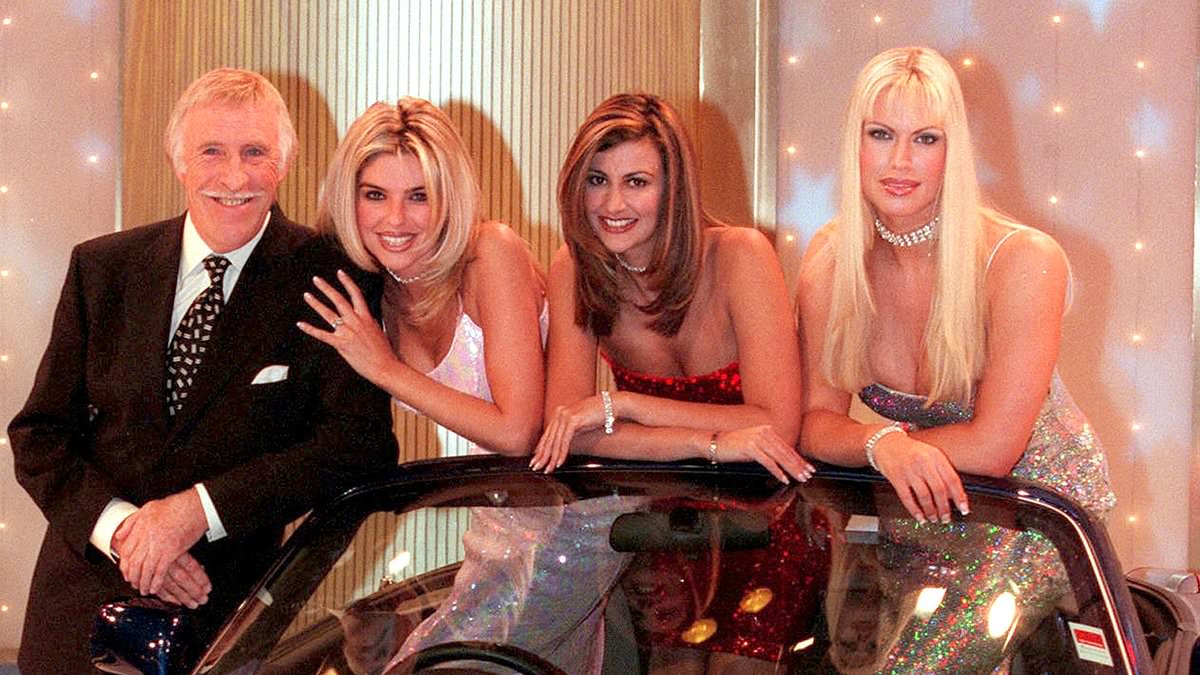
Before the days of Netflix and online streaming services, it was routine for millions of Britons to gather around the TV every Saturday night for an eclectic range of entertainment and quiz shows. Yet a change in the landscape and demand saw a steady decline in the popularity of Saturday night television - with the new and revamped 24th series of Strictly Come Dancing becoming the latest program to be hit by plummeting viewer figures.On Saturday, the pre-recorded launch show peaked at 5.8 million viewers, according to overnight figures, up slightly on last year’s peak of 5.6 million.However, the episode averaged at 5.3 million viewers, down from 5.4 million in 2025 - and well below the figures recorded before the programme was hit by a series of controversies.While Saturday night TV was once in its heyday and amassed audiences in the millions, the framework and types of shows on offer have changed drastically from those which dominated the Seventies, Eighties and Nineties. By the 1980s, when most families had one or two colour televisions, viewing figures could dwarf those seen today for similar shows, with often nearly 19 million people regularly tuning in to peak-time shows. From The Generation Game to Blind Date and Stars in their Eyes, many popular programs, such as Noel's House Party, would be unlikely to be played across British television screens now - due to their exaggerated stereotypes and dated humour. Read on to reminisce over the nostalgic Saturday night programs you loved and miss - and which ones would quickly be cancelled if they aired today...MR AND MRS(1965 to 1999) While the format used in Mr and Mrs, which first aired in the UK in 1965 after arriving from Canada, is a game that's still played on hen and stag dos todayWhile the format used in Mr and Mrs, which first aired in the UK in 1965 after arriving from Canada, is a game that's still played on hen and stag dos today.The basic premise is that one half of each couple who appeared on the show would answer questions about their husband or wife, and then the British host, Derek Batey, would ask the same set of questions to the spouse. Those who got all the questions right would win the programme's jackpot prize.Reflecting societal norms at the time, the programme relied heavily on mid-20th-century gender roles, with the couples – all heterosexual – often consisting of a man as the main breadwinner and a wife who stayed at home. Diversity was rare with very few ethnic couples appearing.THE GENERATION GAME(1971 to 2002) The Generation Game enjoyed its first outing in the late 1970s and was later hosted by controversial UK comic Jim Davison, left. Contestants competed in a variety of challenges to win time on the show's famous conveyor beltBruce Forsyth and Larry Grayson both took on the role of gameshow host for respective series of The Generation Game, which enjoyed the most wanted spot on TV – Saturday night on BBC One.Contestants competed in a variety of challenges to win time on the show's famous conveyor belt. A variety of prizes would roll past them and if they could remember what they saw afterwards, they'd take the haul home with them.Forsyth's famous catchphrases included the lines: 'Didn't he/she/they do well?'However, the original run was rife with casual sexism and gender stereotyping. 'Glamorous assistants' included Anthea Redfern and Rosemarie Ford, who would play second fiddle to Forsyth's main event; the women were asked to model prizes, read out scores and assist with demonstrations.Later, the show would get a new host... stand-up comic Jim Davidson, who was already well known for his outspoken and often controversial comments.Davidson eventually left the show in 2002, after seven years of hosting it – he claimed afterwards that the broadcaster hadn't liked his right-leaning political views and traditional values. THE PRICE IS RIGHT(1984 to 1988) The Price is Right on ITV on a Saturday night was, at the height of its success in the 1980s, a must-watch for family audiences...but the gender stereotypes it played up to would see it have to be drastically remodelled today It aired on ITV around 7pm, with Leslie Crowther as the host. (Bruce Forsyth, left, on The Price is Right alongside Emma Noble, Kimberley Cowell and Lea Kristensen) The Price is Rights' 'Host's Hostesses' would drape themselves across prizes contestants could potentially win. Usually fashion models, the women barely uttered a wordFor anyone who grew up in the 1980s, this US export – it had first aired in America via NBC in 1956, was a Saturday night staple.It aired on ITV around 7pm, with Leslie Crowther as the host. Crowther already had a deeply controversial presenting job behind him, he had hosted the The Black and White Minstrel Show.With its catchphrase 'Come on down, the Price is Right', Crowther would welcome contestants to compete from the audience, who would then have to guess the cost of various items. Alongside Crowther were the 'Host's Hostesses' – later called the Glamorous Girls.Usually fashion models, the women barely uttered a word. Objectified, their role was to smile and look glamorous as they draped across cars or other prizes on offer to those competing.BLIND DATE(1985 to 2003) The rebooted version of Blind Date, the dating show that saw three potential suitors try and win a date from behind a screen. If you were tuning into the ITV show in the 1980s, you would find stereotypes aplenty and heteronormative assumptions Women were often assumed to be financially dependent - with male dates always tasked with paying for the dateThe rebooted version of Blind Date, the dating show that saw three potential suitors try and win a date from behind a screen, addressed the shortcomings of the original but if you were tuning into the ITV show in the 1980s, you would find stereotypes aplenty and heteronormative assumptions.No gay contestants featured in the original run of the ITV show, presented by much-loved former 60s pop star Cilla Black.And casual misogyny was front and centre, with male daters expected to pay with the women who appeared on the Saturday night show often assumed to be financially dependent. Viewed as harmless comedy by many, it's unlikely this version of the show would pass modern compliance.BEADLE'S ABOUT (1986 to 1996) Hosted by the late Jeremy Beadle, this hidden-camera prank show soared to popularity as unwitting members of the public became the targets of practical jokes orchestrated by friends and familyHosted by the late Jeremy Beadle, this hidden-camera prank show soared to popularity as unwitting members of the public became the targets of practical jokes orchestrated by friends and family.However, its brand of humour would nowadays be seen by many as cruel and unnecessarily distressing, and would fail to align with modern-day 'duty of care' and broadcasting guidelines enforced by regulators.Some of the pranks also leaned into topics that many would deem inappropriate today. In August 1996, a late-night spin-off episode called 'Beadle Late' saw the show's co-host Rob Curling and an actress manage to persuade an unsuspecting participant to take their clothes off on air.Meanwhile, other segments featured in the program saw hidden-camera scenarios that many would deem a violation of sexual harassment and workplace ethics in the 21st century. STARS IN THEIR EYES(1990 to 2006) Premiering on ITV in July 1990, Stars in Their Eyes saw ordinary members of the public transform into musical performers and perform live on stage in front of an audiencePremiering on ITV in July 1990, Stars in Their Eyes saw ordinary members of the public transform into musical performers and perform live on stage in front of an audience. Deviating from ordinary karaoke contestants sang live against a studio musical backing before the audience made a vote for their favourite performance.Heat winners then moved through to a live grand final performance, that saw viewer phone votes crown the grand winner.The popular television program was eventually dropped on ITV in December 2006, and despite a brief 2015 revival, it ultimately failed to obtain the same viewership.While it was not taken off the air for being politically incorrect, the impersonation of artists of different races would be deemed unacceptable under today's broadcasting standards.NIGHT FEVER (1997 to 2002) UK karaoke-style game show Night Fever aired on Channel 5 from April 1997 to March 2002 and was hosted by Suggs in the early series UK karaoke-style game show Night Fever aired on Channel 5 from April 1997 to March 2002 and was hosted by Suggs in the early series. But despite its immense popularity, the program's 93 episodes featured several elements that today would draw controversy.The gendered and highly sexualised humour often featured in the show would perhaps fail to abide by broadcasting rules and the general ethics of humour displayed in modern-day programs. BAYWATCH (1989 to 2001) A Saturday night staple in the 90s, Baywatch took Britons away from the cold and wet weather to the sun-soaked beaches of LA in a weekly American drama that followed the lives of lifeguards patrolling the beachesHowever, the show's reliance on raunchy comedy and the objectification of women has been deemed inappropriate by contemporary critics - alongside the hyper-feminine and hyper-masculine beauty standards it promotedA Saturday night staple in the 90s, Baywatch took Britons away from the cold and wet weather to the sun-soaked beaches of LA in a weekly American drama that followed the lives of lifeguards patrolling the beaches.Starring David Hasselhoff and Pamela Anderson, Baywatch dominated TV for years and became one of the longest-running series in history.The popular program lasted for 11 seasons, airing from 1989 to 2001, and continues to be a beloved part of pop culture, even inspiring a 2017 movie adaptation.However, the show's reliance on raunchy comedy and the objectification of women has been deemed inappropriate by contemporary critics - alongside the hyper-feminine and hyper-masculine beauty standards it promoted. NOEL'S HOUSE PARTY (1991 to 1999) Hosted by Noel Edmonds, Noel's House Party's heyday ratings peaked at 15million viewers after the show launched in 1991, but dropped to eight million by the time of its axingHosted by Noel Edmonds, Noel's House Party's heyday ratings peaked at 15million viewers after the show launched in 1991, but dropped to eight million by the time of its axing.The hit show featured much-loved segments at the Gunge Tank, the Gotchas, Grab A Grand, and Wait Till I Get You Home as well as sidekick Mr Blobby.However, the practical jokes played on unsuspecting celebrities by using hidden cameras and microphones in their home would likely cause issues today in light of adapted laws around privacy and fairness. A shift in television culture has seen a move away from these intrusive styles of live entertainment that Noel's House Party relied strongly upon in several of its key segments.
When Saturday night TV was worth watching! As Strictly's revamp flops, the beloved shows from your childhood that don't exist anymore
Full Article
Original Source
Read the full article at Dailymail →KhanList aggregates and links to publicly available news content. We do not host full articles from third-party sources. Always verify important information with original sources.