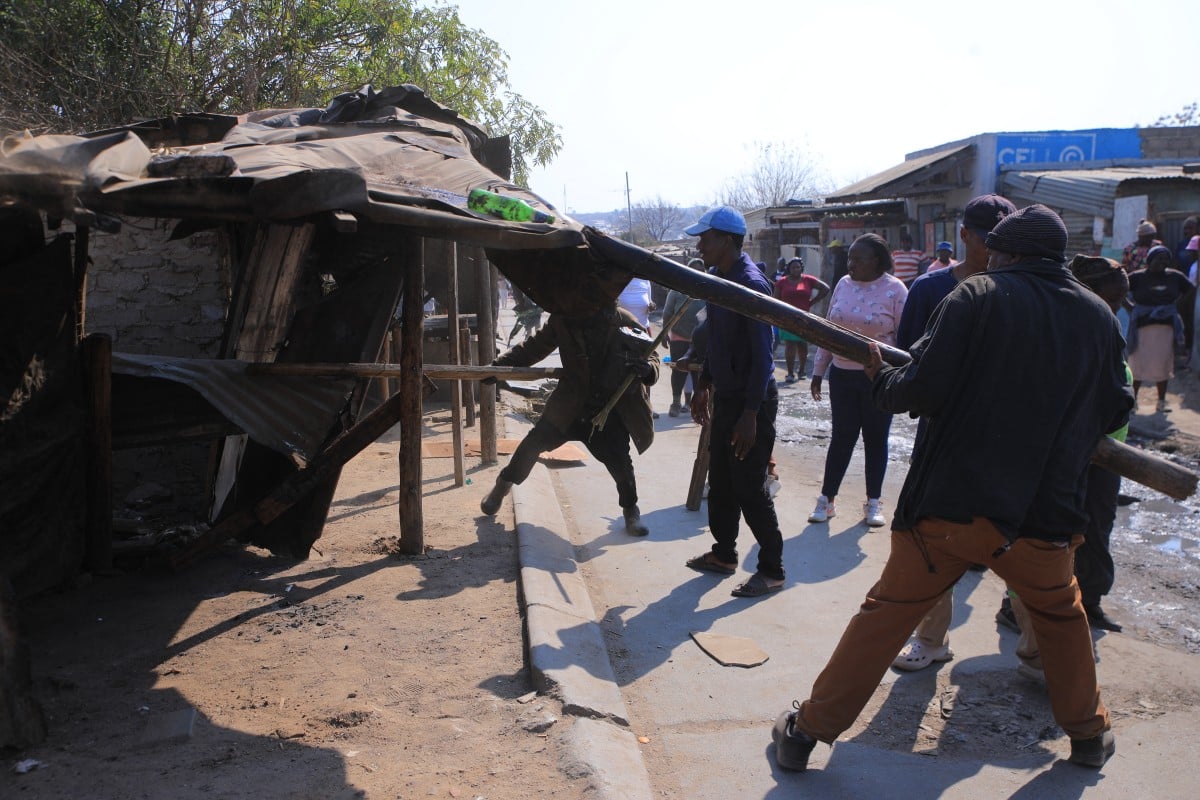
High court confirmed only immigration officers and police under Section 41 may demand identity yet thousands foreign owned shops shut in fear. For years, South Africa has watched the same warning signs appear – immigrants attacked, their businesses targeted, communities divided and misinformation and fear used as tools for political mobilisation. Each time, the country has promised that xenophobia will not become normalised. Yet, the events leading up to 30 June showed how quickly organised vigilantism can escalate when the state fails to act decisively. Although the date had no basis in law, it created widespread fear and disrupted livelihoods. It exposed a dangerous reality – how private actors were able to assume powers that should be reserved for the state. This is why Kopanang Africa Against Xenophobia (KAAX) is taking the state to court. Not because South Africa lacks the laws to stop xenophobic violence, but because the officials sworn to enforce that law have stood aside while private citizens enforce their wishes. Across the country, self-appointed “inspectors” are conducting unauthorised raids on workplaces, shutting spaza shops, looting foreigner-owned businesses and stopping anyone who looks to them like a black African immigrant and demanding their papers on the spot. This is happening despite explicit, repeated statements from the Presidency and the acting police minister that immigration enforcement is exclusively a function of the state. It is also happening despite a high court judgment four months ago confirming that only immigration officers and police acting under Section 41 of the Immigration Act may lawfully demand proof of identity or status. Ahead of the 30 June deadline unilaterally declared by antimigrant groups, a date government repeatedly and publicly rejected as having any official status, thousands of foreigner-owned spaza shops shut their doors, some permanently, as owners weighed a day’s takings against the risk of a beating. Traders who remained open lost stock and income to these unlawful “inspections”. The consequences were felt in homes where families lived in fear, in communities where mistrust has deepened and among people who are afraid to go to their schools, workplaces, seek health care or public spaces. The state budgeted more than R600 million for security operations for South African Police Service (Saps), South African National Defence Force, metro police, intelligence structures and private security to contain the violence. Were the rule of law functioning, such easily foreseeable lawlessness should not have been allowed in the first place. Between our urgent application on this matter, the authorities have opened over 200 criminal cases and made some 350 arrests connected to vigilante conduct. That is not a sign the problem is being managed. It is a measure of how large the problem has already become. On 26 June, hundreds of members of Vatsonga Machangani Association of South Africa – Xitsonga-speaking South Africans from Limpopo – marched to the SA Human Rights Commission to protest being misidentified as undocumented foreign nationals and racially profiled because of the colour of their skin and the language they speak. Add to that the undocumented immigrant, the asylum seeker without a final determination, the refugee whose permit renewal is delayed by a backlogged home affairs, the poor black South African without an ID because the state itself failed to issue one, more than 4.4 million adults according to the department, and a pattern emerges. Vigilantism does not discriminate on the basis of paperwork. It discriminates on the basis of who looks poor, who looks foreign and who looks black. Section 7(1) of the constitution enshrines the Bill of Rights for “all people in our country”, not only citizens. Section 9 prohibits unfair discrimination. Section 10 guarantees dignity to everyone. Section 12 guarantees freedom and security of the person. Section 205(3) imposes on Saps a constitutional duty to prevent and combat crime and to protect the inhabitants of SA. South Africa also has obligations under the International Covenant on Civil and Political Rights and the African Charter on Human and Peoples’ Rights. Being undocumented is, in the overwhelming majority of cases, an administrative status, often one caused by home affairs’ backlogs and its failures, not by any act of the person concerned. South Africa does not have a migration crisis. It has a crisis of documentation, caused by the state and a much older, much deeper, crisis of inequality between a small wealthy elite and a majority still living in poverty after 32 years of democracy. Neither crisis is solved by a man with a stick standing at a taxi rank demanding to see someone’s papers. Both are made worse by a state that lets him do it. The relief KAAX seeks in this litigation is not radical. It asks the state to do what the law already requires: confine immigration enforcement to lawfully authorised officials; protect everyone in the country from xenophobic violence; and convert that obligation into a concrete, monitorable, enforceable implementation plan with clear timelines. If anti-rights groups believed the state was failing to address undocumented migration, the courts were open to them the entire time. Not one of these groups has taken the legal route. Instead, they have chosen a way that leaves thousands of people, regardless of documentation status, too afraid to leave home, too afraid to work, too afraid to send their children to school. That is not border control. It is a humanitarian crisis manufactured by disinformation and tolerated by omission. In a constitutional democracy, tolerating this is itself a violation of the law.
When private actors enforce immigration law, everyone pays the price
Full Article
Original Source
Read the full article at Citizen →KhanList aggregates and links to publicly available news content. We do not host full articles from third-party sources. Always verify important information with original sources.