
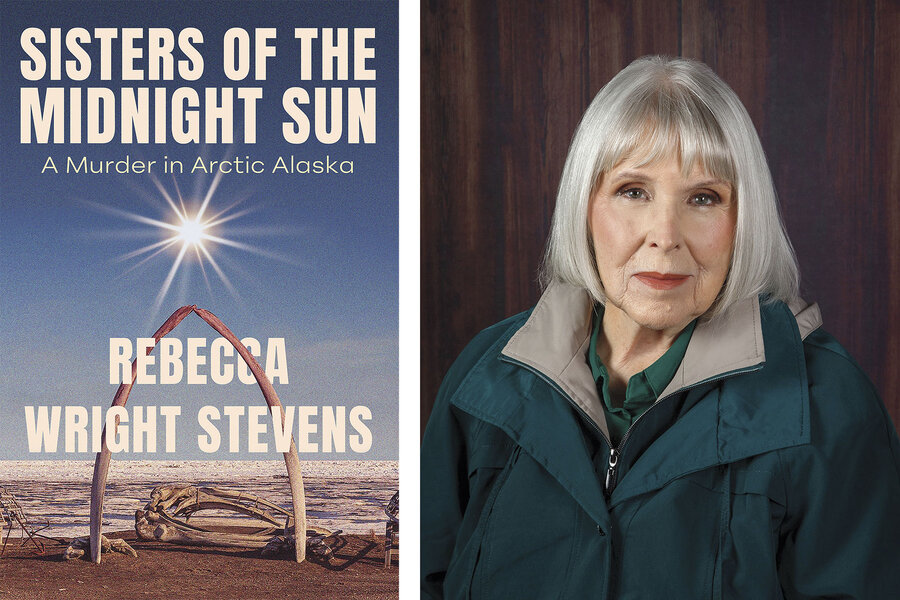
When Rebecca Wright Stevens became a widow and an empty nester in her 40s, she found herself in need of a change. Enticed by the high salary for public defenders in Alaskan bush offices and a desire to be closer to nature, she moved to Alaska in the early 1990s to become a public defender for North Slope Borough, an area populated by the Iñupiat people. In Utqiagvik – the United States’ northernmost city – Wright Stevens found her Little House on the Tundra, with “one neighbor between [her] and the Arctic Ocean” and the scent of seal cooking oil in the air. Then, in August 1993, she took on the defense of an Iñupiaq man named Amos Lane, who was charged with sexually assaulting and murdering two sisters from an Iñupiaq family. So begins “Sisters of the Midnight Sun: A Murder in Arctic Alaska,” Wright Stevens’ memoir in which she digs into the process behind her public defense of Lane, all while examining her life as a white tanik – Iñupiaq for “outsider” – in Utqiagvik. Why We Wrote This In “Sisters of the Midnight Sun,” a public defender examines a murder case that pitted tribal customs against the concept of due process. Rebecca Wright Stevens defended a man accused of killing two Alaskan Indigenous women. The Native community had its own ways of punishing wrongdoers, but Stevens’ role was to protect her client’s constitutional rights. The Lane case was important. Suspicions fell on him because he had a criminal record and the community considered him a drifter. In general, Indigenous women and girls face disproportionately high rates of sexual assault, domestic abuse, and homicide. Because of the complex web of federal, state, and tribal jurisdictions, many of these cases fall through the cracks, and the perpetrators are not brought to justice. In this situation, the Iñupiat community wanted someone held accountable.With 126 other clients in her caseload and a borough roughly the size of Wyoming to serve, Wright Stevens had to change tactics from her earlier work in Washington state. “To keep up with the caseload, I’d had to learn to ... accept the fact that I could touch only most of the bases, not all.”The case also involved an unusual challenge. The assault and murder of sisters Bernice and Wanda Ipalook took place during the region’s summer of midnight sun, where continuous sunlight lasts for 84 days. Days blurred together, with witnesses unsure of when and where they last saw the sisters alive. Most of the Iñupiat people in Utqiagvik believed Lane was guilty – including some of his own family members. People said that his past violent behavior was fueled by anger over his own mother’s murder in a similarly brutal crime when he was age 14. At the heart of the Ipalook case lay a tension between Iñupiaq laws and traditions and what Wright Stevens describes as “Anglo” law. Elizabeth “Liz” Kanayurak, Wright Stevens’ close confidante in the public defender’s office and an Iñupiaq woman herself, repeatedly shared her frustration with the case. “Iñupiaq law has been around for thousands of years before you guys came,” she tells Wright Stevens early in the investigation. “Some people shouldn’t be represented. They should be cast out.”“The grafted-on Anglo system was far from perfect, as were many of its players,” Wright Stevens writes. “But it seemed to me that, worldwide, due process was the best way to go.”Eventually, Bernice Ipalook’s fiancé, John Adams, was charged with the crime. Lane was granted immunity from prosecution for his testimony against Adams, though Wright Stevens grappled with growing evidence that suggested Lane had prior run-ins with the Ipalook sisters and was at their home the night of the murders.In writing about her efforts to build the defense case, Wright Stevens takes frequent detours to paint a fuller picture of life in Utqiagvik. She begins a romance with Liz’s cousin, Michael. She watches over her overwhelmed teenage client, Randy, whom she worries could become another statistic in Alaska’s Native teen suicide epidemic. She observes an Iñupiat whale hunt, and narrowly survives a polar bear encounter in front of her home.By the end of the book, Adams is found not guilty. Though Lane had immunity, the state charged him with perjury for lying about not being with the Ipalook sisters on the night of their deaths. He plead no contest. No one has been successfully prosecuted for the murders. Wright Stevens is, at times, unsparing in the details of the Ipalook crime scene, though her search for truth and justice prevails. Greater clarity around her writing process and sourcing would be appreciated, as there is heavy use of quoted dialogue.Lane died in 2022 in a police shoot-out. Wright Stevens later discovered an earlier interview with him and his sister on a podcast about murdered and missing Indigenous women. When Lane was asked what would bring him peace about his mother’s death, he said he would like to bury his mother and father side by side. “In his last years, what Amos wanted was to put back together the family he lost at fourteen,” Wright Stevens writes. “I cried for him.”
When Native justice clashes with ‘Anglo’ law
Full Article
Original Source
Read the full article at Csmonitor →KhanList aggregates and links to publicly available news content. We do not host full articles from third-party sources. Always verify important information with original sources.