
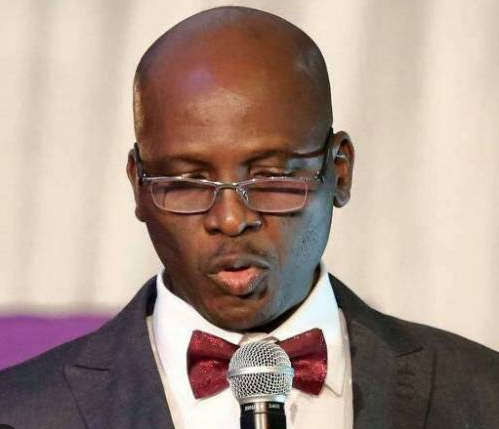
Femi Akintunde-Johnson There is a curious Nigerian argument that appears every few years, usually whenever the country is in trouble and its leaders are somewhere else: must the President actually be physically present in Nigeria for Nigeria to function? The answer, strictly speaking, is no. The more uncomfortable question is this: must Nigerians be expected to watch their President, Vice-President and an increasingly expensive presidential entourage criss-cross the globe while the country is struggling, without asking whether the timing, cost and necessity of those journeys make sense? President Bola Tinubu left Abuja on 30 August for a three-week annual leave in Europe, beginning in London. The Presidency described it as a working vacation and said he would return to Nigeria to join the “hectic campaign” ahead of the January 2027 elections. The timing immediately attracted criticism from former Vice-President Atiku Abubakar and former Anambra governor Peter Obi, both of whom argued, in different words, that a country wrestling with insecurity, hardship, food and transport costs should command more of the President’s physical attention. There is, however, a delicious irony in the present criticism. Atiku’s principal during their years in government, President Olusegun Obasanjo, was himself serially lampooned for the frequency of his foreign travels, sometimes giving Nigerians the impression that Abuja was merely a transit lounge between international engagements. That history does not make today’s criticism of presidential travel invalid; neither should it make us dismiss it merely because it comes from the opposition. A hypocrite can occasionally make a perfectly valid argument. The more useful question is whether we are prepared to apply the same standard to whoever occupies Aso Rock – yesterday, today or tomorrow. So let us remove the partisan wrapping and examine the actual issue. The Constitution does not require a Nigerian President to remain permanently chained to Aso Rock. Section 145 provides a mechanism for temporary absence: where the President transmits a written declaration to the Senate President and Speaker that he is proceeding on vacation or otherwise unable to discharge his functions, the Vice-President acts as President until the President transmits a contrary declaration. So there is no automatic constitutional vacuum merely because the President boards a plane. Indeed, modern government is supposed to be sufficiently institutionalised that it does not collapse whenever its chief executive leaves town. The real test of a mature administration is continuity: decisions continue, emergencies are handled, ministers remain accountable, intelligence flows and the machinery of government keeps turning without everybody waiting for the principal to return from wherever the presidential aircraft has landed. But constitutional legality is only the floor of responsible leadership, not its ceiling. A President may have every legal right to take annual leave and still invite legitimate questions about judgement. A three-week European vacation at a moment when Nigerians are facing frightening insecurity and severe economic pressures inevitably becomes more than a private holiday. It becomes a statement, whether intended or not, about priorities. And public leadership is partly the management of perception. The Presidency says Tinubu has spent months dealing intensively with the economy, security and other matters of state and deserves time to “refuel” before the political season gathers full momentum. There is nothing inherently scandalous about a President resting. In fact, exhausted leaders can make dreadful decisions. The problem is not that presidents need holidays. The problem is whether Nigerian governments have developed sufficiently disciplined rules around where, when, how and at what cost those holidays and official journeys should occur. That question becomes more pointed when the bills enter the conversation. An analysis of GovSpend records reported by The PUNCH put presidential travel-related foreign-exchange expenditure at N34.39 billion for 2024 and 2025 alone, covering the State House, Presidential Air Fleet, Office of the Chief of Staff and travel-related operations involving the President, Vice-President, First Lady and aides. Another later analysis put broader presidential travel and related expenses between June 2023 and April 2026 at about N37.64 billion. These are not figures that should be casually described as the personal cost of presidential holidays; they encompass a wider category of official travel and associated expenditure. But they are sufficiently large to demand transparent accounting. And this is where the Nigerian contradiction becomes almost comic, if it were not so expensive. We lecture citizens about sacrifice, ask families to endure painful reforms, plead with businesses to tighten their belts and invoke fiscal discipline at every opportunity. Then government travel can acquire the appearance of a bottomless institutional hospitality fund. Apparently, austerity has a different boarding gate for VIP passengers. The argument that every foreign journey is wasteful would be equally foolish. Nigeria is a major country with enormous diplomatic, economic and security interests. Presidents must meet foreign leaders, court investors, attend multilateral meetings, negotiate strategic partnerships and represent the country abroad. Some journeys can produce tangible national benefits. The State House itself has described Tinubu’s foreign travel as part of an economic-diplomacy strategy. The sensible question, therefore, is not “Why does the President travel?” but “What is the national return on each journey, and could the same objective have been achieved more cheaply or efficiently?” Other mature democracies provide useful lessons here. Britain publishes ministerial overseas travel information quarterly and its Ministerial Code requires ministers to make efficient and cost-effective travel arrangements, keep official delegations as small as reasonably possible and ensure that their arrangements can withstand public scrutiny. The same code makes provision for ministerial cover during absences. The United States, meanwhile, has institutionalised presidential retreats such as Camp David, allowing a President to withdraw from Washington without withdrawing from the business of government; President Donald Trump was still holding Cabinet business there as recently as July. That is the lesson Nigeria should borrow: not necessarily that every President must holiday in Obudu or Yankari, although there would be considerable poetry in seeing our leaders rediscover their own country, but that absence should never mean administrative invisibility. Nigeria needs a binding presidential and ministerial travel protocol that distinguishes essential diplomatic travel, working visits, private holidays and political journeys; publishes costs and delegation sizes; requires clear acting arrangements during prolonged absence; and provides periodic public reporting of the benefits obtained from major official missions. There should be firm limits on entourage sizes, first-class indulgence and the use of public resources for essentially private or partisan purposes. More importantly, no President and Vice-President should simultaneously create avoidable uncertainty about who is physically available to provide visible national leadership during a serious domestic emergency. If both must be abroad, the constitutional and administrative arrangements should be explicit, timely and reassuring. Citizens should not have to consult social media to discover who is actually minding the national shop. And perhaps President Tinubu should take Peter Obi’s tourism argument more seriously than Obi intended. Nigeria is full of places worthy of presidential attention: Kano, Katsina, Sokoto, Cross River, Bauchi, Ebonyi, Lagos, the Niger Delta and countless others. A President travelling within Nigeria can combine rest with the symbolic business of reminding Nigerians that their country is not merely the place from which government officials depart for better airports, hospitals, hotels and leisure. But there is an even larger point. Leadership is not measured by how frequently the President is photographed boarding an aircraft, nor by how rarely he leaves Aso Rock. It is measured by whether government continues to work, whether public money is treated as sacred, whether citizens can see evidence of priorities that resemble their own anxieties, and whether the institutions are strong enough to function without theatrical dependence on the physical presence of one individual. Opposition politicians should therefore resist the temptation to condemn only the travel habits of the government of the day. They should publish their own travel and expenditure standards and promise to observe them if elected. The Presidency, equally, should stop treating every criticism as partisan mischief. Some critics are opportunists; some are hypocrites; some are genuinely asking uncomfortable questions. A confident government should be able to separate the three. For Nigeria’s leaders, the airport should never become a symbol of escape from responsibility. Neither should Aso Rock become a monument to permanent presence without productive governance. The President can travel. He can rest. He can conduct diplomacy from London, Paris, Washington or anywhere else the national interest demands. But the country must remain demonstrably awake, governed and accounted for. After all, the Nigerian people already spend enough of their lives waiting for things to arrive. We should not have to wait for our government to return from abroad before feeling that it has remembered where home is.
When Leadership Goes Airborne
Full Article
Original Source
Read the full article at Thisdaylive →KhanList aggregates and links to publicly available news content. We do not host full articles from third-party sources. Always verify important information with original sources.