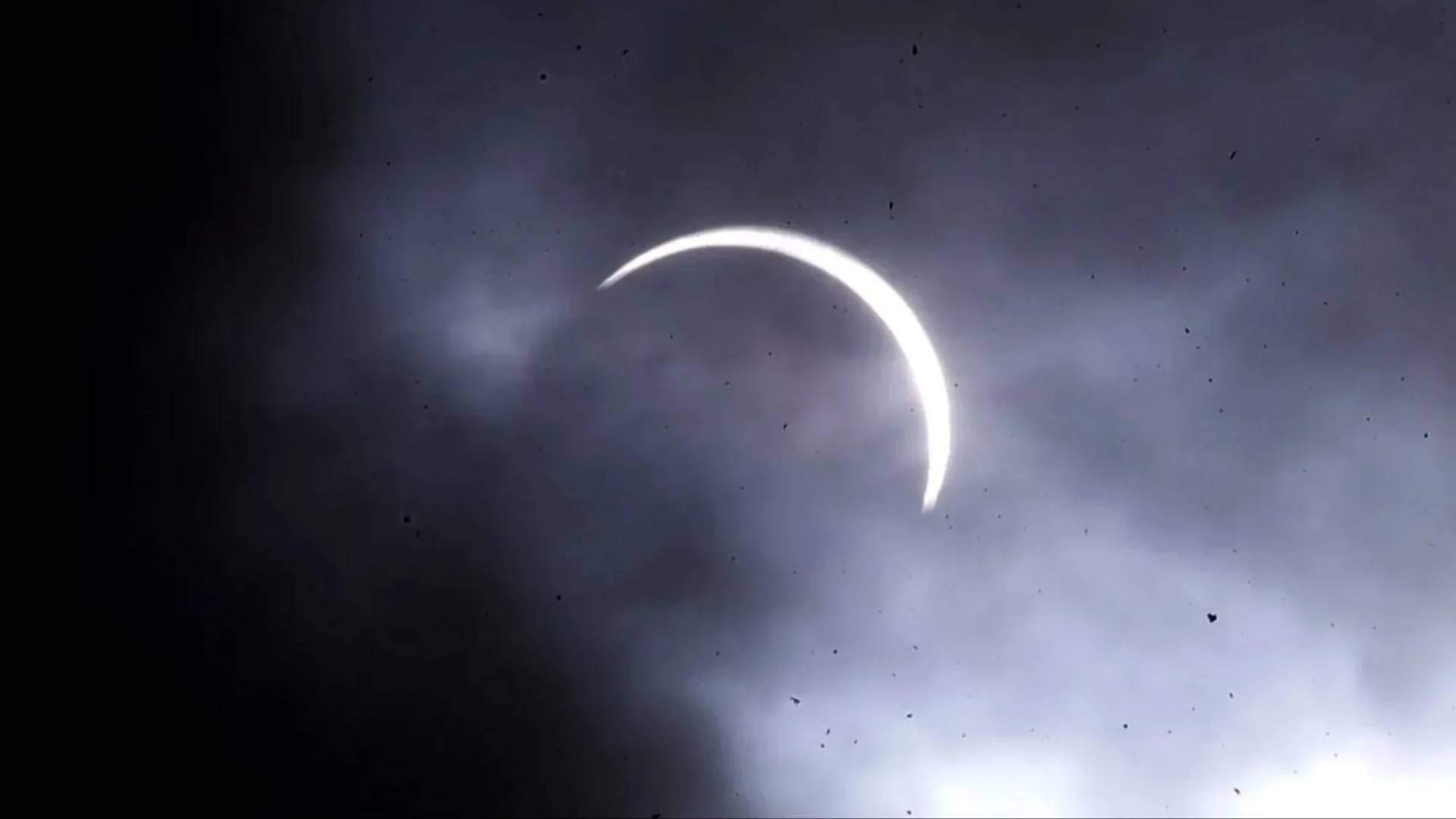
THE Sun will almost disappear from view when a dramatic solar eclipse sweeps across the UK on Wednesday. It will deliver the greatest eclipse coverage seen from these shores since 1999, when parts of Cornwall and Devon experienced totality. It is never safe to look directly at the sun during a partial eclipse without genuine eclipse glasses Credit: EPA Up to 96% of the Sun will be obscured by the moon in the UK Credit: Gerry Penny When is the next solar eclipse in the UK? This week’s solar eclipse takes place on Wednesday 12 August, and will be visible across the whole of the UK. It is a partial solar eclipse, but comes very close to being total, with between 90% and 96% of the Sun of obscured across the nation – the greatest coverage is expected in the South West. Sign up for the Tech newsletter Thank you! Brits will have to wait a very long time for something comparable. There is another deep partial solar eclipse in on November 14, 2050, but it is not predicted to be as close to a total eclipse. read more on the solar eclipse A deeper partial eclipse follows on September 3, 2081, when up to 99% of the Sun is set to be hidden from parts of Great Britain. But the next true total solar eclipse visible from the UK will not occur until September 23, 2090. Gibraltar, a British Overseas Territory, will see a total eclipse on August 2, 2027. It will also be visible to an extent from the UK, but will be much less dramatic, with a maximum 45% of the Sun being obscured by the moon. Most read in Tech What is a solar eclipse? A solar eclipse happens when the Moon passes between Earth and the Sun, blocking some or all of its light from view. Despite so much of the Sun being hidden, during this week’s eclipse the sky won’t turn completely dark or reveal the solar corona as it would during totality. Royal Observatory Greenwich estimates that viewers in London will see around 90% coverage, compared with roughly 95% in Cornwall. The path of totality is the narrow track across Earth’s surface where the Moon completely blocks out the Sun, briefly plunging it into total darkness. For this eclipse, the path of totality passes over northern Russia, the Arctic, Greenland, Iceland, the North Atlantic, large areas of Spain, and also a small corner of north-eastern Portugal. What time is the solar eclipse on August 12? Exact times vary depending on where in the UK you are viewing the solar eclipse from. In London, the partial eclipse begins at 6.17pm, reaches its maximum at 7.12pm and ends at 8.06pm. It begins at 6.08pm in Edinburgh and Glasgow, peaking at 7.05pm, while Truro sees first contact at 6.18pm and maximum coverage at 7.16pm. The Sun will be low in the evening sky, so spectators should find an unobstructed view towards the western horizon. Looking directly at it remains dangerous even when most of its surface is covered. The UK Health Security Agency says ordinary sunglasses do not provide adequate protection. Skywatchers should use genuine eclipse glasses or handheld viewers meeting the ISO 12312-2:2015 safety standard, or watch indirectly with a pinhole projector or colander. Cloud cover doesn’t make looking directly at the Sun any safer. Comment now
When is the next solar eclipse in the UK? How long we will wait to repeat the August 2026 phenomenon
Full Article
Original Source
Read the full article at Thesun →KhanList aggregates and links to publicly available news content. We do not host full articles from third-party sources. Always verify important information with original sources.