
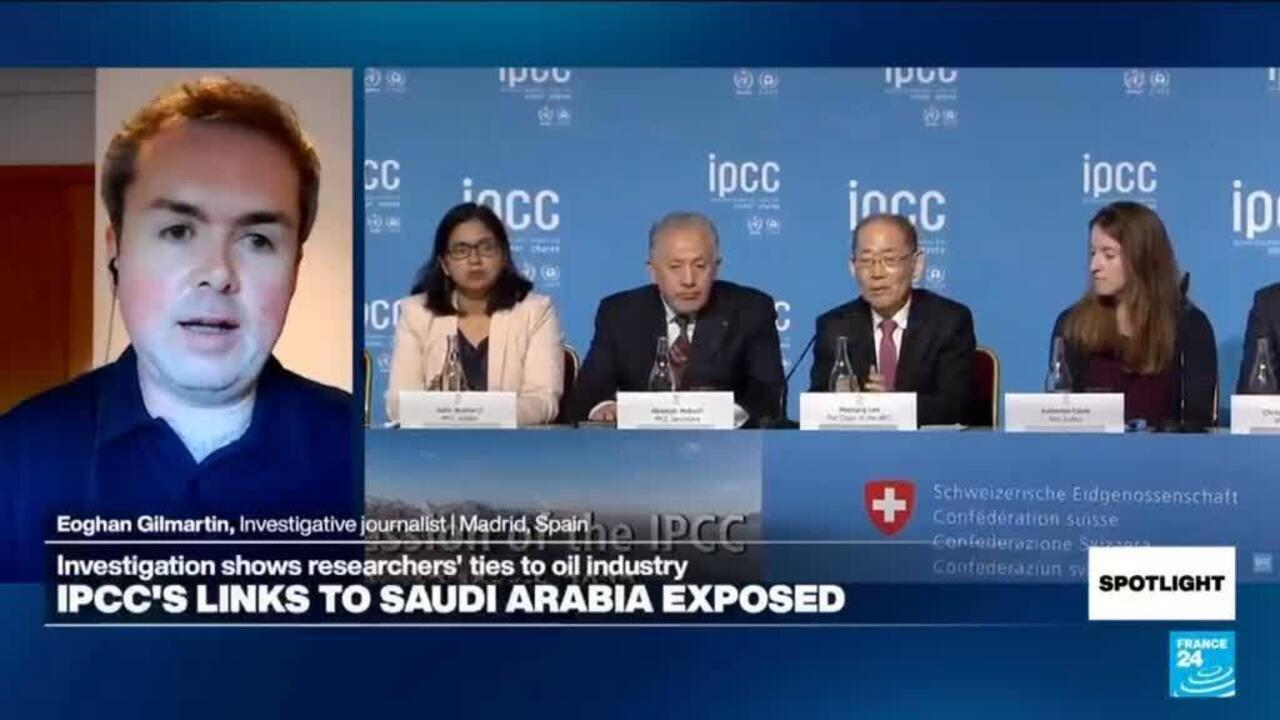
François Picard is pleased to welcome Eoghan Gilmartin, an award-winning investigative journalist and part of The Guardian team whose investigation examined links between IPCC authors and Saudi Arabia’s oil industry, including Saudi Aramco. Their findings take us to the intersection of climate science, political and economic interests, and institutional credibility, and into the politically consequential terrain of climate mitigation: how societies decide to respond to climate change. The investigation identified 20 authors whose affiliations raised what Gilmartin describes as significant conflict-of-interest concerns, including 11 with links to Saudi Aramco or Saudi state institutions. This raises a broader question about the production of authoritative climate knowledge: what happens when researchers helping to assess the pathways for mitigating climate change also have ties to actors with substantial economic interests in the choices being assessed? For Gilmartin, the deeper issue is one of transparency and institutional legitimacy, rather than evidence of illegality or scientific misconduct. The IPCC derives much of its authority from its reputation for independence. Even perceived conflicts of interest can therefore become consequential when researchers assess technologies and pathways that intersect with the economic interests of their employers or funders. That tension becomes particularly significant in the debate over carbon capture and carbon dioxide removal. Gilmartin argues that the central dispute is not whether these technologies have a role in climate mitigation, but how large that role should be. His analysis places this debate within a broader struggle over the pace and character of decarbonization: whether carbon-management technologies complement rapid reductions in fossil-fuel use, or risk becoming a rationale for postponing them. The investigation therefore points to a larger question of climate governance: who helps define the technological pathways presented as viable, necessary or desirable. And how can institutions safeguard scientific credibility when those pathways carry enormous geopolitical and economic consequences?
When climate mitigation becomes politicised: The Guardian uncovers IPCC links to Saudi oil industry
Full Article
Original Source
Read the full article at France24 →KhanList aggregates and links to publicly available news content. We do not host full articles from third-party sources. Always verify important information with original sources.